Photo:AFP
The Israeli military’s recent claim that it now controls about 40 percent of Gaza City marks an important, and controversial, turn in the ongoing war between Israel and Hamas. To some, it is viewed as a demonstration of military strength and a step toward Israel’s stated goal of dismantling Hamas control. To others, it highlights the deepening human tragedy this conflict has inflicted not just on fighters, but on ordinary women, children, and families trapped in the war zone.
Gaza City at the Center of the Conflict
Gaza City is not just another urban area—it is the beating heart of Gaza. It has long been seen as the stronghold of Hamas, with its leadership operating political and military networks from within its crowded neighborhoods and underground tunnels. Controlling even part of this city is symbolically significant because it shows progress in dismantling Hamas’ grip over the region.
For the Israeli government, this gain is being hailed as proof that its campaign in Gaza is working. For Palestinians, however, the loss of territory brings fear of further displacement, destruction, and hunger. This is not just a battle for military dominance; it is a battle set inside the streets, homes, and lives of more than a million civilians who once lived in Gaza’s largest city.
The Military Perspective
From a military standpoint, Israel’s claim demonstrates both its success and its challenges. Israeli commanders have described their operations as careful but intense, with soldiers moving street by street, facing resistance from Hamas fighters who rely on tunnels, booby traps, and guerilla-style ambushes.
Controlling 40 percent of Gaza City does not mean the fighting is over. In fact, it shows how difficult the battle remains. Urban warfare is one of the hardest forms of combat—armies are forced to advance slowly, with high risk to civilians who may be caught in crossfire or trapped inside collapsing buildings.
For Israel, holding this territory is also as difficult as capturing it. Guerrilla fighters often melt into the civilian population, regroup, and strike back unexpectedly. This raises questions: is Israel moving toward decisive victory, or will the war stretch on without clear resolution?
The Civilian Impact
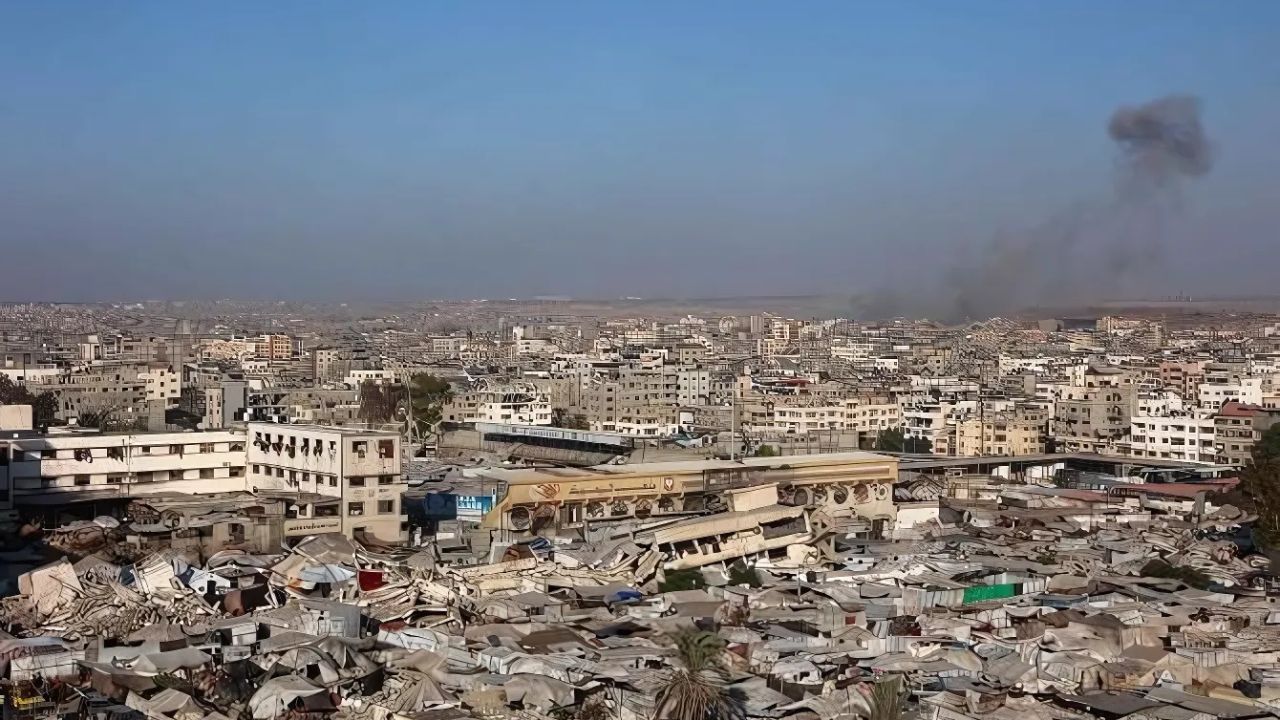
While Israel speaks of percentages and military maps, ordinary people in Gaza see only destruction and despair. Entire neighborhoods in Gaza City are reported to be flattened. Hospitals are overwhelmed with casualties, operating without enough electricity or medication. Families live without water, proper sanitation, or safe shelter. Many have fled south in search of safety, but even those journeys are not guaranteed protection.
International aid groups have repeatedly warned of a humanitarian catastrophe. The longer the fighting continues, the more children go without education, the more parents go without jobs, and the more communities break apart. Controlling 40 percent of Gaza City has meaning in war rooms and strategy sessions, but in human terms, it has meant displacement, hunger, and grief.
Political and International Reactions
The Israeli government sees this advance as part of its mission to secure its population and neutralize Hamas’ ability to launch attacks. Yet globally, the story is met with sharper debate.
The United Nations and international organizations have raised alarm about the rising civilian toll. The European Union and several Arab states have called for immediate humanitarian pauses to deliver aid. World leaders are caught between acknowledging Israel’s right to defend itself and condemning the scale of suffering in Gaza.
The claim of 40 percent control also carries political weight inside Israel. For Prime Minister Benjamin Netanyahu and his government, progress on the ground helps defend their position to continue the military offensive despite growing international criticism. For Palestinian leaders, it becomes a rallying cry about occupation, resilience, and the struggle for basic human rights.
What Lies Ahead
The capture and control of Gaza City will not by itself guarantee peace. Even if Israel claims more ground, Hamas or other groups may still maintain influence through underground networks and popular support. Years of conflict, blockade, and distrust cannot be erased in weeks of military operations.
The outcome of this battle will also reshape the region. If Israel succeeds in controlling most of Gaza City, it might declare a symbolic victory. But at what cost? The loss of life, the scale of destruction, and the deep wounds left behind are likely to breed resentment for generations ahead. Each bombed home or lost child carries the danger of planting more seeds of anger and resistance.