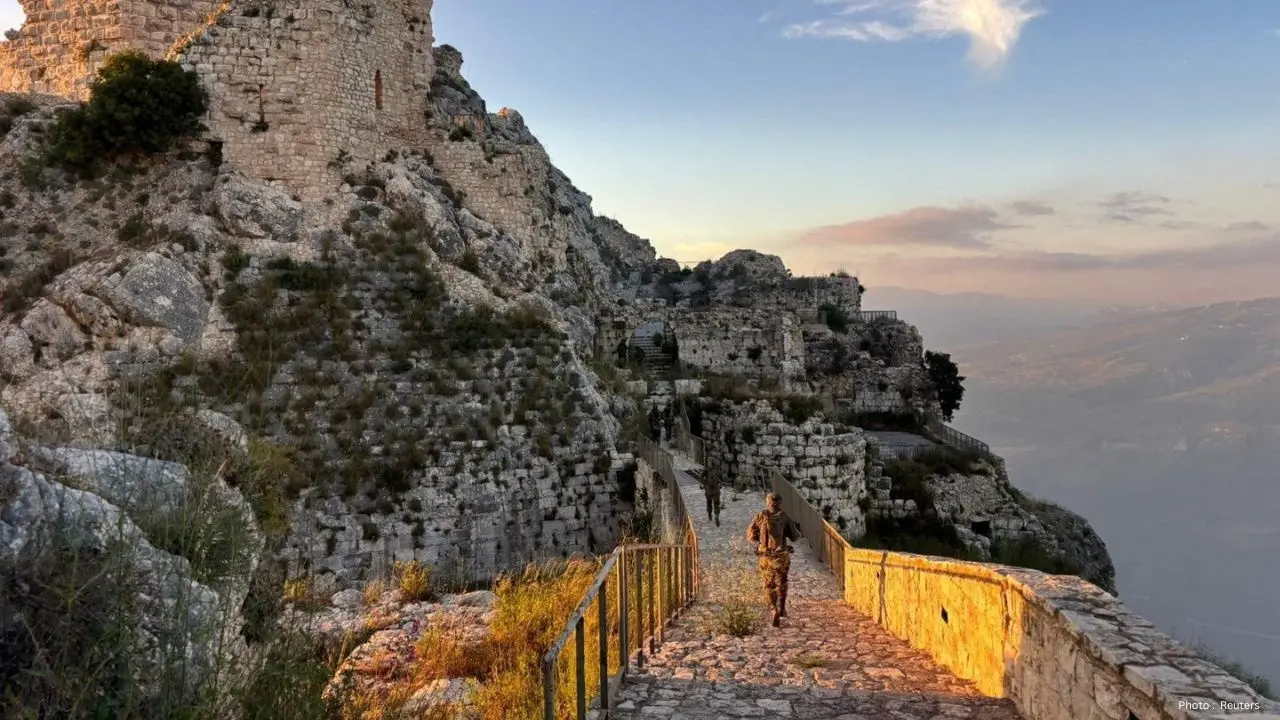
The recent seizure of Beaufort Castle by Israel marks a pivotal moment in the ongoing Israel-Lebanon conflict. This military operation, taking place in southern Lebanon, highlights a significant Israeli incursion into Lebanese territory, raising alarms throughout the Middle East. The timing of this action raises concerns amidst efforts to sustain a ceasefire and mitigate violence, sparking fresh worries about regional stability.
Perched on a prominent ridge, Beaufort Castle has historical significance as a strategic vantage point. Its capture enables Israeli forces to keep a close watch on extensive areas in southern Lebanon. Israeli officials assert that this operation was aimed at neutralizing Hezbollah targets believed to be connected to recent border attacks, with troops moving in after escalating exchanges of fire and heightened security fears.
This latest operation serves to underscore the precarious nature of the recently established ceasefire, which was seen as a promising means to alleviate tensions. Despite temporary success in curbing violence, frequent skirmishes have continually undermined these diplomatic efforts. While Israeli forces cite security threats and rocket launches as justifications for their military maneuvers, Lebanese leaders contend that Israel is overstepping its boundaries, complicating efforts for lasting peace.
The ramifications of this conflict extend beyond military considerations. It reflects the long-standing power struggle between Israel and Hezbollah, which profoundly influences regional politics. The history of clashes in the border region exacerbates fears of a broader crisis, as each new encounter raises the risk of wider involvement from other factions.
Amidst the military and political implications, the humanitarian crisis continues to escalate. Families residing near conflict zones are repeatedly displaced and face ongoing uncertainty and disruption to their lives. The violence has hampered schools, businesses, and essential public services, displacing thousands and leaving communities on both sides vulnerable to further attacks. This humanitarian toll remains a major concern for regional and international leaders alike.
The capture of Beaufort Castle also carries a symbolic weight, harking back to previous conflicts in southern Lebanon. Its renewed prominence in military strategies underscores the persistent tensions that defy years of diplomatic resolution attempts. For many in the region, this incident reflects the formidable challenges to achieving a lasting peace.
International reactions have intensified in light of recent developments. Governments and global institutions have urged all involved parties to exhibit restraint and avoid actions that could escalate tensions. While diplomatic efforts remain active, recent militaristic activities indicate that stability is increasingly at risk if hostilities continue.
The situation surrounding Beaufort Castle underscores that the Israel-Hezbollah conflict is far from settled. As military strategists focus on security, civilians bear the brunt of the enduring uncertainty and instability. This operation introduces a new layer to the intricate dynamics of the region and could significantly affect future political and security strategies. With global leaders closely monitoring these events, the coming weeks will be pivotal in determining whether diplomatic efforts can stave off further confrontation or if the conflict spirals into a more perilous phase.