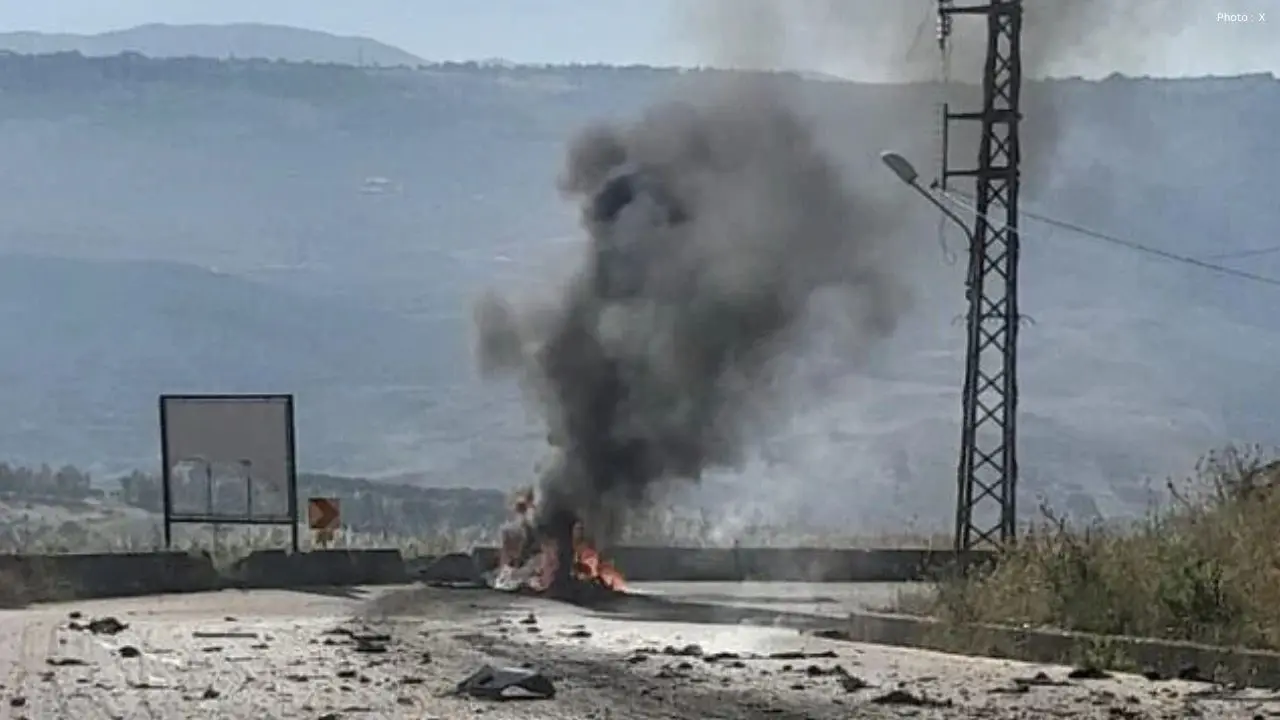
The Israeli Defense Forces (IDF) have confirmed that they executed a strike against a Lebanese military vehicle, citing its “suspicious” movements in a combat zone near the border. This incident escalates existing tensions along the Israel-Lebanon frontier, a region already marked by increasing military operations in recent months.
Military officials stated that the vehicle was detected during heightened security operations in a high-risk zone where movements are observed regularly due to the prevailing conflict conditions. The military response came after real-time assessments to mitigate potential threats in the vicinity.
As of this reporting, the Lebanese armed forces have not provided a comprehensive response, but this incident is likely to spark serious discussions about coordination, identification, and engagement rules in sensitive border areas. Such confrontations raise diplomatic issues, especially between neighboring nations directly involved in military encounters.
The Israel-Lebanon border has long been a focal point of tension in the Middle East. With frequent clashes, cross-border fire, and security operations, the area remains highly volatile. Even minor incidents can rapidly escalate into significant confrontations due to the presence of various armed groups and ongoing military actions.
This recent strike unfolds amid already heightened regional tensions. Multiple areas in the Middle East are experiencing instability, with security forces operating under increased alert protocols. In these scenarios, military decisions are often made rapidly in response to perceived threats, heightening the risk of miscommunication or unintended ramifications.
Military analysts emphasize the complexities of border combat zones. Unusual vehicle movements can easily be misinterpreted, especially when communication between different forces is weak or disrupted. This underscores the importance of clear coordination and identification to prevent escalation.
The incident also signifies the broader challenge of maintaining stability in conflict zones with numerous armed entities. Differentiating between civilian, military, and suspicious activities becomes increasingly difficult, adding pressure on forces to respond swiftly while also raising concerns about the proportionality and accuracy of their actions.
International attention often focuses on the use of force in such scenarios. Governments and global entities typically advocate for restraint and thorough investigation when incidents result in casualties or involve cross-border military actions. Such efforts aim to mitigate further escalation and foster dialogue among the conflicting parties.
The Israel-Lebanon border has seen recurring cycles of tension over the years, with each side maintaining security concerns regarding the other. These intermittent clashes have fostered an unstable and unpredictable security climate. Even if large-scale conflicts are averted, smaller incidents continue to sow instability and mistrust.
The recent incident may also influence ongoing diplomatic initiatives in the region. International mediators frequently strive to de-escalate tensions and prevent local skirmishes from transforming into larger conflicts. However, military actions, particularly those resulting in casualties, complicate efforts to maintain peace and mutual trust.
From a humanitarian perspective, ongoing military activity near border zones poses risks for both soldiers and civilians. Local communities often endure uncertainty, disruptions, and safety threats during periods of escalated tensions. Long-term instability can adversely impact economic conditions and community development.
This incident serves as a stark reminder of how quickly dynamics can shift in conflict zones. Even routine surveillance operations can yield significant consequences when perceived as threats. Thus, effective communication, monitoring systems, and clear protocols are vital to minimizing misunderstandings.
As investigations progress and responses unfold, attention will likely be directed toward how both parties manage the aftermath of the strike. Whether this incident leads to further escalation or inspires renewed efforts to ensure careful border security will depend on diplomatic engagement and military restraint in the coming days.
For now, the environment remains delicate, with military and political analysts closely monitoring developments along the Israel-Lebanon border.