Photo:reuters
International enrolment at Conestoga College has plummeted by more than 60 percent in 2024–2025, marking one of the steepest declines across Ontario’s post-secondary sector. This article examines the regulatory shifts behind the drop, its financial and academic fallout, and the broader implications for students and the local community.
Government-Imposed Caps on International Students
In early 2024, the federal government capped Canada’s overall study permits at a 35 percent reduction from 2023 levels. Ontario received the largest share of cuts, with provincial regulations further restricting colleges and universities. Conestoga, which led Canada in international study permit approvals with around 30,395 in 2023, was targeted for the largest enrollment curtailment among public institutions.
Ontario’s rule caps international intake at 55 percent of domestic first-year enrolment, with exemptions only in designated priority programs like skilled trades, STEM, health care, hospitality, and child care. Conestoga’s allocation for new international students in fall 2024 was limited to just 4,600, less than half of its previous volume.
Conestoga’s Official Response
The college acknowledged the dramatic reduction, stating their allocation was “set at less than 50 percent of our current international enrolment.” Officials committed to assessing the operational and financial impact while maintaining collaboration with government partners.
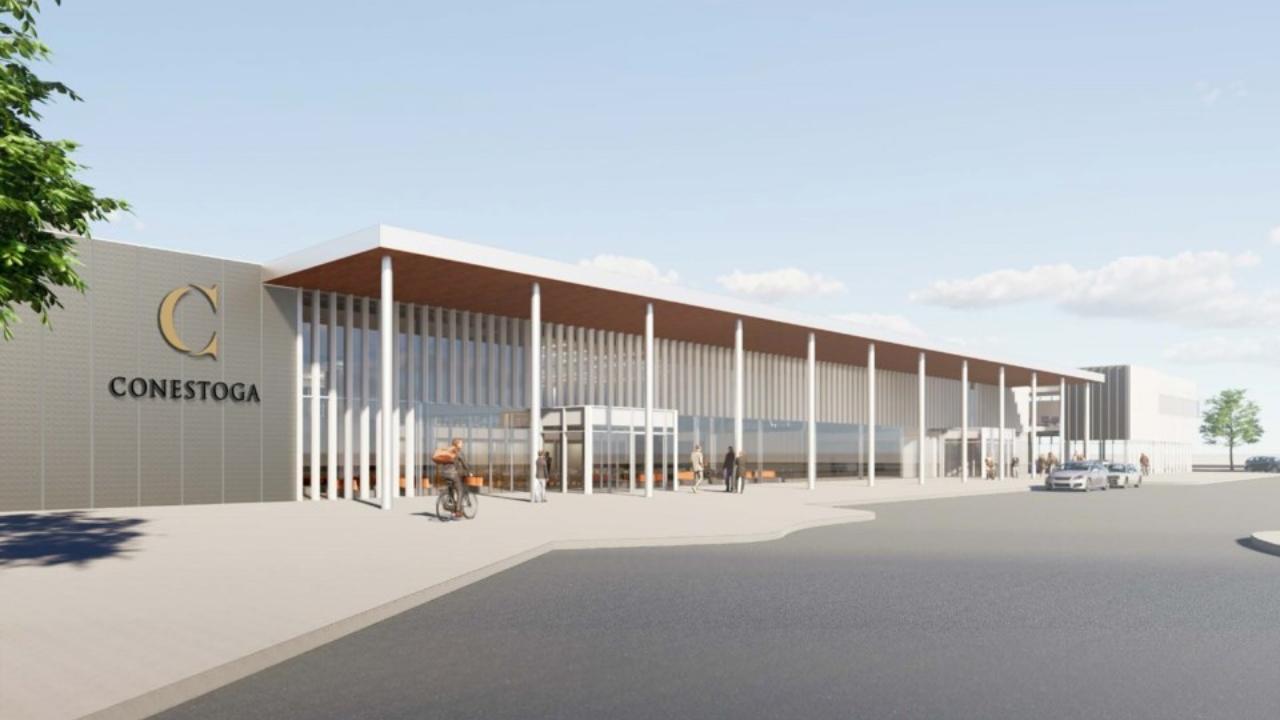
Conestoga confirmed it would continue with major campus and housing investments—such as multi-campus developments across Waterloo Region and Guelph—but recognized that these plans might need reevaluation given the enrollment decline.
Financial Repercussions and Institutional Concerns
Conestoga posted a surplus of $106 million in 2022–23 and nearly $252 million by mid‑2024—largely attributed to international tuition revenue.
Based on student-per-term tuition around C$9,000 and a drop from ~30,000 to ~4,600 incoming students, the college could face a $200 million shortfall in revenue—impacting staffing, programming, and expansion plans.
Staff Layoffs and Program Cuts
Reductions in enrollment have prompted layoffs and program suspensions across Ontario colleges. While larger institutions like Centennial and Mohawk face layoffs in the hundreds, Conestoga is also likely to reduce part-time faculty positions and administrative staff amid shrinking demand.
Faculty and staff have voiced concerns internally for years: in 2020, teaching faculty warned of safety and quality issues due to rapid international admissions.
Reputation and Community Concerns
Community discussion—particularly on Reddit—portrays Conestoga as heavily dependent on international students and criticized as prioritizing quantity over quality. Some locals allege oversupply of applicants, local housing strain, and perceptions of diminished academic standards.
Reports indicate a perception of declining graduate credibility, with anecdotal notes that some employers now filter out Conestoga grads based solely on college name.
Impact on Students and the Local Economy
Reduction in international enrollment affects not only the college but also local economies. Thousands of students supported part-time employment, rental markets, and services in Kitchener–Waterloo. These shifts may lead to marginal job losses in local hospitality, retail, and housing sectors.
International programs also helped sustain expansion projects and local construction—measures now under pressure due to declining funding flows.
Academic and Operational Adjustments
Conestoga plans to reassess program viability. Non-priority or low-demand offerings may be cut. Faculty contracts—especially part-time and recent hires—are most at risk.
Recent growth included trailer classrooms to meet demand; with fewer students, many of these temporary facilities now sit underutilized.
Regulatory Rationales and Policy Objectives
Ontario officials maintain the cap helps align international student numbers with labor-market demand and infrastructure readiness. The policy aims to prevent overdependence on tuition revenue and curb exploitative recruitment models.
Federal policy changes—particularly restricting Post Graduate Work Permits (PGWP) in private-public partnership programs—further disincentivize mass recruitment in low-value fields.
Community Reaction and Calls for Reform
Public and media critics argue for:
-
Caps or country quotas to diversify recruitment
-
Greater focus on domestic students and in-demand program capacity
-
Better housing support and infrastructure planning to accommodate international intake responsibly
-
Reinforcement of academic quality standards and accreditation oversight
Looking Forward: Recovery or Realignment?
Conestoga—like other affected institutions—must now decide whether to scale back expansion, tighten budgets, or pivot to domestic recruitment. Industry analysts suggest any backlog must restored through quality-focused programming and restored employer trust.
Monitoring trends in domestic enrolment, program viability, job placement rates, and deferred building plans will signal whether the college transitions toward sustainability or continues as an international reliance model.