Understanding Space Technology's Integration in Daily Living
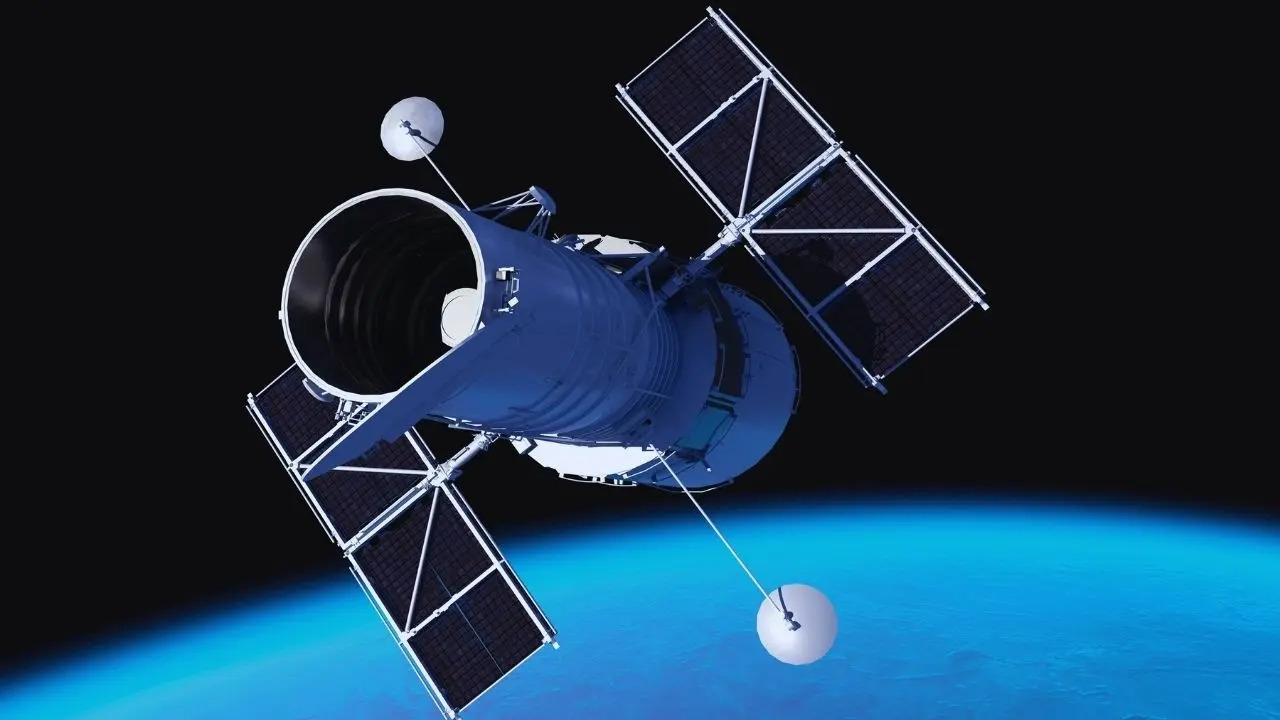
When discussing "space technology," the images that usually come to mind are of rockets and astronauts. However, we often overlook the immediate impact of satellites, whether it's the map app on your phone or weather alerts preventing you from getting drenched in the rain.
In reality, our modern existence is intricately linked to space.
Even if you’ve never been to space, satellite systems constantly work behind the scenes in your daily activities. They assist with travel navigation, storm warnings, package tracking, online banking, and even help in agricultural practices by determining optimal planting times.
Space is now seamlessly intertwined with our earthly experiences.
How Satellites Support Your Day-to-Day Digital Tools
Most of the digital platforms you rely on depend on precise location data, real-time connectivity, and ongoing assessment of environmental conditions. This is where satellites come in.
Every time you:
Access a navigation application
Check weather forecasts
Tune into live news
Perform online transactions
Monitor deliveries
Stream content
Engage in video conferencing
you are, in fact, utilizing data relayed from satellites.
Satellites are essential, ceaselessly operating as unseen laborers.
Your Smartphone's Location Services Are Space-Dependent
Navigation services are powered by a constellation of satellites orbiting our planet. These satellites send signals that your device interprets to pinpoint your location.
Your device accurately calculates its location by communicating with satellites positioned over 20,000 kilometers above you.
This precision enables applications such as:
If we remove satellites from the equation, your device becomes lost in terms of navigation.
Without Satellites, Maps Would Be Ineffective
Digital maps may seem straightforward, but they rely on a complex structure of:
Earth observation satellites
Real-time traffic analytics
Positioning networks
Imaging sensors
Surface modeling algorithms
Satellites constantly survey every imaginable route from high above, gathering data that helps mapping services identify changes like:
Traffic routes are recalculated in real-time using satellite data.
The reason your navigation tool can provide quicker alternatives in heavy traffic is that satellites continuously refresh their data.
Location Precision Is Not Accidental
Your device connects to numerous satellites simultaneously.
The more connections established, the more precise your location becomes.
Urban landscapes with tall buildings can slightly distort signals, while open highways allow for better satellite reception.
That said, modern technology can often pinpoint your location within mere meters.
This illustrates the power of contemporary space technology operating subtly above us.
Weather Applications Rely on Continuous Earth Monitoring
Weather predictions are a science.
These predictions rely on a comprehensive global network of satellites that monitor:
All national weather forecasts begin in space.
Satellite information feeds computer simulations that project temperature fluctuations, rain patterns, and extreme conditions.
This capability allows meteorologists to:
When your weather application signals an impending rainstorm, it’s leveraging space-derived data.
Without Satellites, Disaster Notifications Would Be Impossible
Timely notifications save lives.
Many disasters would occur without warning if not for satellites.
Satellites can identify:
In numerous nations, disaster management teams depend on space systems to:
Assess damage
Identify isolated areas
Plan rescue operations
Track flood situations
Evaluate forest damage
Monitor landslide risks
Satellites serve as the first responders in disaster scenarios, long before assistance arrives on the ground.
Communication Advances Thanks to Space Technology
Whether you’re making a video call, live-streaming, or watching global news without network interruptions, satellites are often part of the equation.
Rural regions lacking fiber-optic networks rely predominantly on satellite communication.
Satellites support:
While undersea cables handle most data, satellite connections bridge the gap where traditional infrastructure is absent.
For those in challenging geographic regions, satellites are not merely conveniences.
They represent essential connections.
Finance, Security, and Timing Relies on Space
Bank transactions require precise timing.
Online payments depend on accurate clocks.
Automated teller machine networks need geographic verification.
All of these functions depend on satellite timing signals.
A disruption in satellite services would impact vital systems including:
Space is intertwined with finance.
The financial infrastructure relies on silent systems orbiting the Earth.
Accurate Timekeeping Originates from Satellites
Satellites maintain atomic clocks.
These clocks possess greater precision than any timepiece on our planet.
Digital systems rely on this temporal precision to:
Authenticate financial transactions
Sync networks
Ensure stock market reliability
Support secure communications
Manage international financial dealings
Your device's internal clock derives its accuracy from satellites.
Farming Has Evolved Thanks to Satellites
Contemporary agriculture is no longer based on estimates.
Satellite assessments provide farmers with crucial information on:
Soil conditions
Crop health
Water availability
Pest risks
Weather conditions
Irrigation requirements
This data enables:
Optimized fertilizer application
Enhanced yield forecasting
Conservation of water
Increased efficiency
Less environmental impact
What was once reliant on generations of experience is now guided by satellites.
Agriculture is transforming into a precise science supported by space.
Air Travel Relies Heavily on Satellite Technology
Every flight depends on satellite navigation systems.
Planes do not navigate by mere sight.
Satellites provide:
Without space technology, flying would be a slower, riskier, and more expensive endeavor.
Airports also rely on satellite-sourced information for:
Every successful flight reflects the significance of satellite systems.
Entertainment and Streaming Favored by Satellite Access
From live sports to satellite TV and news coverage, satellite technology plays a pivotal role.
Streaming platforms rely on:
When undersea connectivity fails, satellites step in.
Entertainment continues due to the reliability of space.
Environmental Conservation Efforts Driven by Space Technology
Space innovations do more than improve our convenience.
They contribute significantly to environmental protection.
Satellites monitor:
Carbon footprints
Deforestation levels
Desert expansion
Ice sheet degradation
Acidification of oceans
Wildlife migration
Governments rely on this data to enforce laws concerning the environment, monitor illegal mining activities, regulate forest usage, detect pollution levels, and assess the effects of climate change.
Environmental assessments are increasingly driven by satellite data instead of traditional on-ground investigations alone.
Emergency Services Rely on Satellite Communication
Ambulance dispatch, police coordination, and disaster relief operations all utilize satellite systems for:
The reason help often arrives so rapidly today is due to the guidance provided by space technology.
Space Careers Are Becoming More Mainstream
Jobs in space technology are no longer niche occurrences.
Careers associated with space include:
Today's kids learning to code may find themselves managing satellite systems in the future.
Space is transforming from a mere destination into a career landscape.
Consequences of Satellite Failures
It's a challenging thought, but important to know what could happen if satellite systems were to break down:
Navigation systems would malfunction
Communications would falter
Financial markets would come to a standstill
Weather notifications would vanish
Emergency responses would weaken
Today's civilization relies heavily on orbital networks.
We often overlook their importance because they function so efficiently.
The Future Will Be Even More Dependent on Space Technology
As technology continues to advance, our reliance on satellite systems will only grow.
Future developments could encompass:
Autonomous vehicle navigation solutions
Internet services from space
AI for predicting weather patterns
Earth observations for sustainable urban development
Healthcare solutions powered from orbit
Climate analysis from space
Our future smart cities will lean heavily on satellite data for:
Controlling pollution
Optimizing traffic flow
Effective water resource management
Enhanced disaster resistance
Maximizing energy efficiency
The sky will increasingly serve as the command center for our terrestrial activities.
The Underrated Influence of Space Technology
Satellites operate quietly, without demanding recognition.
We see communication cables and cellular towers, but satellites remain unseen, diligently working overhead.
This invisibility often causes their critical role to be overlooked.
However, life would come to a grinding halt without their unwavering support.
When systems operate so seamlessly that no one notices them, that’s a mark of true accomplishment.
Concluding Thoughts: Space Technology Is Part of Your Everyday Life
Space technology is not merely a concept of the future.
It is integrated into our everyday experiences.
It might wake you up in the morning.
It directs you on your commute.
It alerts you to weather changes.
It manages your finances.
It entertains during your leisure time.
It keeps you safe.
It aids agricultural pursuits.
It illuminates your surroundings.
It powers your daily activities.
You might never gaze up to see a satellite.
Nevertheless, they are consistently observing and supporting you.
Silently. Constantly. Reliably.
DISCLAIMER
This article serves for educational and informative purposes only. It does not offer technical, governmental, or policy advice. For specialized insights relating to satellite services or communication technology, readers should seek professional expertise or official channels.