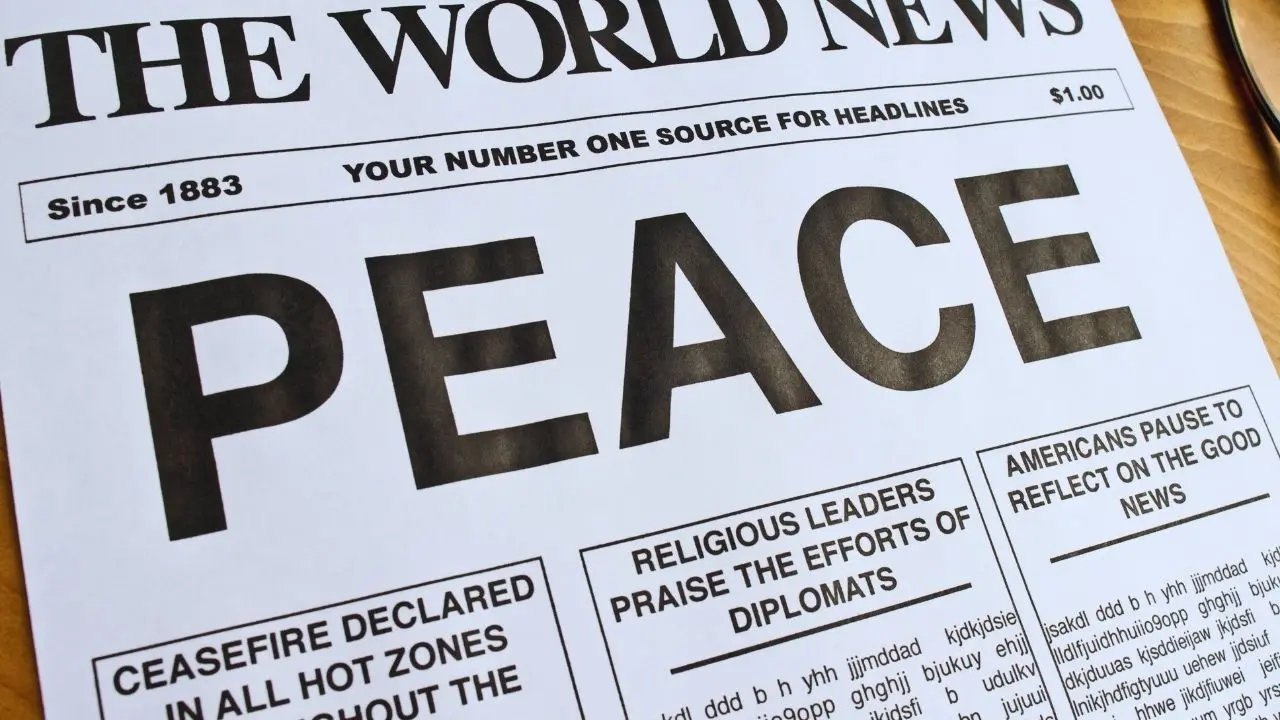
A World Shifting from Conflict to Conversation
While headlines scream of war, the foundations of peace are laid quietly. These crucial negotiations unfold in secret meetings, late-night calls, and lengthy discussions where often, silence speaks volumes. The impact of peace is significant, even if it goes unnoticed.
In regions mired in conflict, efforts towards ceasefire extend beyond halting violence. They involve reconfiguring global power dynamics, redefining alliances, and restoring tenuous stability.
As talks commence, international markets respond. Currency fluctuations occur, diplomatic relations shift, and refugee patterns evolve. For individuals often miles from the conflict, costs such as groceries, fuel, and air travel see gradual adjustments.
Peace isn’t merely a local affair; its ramifications resonate globally.
The Importance of Negotiation Over Military Might
In modern warfare, victories are seldom absolute. Even the most robust military offensives struggle to yield lasting peace. Thus, negotiation has emerged not as a weakness but as an essential strategy.
While military force dismantles structures, negotiation paves the way for reconstruction.
Discussions pave pathways for:
Without meaningful dialogue, wars become endless cycles of violence.
With dialogue, they transition into chapters of history.
Power Goes Beyond Military Strength
In today’s world, influence is often more about:
Who participates in negotiations
Who controls the dialogue
Who establishes terms of compromise
Who dictates the terms of agreement
Who ensures adherence to terms
Generation of peace is rooted in the ability to conclude conflicts, not instigate them.
The Global Ripple Effects of Ceasefires
A ceasefire is not merely a moment of silence.
It serves as a harbinger of change.
Financial markets respond eagerly to this news, reflecting future prospects.
When guns fall silent:
Conversely, if negotiations fall apart:
Investors retract
Commodity prices soar
Borders become tighter
Refugee numbers swell
Defense budgets expand
Truly, peace negotiations influence economic landscapes faster than central banks can react.
The Chain Reaction of Conflict and Resolution
No conflict exists in isolation.
Each war triggers:
Every peace agreement begins the slow, yet expansive, process of reversing those consequences.
Peace can bring relief on a wide-ranging scale.
Food and Energy Markets: The Ripple from Ceasefires
Energy and food are the resources most sensitive to warfare.
Conflict disrupts supply chains.
With the dawn of peace, logistical operations regain momentum.
Conflict zones house critical infrastructure due to:
Oil reserves situated near borders
Pipelines traversing volatile areas
Ports under militarization
Inflated insurance premiums
The food supply chain faces similar interruptions due to:
Peace discussions alleviate the instability discounts associated with supply and fundamentally reduce prices.
The Interdependence of Diplomacy and Food Security
A farmer's harvest in one nation may sustain a family in another, but war obstructs this unseen connection.
The onset of negotiation allows for:
Politics can influence agricultural output just as much as the earth itself.
Modern Security: Beyond Borders
Today’s security concerns encompass:
Digital landscapes
Economic facets
Environmental aspects
Information flows
Cyber territories
Current negotiations address:
Increasingly, peace accords define not only territorial boundaries but also the way information circulates.
The Invisible Battlefields of Modern Warfare
Cyber attacks can debilitate financial systems.
Information warfare can alter entire political landscapes.
In this age of technology, wars can be waged without a single explosion.
Peace negotiations act as the bulwark against such disruptions.
Understanding Prolonged Conflicts
Not all wars conclude swiftly.
Certain disputes endure due to:
In these cases, negotiations do not conclude conflicts; they contain them.
Containment, while not a solution, can serve as a pathway to survival.
The Imperfect Nature of Peace
Compromise often does not appease everyone involved.
Peace agreements may:
Nonetheless, the pursuit of peace continues because chaos leads to greater suffering.
The Essential Role of Mediation
Neutral entities frequently emerge as facilitators of peace.
Their influence can encompass:
Setting the framework for discussions
Proposing incentives
Exerting influence
Providing security assurances
Coordinating recovery initiatives
Mediators may not win conflicts.
However, they play a decisive role in bringing them to an end.
The Crucial Nature of Trustworthy Intermediaries
When adversaries engage, they often communicate heatedly.
Mediators have the crucial task of translating conflict into agreements.
Without intermediaries, discussions often devolve into blame games.
The Effects of Ceasefires on Global Defense Budgets
Conflict leads to escalated defense spending.
Conversely, peace diverts funding towards:
A peaceful border signifies:
Reduced arms purchases
Lower military deployments
Diminished emergency expenditures
More manageable financial planning
Peace represents a dividend to economies, while conflict is a drain.
Why Nations Monitor Peace Dialogues
Countries pay attention to wars in which they have no direct involvement because:
Investment landscapes shift
Alliances alter
Currency dynamics fluctuate
Refugee inflows increase
Diplomatic influences are reshaped
Conflict anywhere breeds unpredictability everywhere.
Neutrality Bears Weight
Silence does not equate to disinterest in these matters.
Even non-involvement carries implications.
The Human Toll Behind Diplomatic Talk
The language of diplomacy often masks significant suffering.
Discussions revolve around:
Safe zones
Relief routes
Aid initiatives
Resettlement strategies
Civilian protections
But behind these terminologies lie:
True peace is about restoring dignity, not just land.
Why Public Trust in Negotiation Wanes
Disillusionment arises when:
Consequently, the belief that force speaks louder prevails.
This mindset fuels conflicts more than ideological differences.
A Fragile Yet Necessary Hope
Peace demands:
Vision
Perseverance
Trust
Bravery
Without these elements, war risks becoming an entrenched norm.
Technological Advancements in Modern Negotiation
Meetings today are not confined to physical spaces.
Modern discussions incorporate:
Secure online platforms
Simulations of intelligence
AI-driven data analysis
Monitoring via satellites
Cyber verification processes
This contemporary diplomacy operates instantaneously.
Negotiations now happen in moments rather than weeks.
The Necessity of Ceasefire Oversight
Signing a treaty does not signify the end of conflict.
The real measure lies in compliance.
Verification processes encompass:
On-ground monitors
Satellite oversight
Border supervision
Communication checks
Independent assessments
Trust may be scarce, yet accuracy remains critical.
What a Stable Peace Looks Like
When real peace prevails:
Businesses resume operations
Schools reopen
Healthcare institutions recover
Borders become more accessible
Tourism flourishes
Investments flourish
The return to normalcy represents a profound and joyous advancement.
Peace: A Powerful Force for Change
Peace may be subtle.
But it wields great power.
Shaping Our Future in Negotiation
The coming years will be sculpted less by military might and more by:
War is an age-old concern.
But achieving peace requires continual progress.
Conclusion: The Silent Strength of Discourse
Wars ignite rapidly.
Peace, however, necessitates time.
Only through peace can history be rewritten in a compassionate manner.
Every ceasefire possesses more potential for change than all the ammunition combined.
For while weapons destroy, words have the power to rebuild.
From today’s negotiation tables emerge the borders, security, and prosperity of tomorrow.
When leaders engage in dialogue, the world pays attention.
And when the world listens…
Everything can change.
DISCLAIMER
This article is intended for general information and educational purposes only. It does not constitute political, legal, or strategic advice. Readers are encouraged to consult credible international sources and subject experts for in-depth analysis and updates on global affairs.