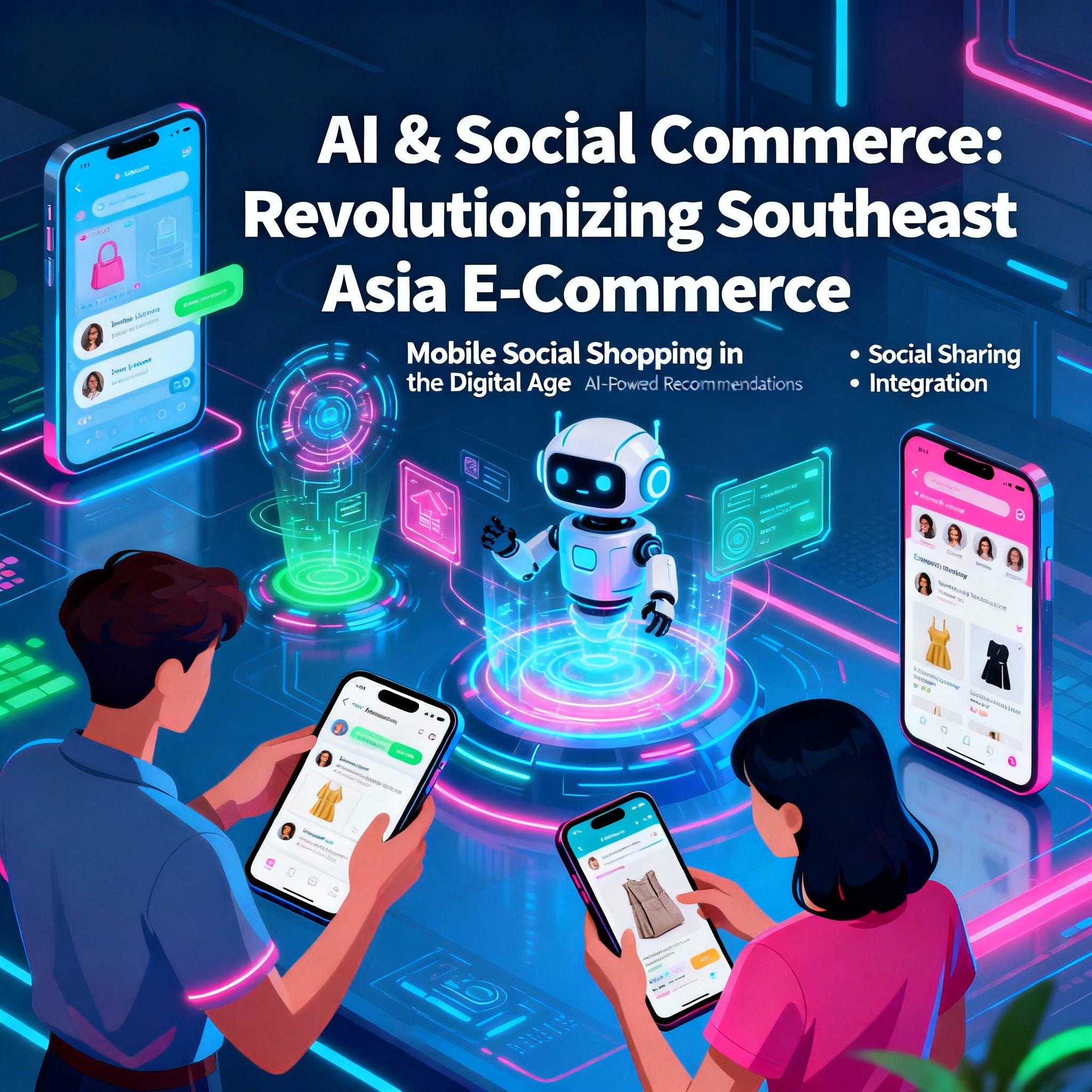
How AI and Social Commerce Are Transforming Southeast Asia’s E-Commerce
Southeast Asia’s e-commerce landscape is undergoing a major transformation driven by artificial intelligence (AI) and social commerce. With over 460 million internet users and a rapidly growing digital economy, the region is embracing new technologies that redefine how consumers discover, engage with, and purchase products online.
AI enables smarter personalization, predictive analytics, and automation, while social commerce platforms like TikTok, Instagram, and Facebook are turning social interactions into powerful sales channels. Together, they are shaping the next era of digital retail across Indonesia, Vietnam, Thailand, Malaysia, the Philippines, and Singapore.
The Role of Artificial Intelligence in E-Commerce
AI-Powered Personalization and Recommendations
AI algorithms analyze browsing behavior, purchase history, and engagement patterns to deliver personalized product recommendations. Platforms like Shopee and Lazada use machine learning to tailor search results and promotions, increasing conversion rates and customer satisfaction.
Chatbots and Virtual Shopping Assistants
AI-driven chatbots provide instant customer support, helping users find products, track orders, and resolve issues in real time. Virtual assistants enhance the shopping experience by offering 24/7 engagement and multilingual support across Southeast Asia’s diverse markets.
Predictive Analytics for Smarter Retail Decisions
Retailers leverage AI-powered analytics to forecast demand, optimize inventory, and plan marketing campaigns. Predictive insights help businesses anticipate consumer trends and adjust pricing strategies dynamically, improving profitability and efficiency.
The Rise of Social Commerce in Southeast Asia
TikTok Shop, Instagram, and Facebook Live Shopping
Social commerce has become a dominant force in Southeast Asia’s digital economy. Platforms like TikTok Shop, Instagram Shopping, and Facebook Live enable brands and influencers to sell directly through interactive content. Live-stream shopping events attract millions of viewers, blending entertainment with instant purchasing.
Influencer Marketing and Community Engagement
Influencers play a crucial role in driving trust and authenticity. Micro-influencers, in particular, connect with niche audiences, promoting products through relatable content. This peer-driven approach fosters community engagement and boosts brand loyalty.
The Power of User-Generated Content
User-generated reviews, unboxing videos, and testimonials influence purchase decisions more than traditional advertising. Social proof has become a key factor in building credibility and driving conversions across the region.
How AI and Social Commerce Work Together
Data-Driven Targeting and Real-Time Insights
AI enhances social commerce by analyzing user data to deliver hyper-targeted ads and personalized recommendations. Real-time insights allow brands to adjust campaigns instantly, maximizing engagement and sales performance.
Personalized Shopping Journeys Across Platforms
By integrating AI with social media analytics, businesses can track customer journeys across multiple touchpoints. This creates seamless, personalized experiences—from product discovery on TikTok to checkout on e-commerce platforms.
Country Highlights
Indonesia – The AI Commerce Leader
Indonesia leads Southeast Asia’s AI-driven e-commerce revolution. With over 200 million internet users, platforms like Tokopedia and Shopee Indonesia use AI to optimize logistics, pricing, and customer engagement.
Vietnam – Social Commerce on the Rise
Vietnam’s young, mobile-first population is driving rapid adoption of social commerce. TikTok Shop and Facebook Marketplace dominate, supported by strong local influencer networks.
Thailand and the Philippines – Mobile-First Markets
Thailand and the Philippines are experiencing explosive growth in mobile shopping. AI-powered personalization and live-stream selling are key to capturing these highly engaged audiences.
Key Benefits for Businesses and Consumers
Enhanced Customer Experience
AI and social commerce create intuitive, engaging, and personalized shopping experiences that increase satisfaction and loyalty.
Increased Conversion Rates
Personalized recommendations, influencer-driven campaigns, and real-time engagement significantly boost conversion rates and average order values.
Streamlined Marketing and Operations
Automation tools powered by AI reduce manual tasks, optimize ad spending, and improve inventory management, allowing businesses to scale efficiently.
Challenges and Ethical Considerations
Data Privacy and Security
As AI and social commerce rely heavily on user data, ensuring privacy and compliance with regional regulations is critical. Transparent data practices build consumer trust and long-term loyalty.
Algorithm Bias and Transparency
AI systems can unintentionally reinforce biases in product visibility or pricing. Businesses must prioritize fairness, transparency, and ethical AI deployment to maintain credibility.
The Future of AI and Social Commerce in SEA
Integration of AR/VR Shopping Experiences
Augmented and virtual reality technologies will redefine online shopping by allowing consumers to visualize products in real time. Virtual try-ons and immersive showrooms will become mainstream by 2030.
The Rise of Voice Commerce and Smart Assistants
Voice-enabled shopping through AI assistants like Alexa and Google Assistant is gaining traction. As Southeast Asia’s smart device adoption grows, voice commerce will become a key channel for convenience-driven consumers.
The Next Era of Digital Commerce in Southeast Asia
AI and social commerce are revolutionizing Southeast Asia’s e-commerce ecosystem. By merging data intelligence with social engagement, businesses can deliver more personalized, efficient, and enjoyable shopping experiences.
As technology continues to evolve, the synergy between AI and social commerce will define the future of digital retail—empowering consumers, transforming brands, and driving the region’s next wave of economic growth.