Photo:AP
Introduction
A shocking exposé from detainees at the newly opened immigration detention center, nicknamed “Alligator Alcatraz,” located on a remote airstrip in Florida’s Everglades, paints a dire picture. Allegations shared with the Associated Press describe horrors including worms in meals, sewage flooding around bunk beds, non-functional toilets, and 24-hour lights—all under harsh tropical conditions. This article explores each disturbing claim, facility logistics, legal concerns, responses from authorities, and the broader ideological context surrounding the site.
Origins of “Alligator Alcatraz”
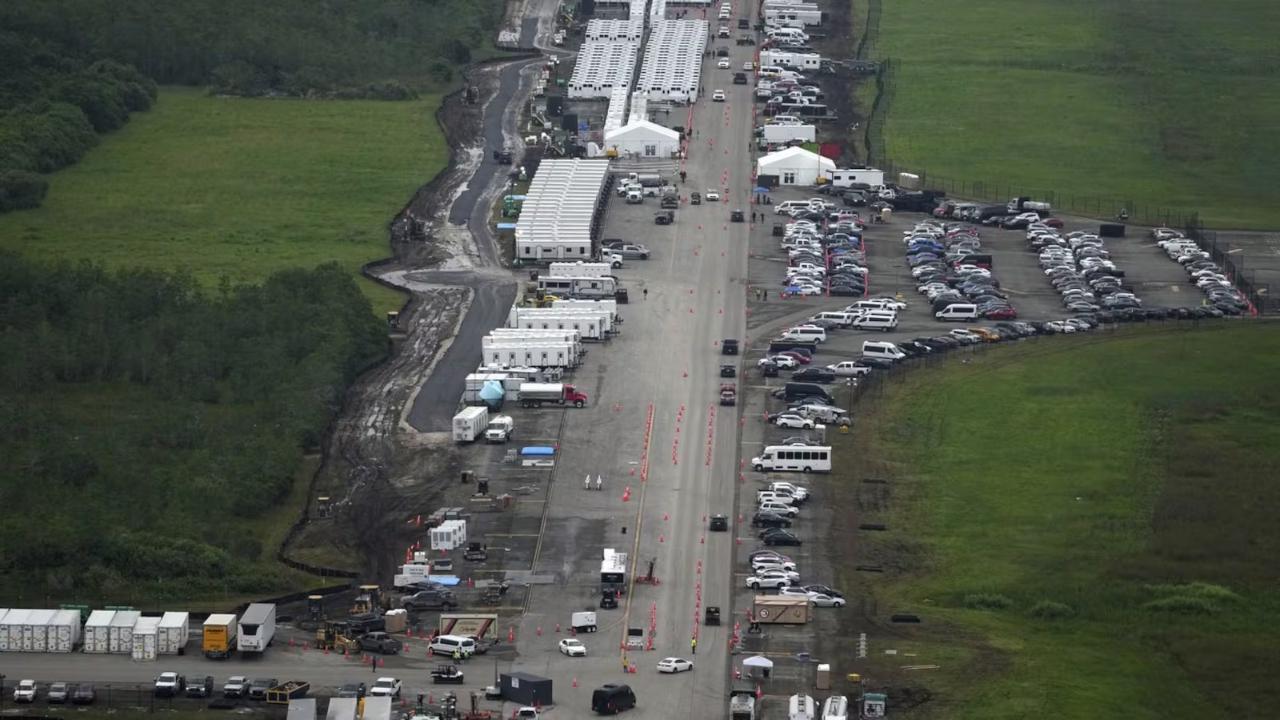
Built at the Dade-Collier Training and Transition airport near Ochopee, Florida, the tented detention facility was rapidly constructed under Governor Ron DeSantis’s directive, with assistance from the state Division of Emergency Management. Its remote location—surrounded by wetlands and wildlife—prompted the moniker “Alligator Alcatraz.” The center began receiving detainees on July 2, shortly after a high-profile visit from former President Donald Trump, who praised its harshness as part of a broader deterrence strategy.
Detailed Allegations from Inside
-
Food contamination: Detainees report seeing worms and maggots in their sole daily meal. One 35-year-old Cuban described being given a single serving with two minutes to eat: “The meals have worms.”
-
Sewage overflow: Malfunctioning toilets left fecal waste pooling on floors near bunk beds. Floodwaters carried human waste across tent interiors.
-
Insect infestations: Mosquitoes the size of “elephants,” crickets, frogs—detainees said the facility bristles with insects due to constant moisture and poor sealing.
-
Extreme heat and lighting: Air conditioners turn off without warning in the heat, while lights burn round the clock, contributing to sleep deprivation and extreme discomfort.
-
Hygiene and health neglect: No showers for days, limited or no prescription medication, lack of clean water for teeth or washing. One detainee likened the place to “rats in an experiment.”
-
Communication and restraint: Detainees communicate via recorded phone lines, cut off every three minutes. Lawyers cannot enter; detainees are cuffed with arms held by two guards and followed by a third.
Voices from Detainees and Advocates
A Venezuelan detainee described constant lights and confinement: “The conditions in which we are living are inhuman… psychological pressure… to sign self‑deportation.” Cuban musician Leamsy La Figura said his Bible was confiscated, denied religious rights: “It is impossible to sleep with this white light.” Attorney Atara Eig emphasized the facility’s extremity, noting it surpasses prior detention center criticisms.
Families and Legal Counsel Blocked
A detainee’s wife shared that her husband had no shower for days, with urine and feces pooling on the floor. Legal counsel, including one representing a 15-year-old with no criminal record, was denied access and told to wait 48 hours with no clear contact pathway.
Official Denials from Authorities
Stephanie Hartman of Florida’s DEM strongly denied the claims: “Complete fabrications. Every detainee has medicine, showers, three meals, unlimited water. Plumbing is operational, lights and air conditioning functioning.”
Lawmakers Demand Access
In response to blocked media and legal access, Democratic lawmakers launched a lawsuit forcing the administration to allow site visits. A visit by state legislators and members of Congress was scheduled for July 12.
Constitutional & Human Rights Concerns
Legal experts have flagged multiple violations: due‑process rights, refusal of counsel, potential deliberate neglect, and forced coercion of self-deportation. Human rights advocates also note the denial of religious practice and medical neglect.
Psychological and Physical Toll
The mental health impact is profound: sleep deprivation, anxiety, loss of dignity, worsening medical conditions. The removal of personal items—like a Bible—coupled with nonstop surveillance and lights, compounds emotional distress.
Animal Welfare, Environmental Risks
The site's location in the Everglades raises ecological concerns. Disrupting wetlands to build makeshift tents invites pests, exacerbates sewage leaks, and threatens delicate ecosystems. Environmentalists, such as Friends of the Everglades, had previously opposed the project.
Broader Political Context
The facility is emblematic of a broader hardline immigration stance aligned with Trump and DeSantis’s agenda—to deter migrants through harsh conditions. The symbolism of “Alligator Alcatraz” leverages Everglades fauna to deter escapes, reinforcing a terror-based punitive model.
Legal Precedent and Comparisons
Compared to prior critiques of ICE facilities, this new center’s allegations—infestors in food, unlivable hygiene conditions, total legal blackout—surpass earlier cases. Courts could find violations of 8th Amendment (cruel and unusual punishment) and 5th Amendment due-process rights, especially for non-violent migrants and minors.
Ongoing Oversight & Pressure Campaigns
-
Miami-Dade Mayor Daniella Levine Cava urged federal and state oversight, requesting weekly reports and remote monitoring.
-
Civil rights groups and Sen. advocates are pushing for court-enforced visitation, inspections, and independent oversight.
-
Reuters/AFP-style deep investigative teams are tracking: media access is currently denied.
Potential Legal Outcomes
Pending lawsuits may force improved conditions or require closure. Federal courts could mandate counsel access, plumbing repairs, medical care protocols, religious accommodation, and environmental mitigation. The involvement of minors heightens urgency under juvenile rights protections.
Human Stories: In Their Own Words
“They treated us like rats in an experiment…” — La Figura
“They eat once a day… meals have worms.” — Cuban detainee’s wife
“The conditions… inhuman… pressure to self‑deport.” — Venezuelan detainee
Conclusion: A Test for U.S. Principles
“Alligator Alcatraz” now stands at the crossroads of urgent themes in U.S. policy: immigration control, human rights, environmental stewardship, and the rule of law. Allegations of systemic neglect raise profound questions about the balance between deterrence and dignity, security and rights. The legal battles, oversight efforts, media exposure, and detainees’ lived experiences will determine whether this facility represents a dark precedent—or a cautionary wake-up call for humane policy reform.