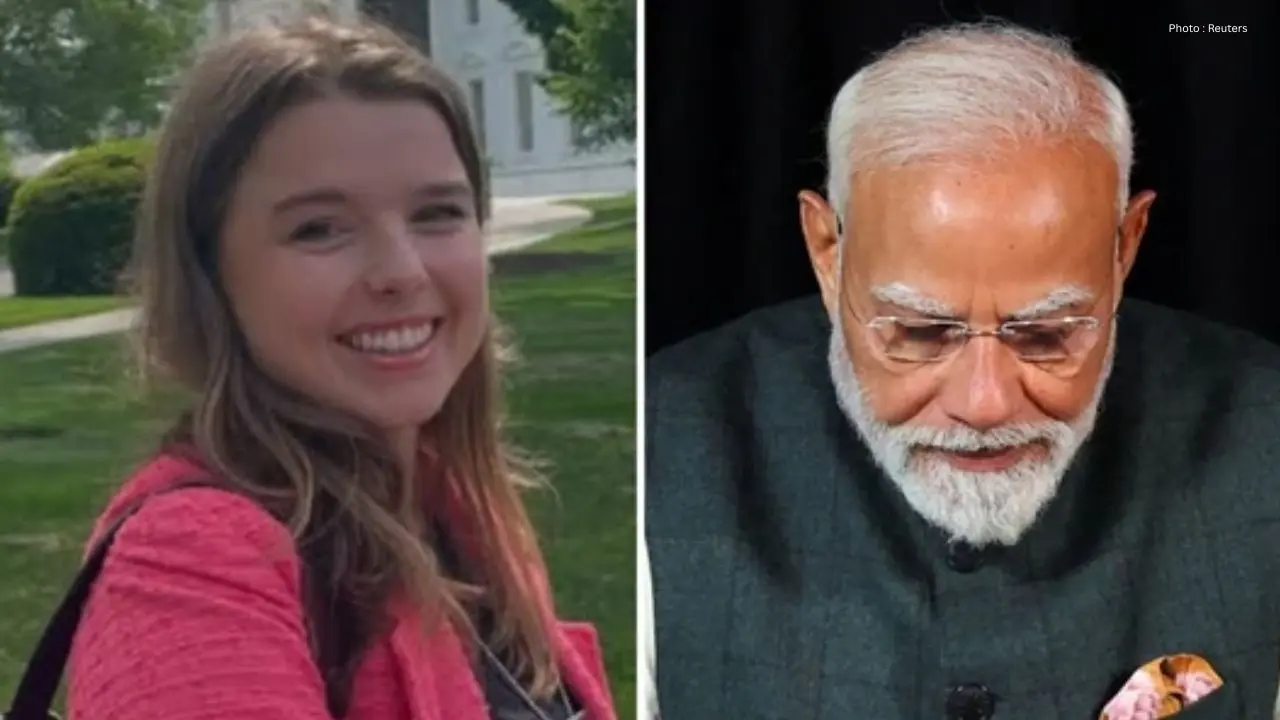
Norwegian journalist Helle Lyng has spoken publicly about the strong backlash she faced after asking Indian Prime Minister Narendra Modi a question about press freedom during his recent visit to Norway. The incident quickly became a major topic online and sparked political debate in both India and Norway. Lyng said she did not expect the situation to become so controversial but defended her decision to ask what she described as an important journalistic question.
The controversy began during a joint media appearance in Oslo involving PM Modi and Norwegian Prime Minister Jonas Gahr Støre. During the event, Helle Lyng questioned Modi about why he does not regularly take questions from the press, referring to Norway as having “the freest press in the world.” Videos of the interaction quickly spread across social media platforms and triggered mixed reactions from political supporters, journalists, and international observers.
After the video went viral, Lyng faced intense criticism online. Some social media users accused her of trying to embarrass India or create unnecessary controversy during an important diplomatic visit. Others defended her, saying journalists have the right to ask direct questions to world leaders, especially about issues related to democracy, media freedom, and human rights. The debate soon expanded into a larger discussion about press freedom and political accountability in India.
Responding to the backlash, Lyng said in interviews that her question was part of her responsibility as a journalist and was not intended as a personal attack on the Indian Prime Minister. She reportedly stated that “maybe it was a tough question for PM Modi,” but added that asking difficult questions is an important part of journalism in democratic societies. She also rejected online accusations that she was acting on behalf of any political group or foreign agenda.
The issue became even more controversial after Lyng claimed that her Facebook and Instagram accounts were suspended following the viral incident. She publicly shared concerns about the timing of the suspensions and said she hoped her accounts would soon be restored. The situation increased international discussion about online harassment, digital moderation, and the pressure journalists can face after high-profile political coverage.
Indian officials later defended the country’s democratic system and media environment. During a separate press briefing, Indian diplomats responded to questions raised by Lyng regarding human rights and press freedom in India. Officials stated that India has a large and diverse media landscape and argued that democratic institutions in the country remain strong. The exchange itself also became widely discussed online, with clips from the briefing shared across news platforms and social media.
The controversy has also created divided public reactions on social media and discussion forums. Some users criticized Modi for avoiding direct media questions, while others argued that the event was only a press briefing and not a formal question-and-answer session. Several online discussions showed strong disagreement over whether Lyng’s approach was appropriate during a diplomatic visit.
Media analysts say the incident reflects growing global debates around press freedom, political communication, and the relationship between world leaders and journalists. The exchange between Helle Lyng and PM Modi has now become an international talking point, with supporters on both sides continuing to argue over the role of journalism, accountability, and political criticism in modern democracies.