Photo: Reuters
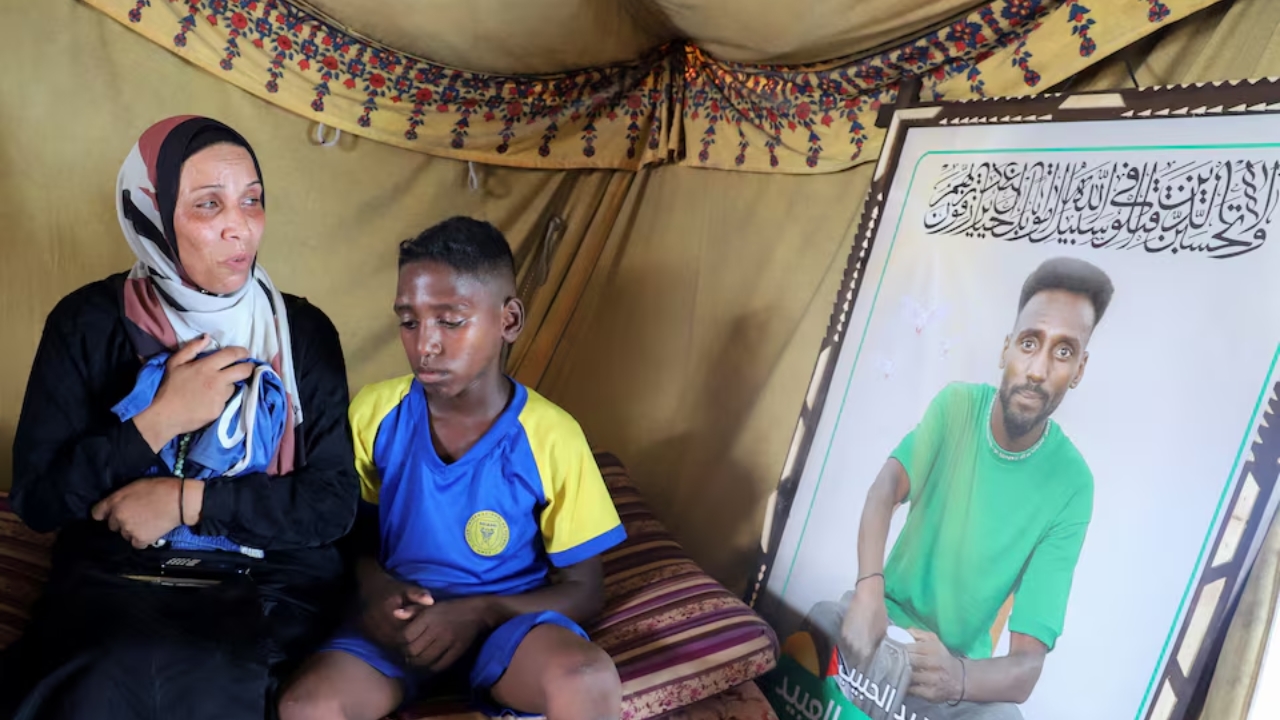
In early August 2025, Palestinians, especially in Gaza, felt a deep and painful loss when beloved football star Suleiman al‑Obeid was killed. He was well known across the region as the “Palestinian Pelé,” a nod to his graceful playing style and skill on the field. At 41, he had built a career that included both local Palestinian clubs and the national team.
Tragically, he died when a tank shell struck a group of people standing in line for food in southern Gaza. He was with other desperate civilians, waiting for humanitarian aid in incredibly high-stress conditions. His death shocked his community and drew public grief from around the world.
A Family Left with One Memory
His widow, Doaa al‑Obeid, now holds tightly to the blue and white soccer shorts with the number 10 that Suleiman wore. It’s the only piece of him she has left. Doaa and their five children now live in a tent surrounded by rubble, their home destroyed by earlier bombing. Amid this devastation around them, she said, “This is the most precious thing he left behind.”
Why He Was Called the “Palestinian Pelé”
Fans and colleagues gave him that nickname not just for his talent, but for how he played. He was praised for his speed, scoring ability, and grace on the field—some even compared him to Thierry Henry. A local barber described him as a “gazelle,” easy to watch and hard to catch, while many fondly called him “Captain Suleiman al‑Obeid.”
His Remarkable Football Journey
Early Years: Born in Gaza City in 1984, he began his football journey with Khadamat al-Shati. He later played for a team in the West Bank, called Markaz Shabab al-Am’ari.
National Team: He debuted in 2007 for the Palestine national team, earning 24 caps and scoring two goals. One of these was a stunning scissor-kick goal against Yemen in 2010—now legendary.
Local Star: He played for clubs like Gaza Sport and became a top goal scorer in local leagues, with over 100 goals in his career. More than just a player, he became a symbol of hope, training and inspiring others even amid conflict.
A Disturbing Loss in a Time of War
- His death happened in a Gaza already weakened by warfare, hunger, and destruction. The Palestine Football Association reported these heartbreaking numbers:
- 662 sports-related figures (including athletes and officials) have lost their lives since October 2023.
- That includes 421 footballers, of which 103 were children.
- More than 288 sports venues—such as stadiums and gyms—have been destroyed.
- Suleiman’s passing is not just a sporting loss; it highlights how deeply war affects community hopes and unity.
A Global Call for Clarity
Liverpool star Mohamed Salah responded strongly to how the football community paid tribute. UEFA had issued a brief tribute calling Suleiman “a symbol of hope,” but did not say how or why he died.
Salah took to social media and asked directly: “Can you tell us how he died, where, and why?” His question brought greater attention to the tragedy and raised urgent demands for honesty and accountability.
UEFA’s president later acknowledged Suleiman’s impact, especially on young Gaza players, but the lack of detail about his death left many, including family and fans, feeling that the tribute was not enough.
Remembering a Life of Courage
- People in Gaza and beyond will remember Suleiman not just for how he died, but for how he lived:
- He continued to train every day—even when bombs were falling.
- He organized games for neighborhood children, offering a break from fear.
- He represented hope, unity, and pride in a place filled with hardship.
- A barber named Hassan al‑Balawi said children proudly called him “Henry or Pelé of Palestine.”
Making Sense of It All
1. A Human Face to Conflict
Suleiman’s death reminds us of the personal cost of war—not just buildings, but lives, dreams, and futures.
2. Pride and Identity
In a place facing constant hardship, he became more than a player. He was identity, pride, and promise—something young fans could look up to.
3. The Cost to Sports
When sports facilities vanish and athletes die, communities lose not only entertainment, but places to connect, compete, and grow.
4. The Power of Global Attention
When public figures like Salah speak out, they bring the human story behind the headlines to a global stage—pressing for truth, justice, and recognition.
Who was lost?
Suleiman al‑Obeid, “Palestinian Pelé,” a football legend in Gaza.
What happened?
He was killed by a tank shell while waiting for food aid.
Why is it so painful?
He symbolized courage and pride, playing even in times of war. His loss is deeply felt.
What now?
Remembrance continues. His family mourns, while calls for truth and justice grow.
Suleiman didn’t just play soccer—he lifted spirits. Even in the darkest times, he brought moments of beauty and community. His story shows us that war doesn’t just take lives; it erases joy, hope, and the simplest dreams we share.