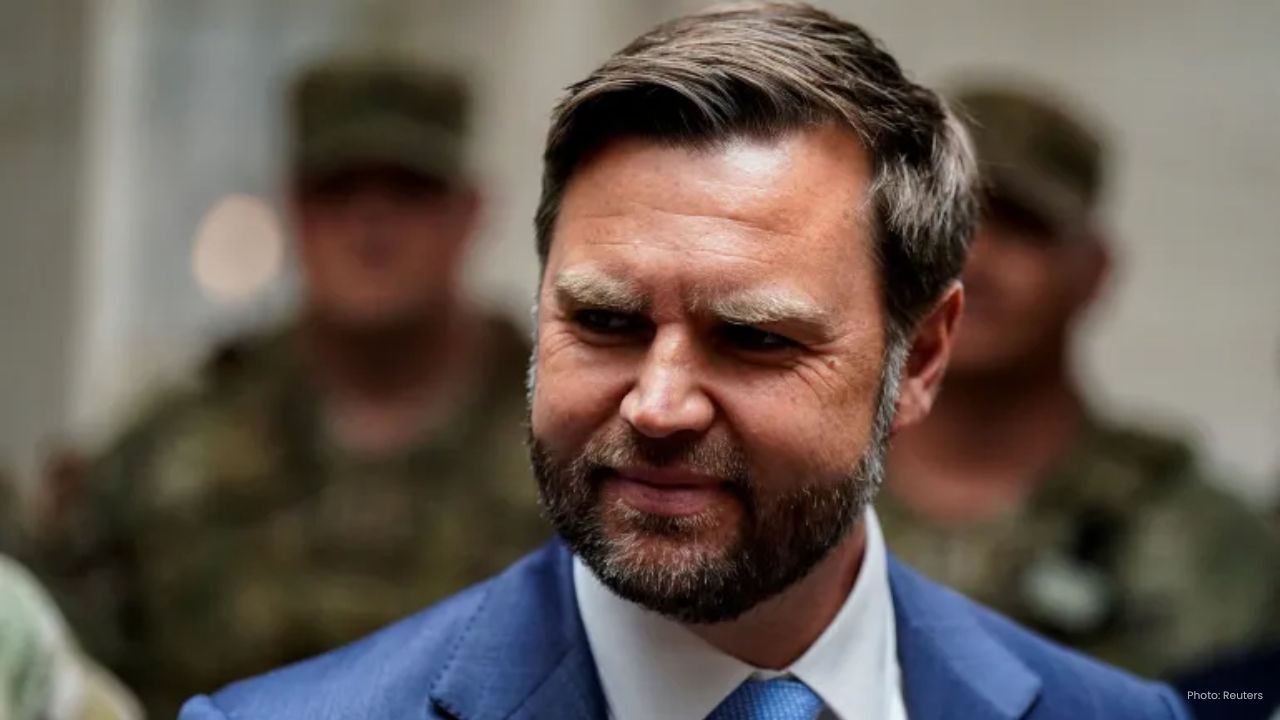
United States Vice President JD Vance has said that European nations should take the “lion’s share” of responsibility for securing Ukraine if a deal is reached to end Russia’s ongoing war in the country. Vance emphasized that the United States should not carry the full burden of protecting Kyiv or guaranteeing Ukraine’s post-war security.
In a detailed interview, Vance said that while the US could be helpful if needed to halt the war and prevent further deaths, European countries must take the leading role in ensuring long-term security for Ukraine.
“I think that we should be helpful if it’s necessary to stop the war and to stop the killing. But we should expect, and the president certainly expects, Europe to play the leading role here,” Vance said, underscoring the responsibility Europe would bear in any post-war agreement.
Vance also clarified that the United States is open to discussions about security guarantees for Ukraine, but Washington will not make any binding commitments until there is a clear understanding of what measures are necessary to stop the war.
Trump Rules Out American Troops in Ukraine
Vance’s comments came shortly after US President Donald Trump stated that American troops would not be deployed to Ukraine under any circumstances. However, Trump indicated that Washington could provide air support to assist Ukrainian forces if needed.
Trump has suggested that European countries should act as the “first line of defense” in the event of a post-war security arrangement, while the US would play a supportive role rather than taking on the main burden.
At the same time, Trump ruled out NATO membership for Ukraine. Nevertheless, he did not reject the idea of offering Ukraine security guarantees that resemble NATO’s collective defense system. In recent discussions, NATO Secretary-General Mark Rutte and Trump’s special envoy, Steve Witkoff, have explored possible agreements to provide Kyiv with protection without granting full NATO membership.
NATO and Post-War Security Guarantees
Under Article 5 of the North Atlantic Treaty, an armed attack against one NATO member is considered an attack against all member nations. Ukraine is not a NATO member, but security discussions aim to offer the country similar protection through other agreements or guarantees.
Trump has suggested that Russian President Vladimir Putin may accept the deployment of European peacekeepers in Ukraine. This could allow European forces to help maintain stability and protect civilians without the direct involvement of American troops.
However, Moscow has repeatedly rejected the presence of NATO forces along its borders. Russian Foreign Minister Sergey Lavrov emphasized that Russia must be included in any discussions about Ukraine’s security. He warned that excluding Moscow from negotiations would lead to failure and could undermine the possibility of a lasting agreement.
Progress in Peace Negotiations
Despite the many challenges and disagreements, Vice President Vance said the Trump administration has made “great progress” in advancing talks to end the conflict. According to Vance, both Russia and Ukraine are engaged in discussions about what each side would need to stop the fighting, prevent further casualties, and establish long-term security measures.
“You can never say with certainty what the outcome in this situation is going to be,” Vance noted. “But we now have the Russians talking to the Ukrainians; they’re talking details about what would be necessary on each side to stop the fighting, to stop the killing.”
These discussions represent the most concrete steps yet in diplomatic efforts to bring the war, which has lasted more than three and a half years, closer to an end.
The Stakes for Europe
The United States insists that Europe should carry most of the responsibility for post-war security in Ukraine. Vance stressed that while the US is willing to provide support, the primary role should be European-led.
This emphasis reflects the US desire to reduce its direct military obligations while still playing a constructive role in ending the conflict. European nations would likely be expected to provide troops, peacekeeping forces, and long-term security guarantees in the event of a deal.
The stakes are high for European countries, which must balance their commitments to Ukraine with their broader strategic and security concerns. Ensuring that Ukraine remains secure after the war would require careful coordination, resources, and political will.
Russia’s Role and Red Lines
Russia has consistently maintained that it must be included in any negotiation on security guarantees. Lavrov’s warning highlights a fundamental challenge in reaching an agreement: any post-war arrangement must consider Russia’s security concerns or risk failure.
Excluding Moscow from discussions could undermine efforts to prevent renewed fighting. At the same time, Ukraine and its European supporters insist on guarantees that will prevent future aggression and ensure the country’s sovereignty.
The complexity of negotiations shows that a durable peace in Ukraine requires cooperation among multiple parties, including the US, European nations, Ukraine, and Russia.
Possible Security Arrangements
Experts and officials have suggested several potential security arrangements for Ukraine. These include:
-
Deployment of European peacekeeping forces to deter future attacks
-
Security guarantees from individual European countries rather than full NATO membership
-
Limited US assistance through air support or logistics without permanent troop deployment
-
Multilateral agreements that involve both Ukraine and Russia to create a framework for long-term stability
While the details are still being negotiated, any agreement would need to address both the immediate cessation of hostilities and the long-term protection of Ukraine’s borders and sovereignty.
Challenges Ahead
Despite the progress, several obstacles remain. The US, Europe, and Russia have different expectations, priorities, and red lines. European countries must weigh their willingness to commit troops and resources, while the US aims to avoid becoming overextended.
Russia’s insistence on being included in negotiations adds another layer of complexity, particularly given Moscow’s previous rejection of NATO forces along its border. Meanwhile, Ukraine continues to face threats from ongoing military operations and the humanitarian impact of the war.
Finding a solution that satisfies all sides will require careful diplomacy, compromise, and a willingness to address the security concerns of both Ukraine and Russia.
Public and International Reactions
Many international observers and governments are closely watching developments. The emphasis on European leadership in Ukraine’s post-war security highlights the global implications of the conflict and the role of international cooperation in maintaining peace.
Within the United States, officials stress that support for Ukraine remains important but aim to ensure that the burden of security does not fall entirely on American forces. In Europe, countries are assessing their capacity to provide peacekeeping and defense assistance if a post-war agreement is reached.
US Vice President JD Vance has said that European countries should take the lead in guaranteeing Ukraine’s security after the war, while the US provides limited support. President Trump has ruled out American troops in Ukraine, although air assistance is possible. Russia insists on inclusion in security negotiations, making diplomatic talks complex. Peace discussions are ongoing, with both sides considering what is needed to stop fighting, protect civilians, and maintain long-term stability.