The Dubai Electricity and Water Authority (DEWA) reinforces its role as a premier global player in energy and water services. Over its illustrious history, DEWA has evolved from a local entity to an international exemplar of sustainability, reliability, and technological advancement.
Founded on January 1, 1992, through a decree by the late Sheikh Maktoum bin Rashid Al Maktoum, DEWA emerged from the consolidation of Dubai Electricity Company and Dubai Water Department, both established in 1959 under Sheikh Rashid bin Saeed Al Maktoum’s leadership. This merger laid the groundwork for a cohesive utility model heavily oriented towards strategic planning, robust governance, and infrastructure poised for the future.
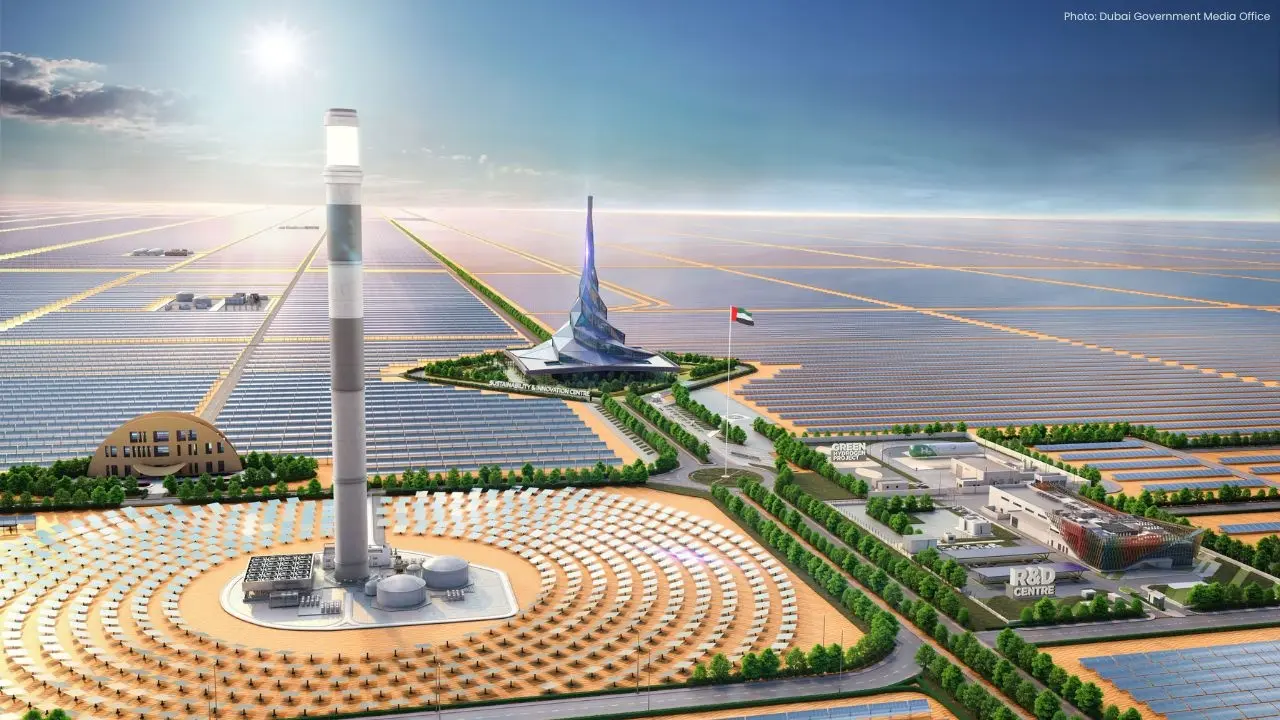
Under the visionary leadership of HH Sheikh Mohammed bin Rashid Al Maktoum, DEWA is adeptly scaling its energy and water systems to cater to Dubai's rapid urbanization and economic advancement. The authority proudly manages state-of-the-art power generation and desalination plants, achieving remarkable milestones, including the world’s tallest concentrated solar power tower (over 263 metres), the largest solar energy storage capacity at the Mohammed bin Rashid Al Maktoum Solar Park Phase IV, and the largest single-site natural gas power plant in the Jebel Ali complex.
Currently, DEWA’s power generation capacity stands at about 18 gigawatts (GW), with aspirations to elevate this to 23GW by 2030. This growth strategy is essential for addressing increasing energy demands while fostering sustainable economic progress and enhancing Dubai’s standing in the global market.
A significant focus of DEWA’s strategy revolves around investment in clean and renewable energy sources. The Mohammed bin Rashid Al Maktoum Solar Park is among the largest standalone solar parks worldwide, currently generating 3,860MW. It incorporates cutting-edge technologies and artificial intelligence to optimize efficiency, encompassing PV panel cleaning, energy forecasting, and smoothly integrating storage systems into the grid.
To tackle renewable energy fluctuations, DEWA employs sophisticated storage solutions, including battery technologies, pumped-storage hydroelectric systems, molten salt thermal storage for CSP projects, and exploration of green hydrogen. The Hatta Pumped-Storage Hydroelectric Power Plant also aligns with this holistic strategy.
These initiatives align with the Dubai Clean Energy Strategy 2050, which aspires towards a 100% clean energy mix and aims for net zero emissions by 2050. Presently, clean energy constitutes 21% of Dubai’s energy portfolio, with objectives to amplify this to over 36% by 2030, as solar output exceeds 8,000MW.
In summary, DEWA's evolution signifies a transition from mere infrastructure scaling to a contemporary, innovation-centric utility model emphasizing sustainability, efficiency, and long-range climate objectives, ensuring Dubai remains at the forefront of clean energy and enhanced quality of life.