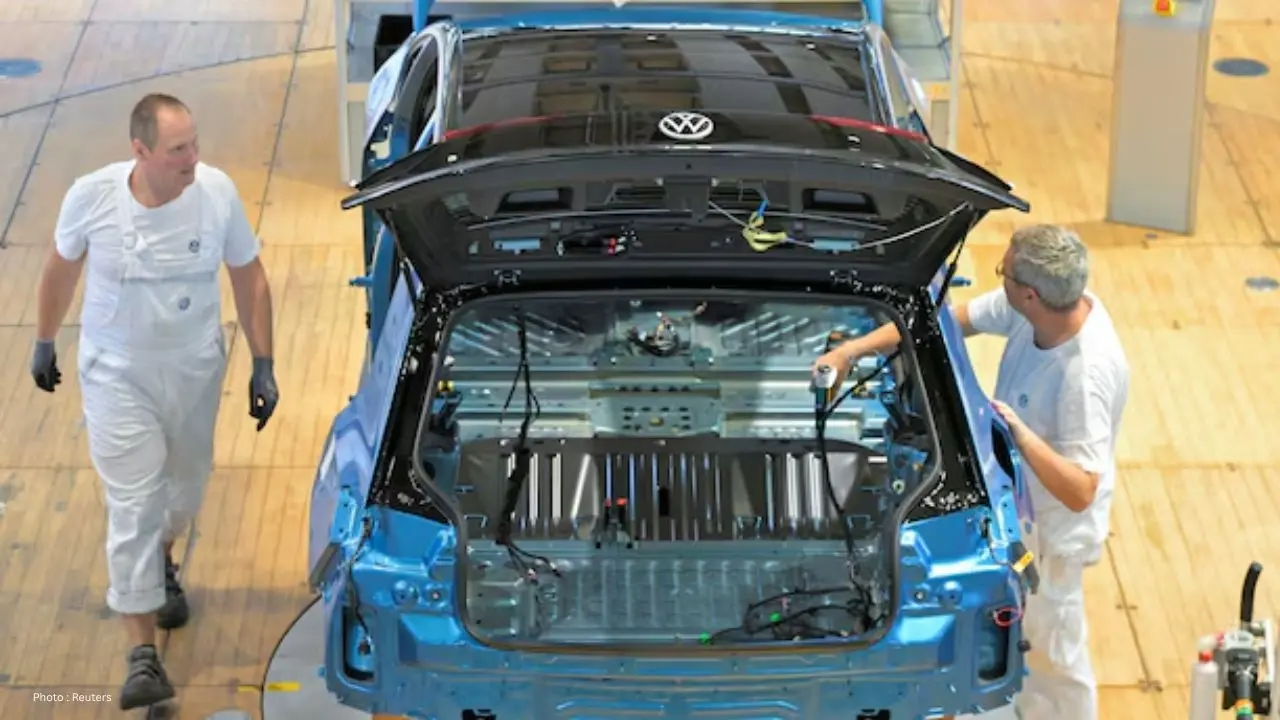
Germany’s powerful automotive industry association has warned that another 125,000 jobs could disappear by 2035 as the country’s car sector struggles with rising competition, electric vehicle transition costs and weakening global demand. The warning has increased concerns about the future of one of Germany’s most important industries and the broader impact on Europe’s largest economy.
The warning came from the German Association of the Automotive Industry, known as the VDA, which said the industry is facing historic changes as manufacturers shift away from traditional gasoline and diesel vehicles toward electric transportation. Industry leaders say the transformation is happening at a difficult time, with high energy prices, economic uncertainty and strong competition from Chinese electric vehicle companies putting additional pressure on German manufacturers.
Germany’s automotive sector directly and indirectly supports hundreds of thousands of jobs and plays a major role in the country’s economy. However, experts say electric vehicles generally require fewer parts and less assembly work compared to traditional combustion-engine cars, reducing demand for many manufacturing jobs over time.
According to the industry group, many suppliers and smaller automotive companies could face the biggest risks during the transition. Businesses that specialize in engine components, fuel systems and transmission technologies are expected to be especially vulnerable as electric vehicle production expands across Europe.
The VDA warned that without stronger government support and better industrial policies, Germany could lose its position as one of the world’s leading automotive manufacturing centers. Industry representatives have called for lower electricity prices, faster infrastructure development and greater investment in battery production and digital technology.
German automakers including Volkswagen, BMW and Mercedes-Benz are already investing billions of euros into electric vehicle projects and new production facilities. Despite these investments, companies continue facing pressure from slowing demand in Europe and increasing competition from lower-cost Chinese electric vehicle brands.
Several major manufacturers have already announced restructuring plans and workforce reductions in recent years. Analysts say automation, artificial intelligence and digital manufacturing systems are also reducing the need for traditional factory labor across the industry.
The warning about future job losses comes as Germany’s economy continues facing broader industrial challenges. Manufacturing activity has slowed in several sectors because of weaker exports, global trade tensions and higher operating costs linked to energy prices and inflation.
Labour unions reacted cautiously to the industry report, warning that workers should not carry the full burden of the transition toward electric vehicles. Union leaders have demanded stronger job protection measures, retraining programs and long-term investment strategies to help workers adapt to changing technologies.
Political leaders in Germany are also under pressure to protect industrial employment while meeting climate goals aimed at reducing carbon emissions. The European Union plans to phase out the sale of new combustion-engine vehicles by 2035, a policy that is accelerating the transition toward electric transportation across the continent.
Industry analysts say Germany’s automotive future will depend heavily on how quickly companies can adapt to new technologies while remaining competitive against rapidly growing Chinese and American rivals. Experts also warn that delays in charging infrastructure, battery production and digital innovation could further weaken Europe’s position in the global car market.
Despite the concerns, the VDA said Germany still has strong engineering expertise, advanced manufacturing capabilities and globally recognized automotive brands. Industry leaders believe the country can remain competitive if governments and businesses work together to manage the transition more effectively over the next decade.