Cuba has strongly criticized a new round of economic sanctions imposed by United States President Donald Trump, describing the measures as “collective punishment” against the Cuban people. The sanctions were announced through a new executive order targeting major sectors of Cuba’s economy as tensions between Washington and Havana continue to grow.
The Trump administration said the new sanctions are aimed at increasing pressure on the Cuban government over issues related to national security, human rights, corruption, and foreign policy concerns. According to the White House, the sanctions target individuals, businesses, and organizations linked to important sectors of Cuba’s economy, including energy, defense, mining, financial services, and security operations.
Cuban Foreign Minister Bruno Rodríguez Parrilla publicly rejected the sanctions and accused the United States of attempting to economically punish ordinary citizens rather than political leaders. In statements posted on social media and repeated during public events in Havana, Rodríguez called the measures “illegal,” “abusive,” and a violation of international law. He said the restrictions would worsen economic hardship already facing the Cuban population.
The new sanctions come at a difficult time for Cuba’s economy, which is already struggling with fuel shortages, inflation, food supply problems, blackouts, and declining tourism revenues. Analysts say the island has faced severe economic pressure in recent months following tighter US restrictions on oil shipments and financial transactions linked to Cuba.
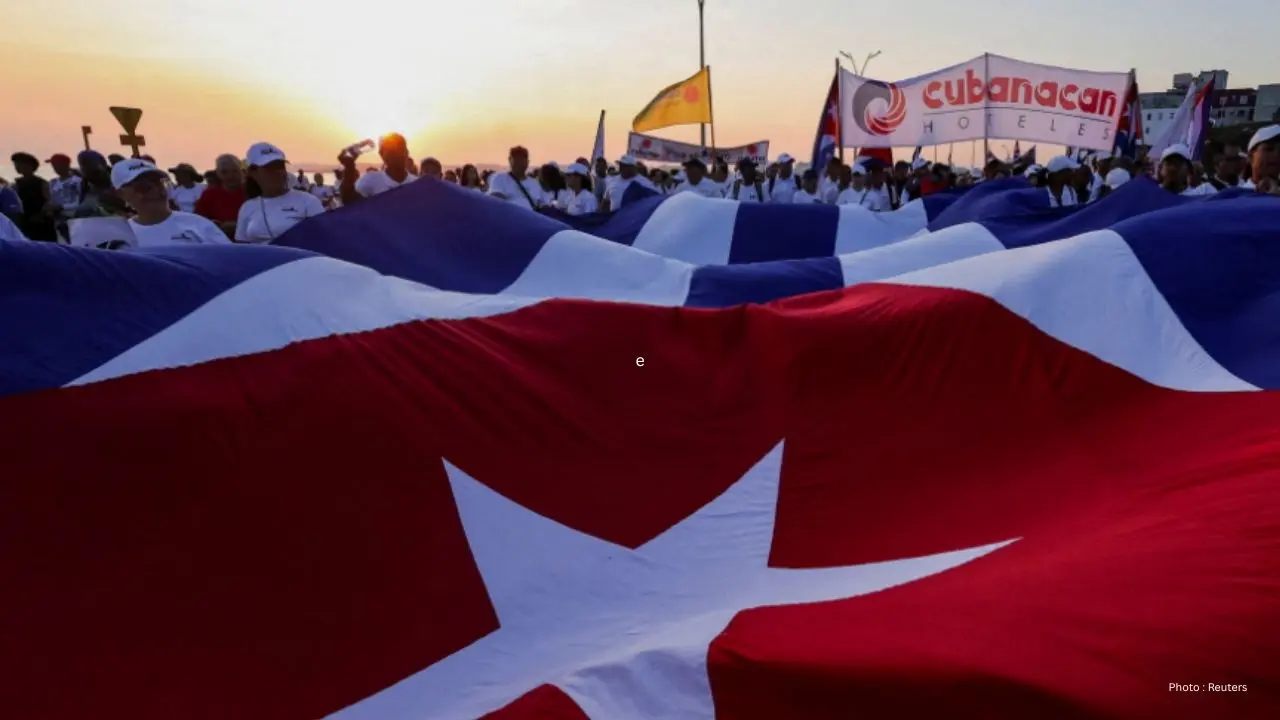
Large crowds gathered in Havana during May Day events, where Cuban leaders used the occasion to criticize Washington’s actions. Cuban President Miguel Díaz-Canel and former leader Raúl Castro led marches near the US embassy under the slogan “Defend the Homeland.” Government officials accused the United States of trying to destabilize Cuba politically and economically.
President Trump defended the sanctions and said the United States would continue applying maximum pressure on the Cuban government. American officials argue that Cuba supports hostile international actors and has failed to improve political freedoms or democratic reforms. The executive order also allows penalties against foreign companies and financial institutions that continue doing business with sanctioned Cuban entities.
Experts believe the latest sanctions could have major international effects because they extend beyond American companies. Businesses and banks outside the United States may also face restrictions if they are found supporting targeted Cuban sectors. Analysts warned that this could discourage foreign investment and make it even harder for Cuba to import essential goods and fuel.
Relations between the United States and Cuba have remained tense for decades since the communist revolution led by Fidel Castro in 1959. Although there were periods of diplomatic improvement under previous US administrations, Trump’s government has restored and expanded several restrictions since returning to office.
The sanctions also arrive despite recent diplomatic contacts between American and Cuban officials earlier this year. Reports suggested both sides held discussions in April regarding migration, economic conditions, and regional stability. However, the latest actions now appear to have weakened hopes for improved relations between the two countries.
Political observers say the growing confrontation between Washington and Havana could further increase economic difficulties inside Cuba while also creating fresh diplomatic tensions across Latin America. Human rights groups and international organizations are expected to continue closely monitoring the impact of the sanctions on Cuba’s economy and daily life for ordinary citizens.