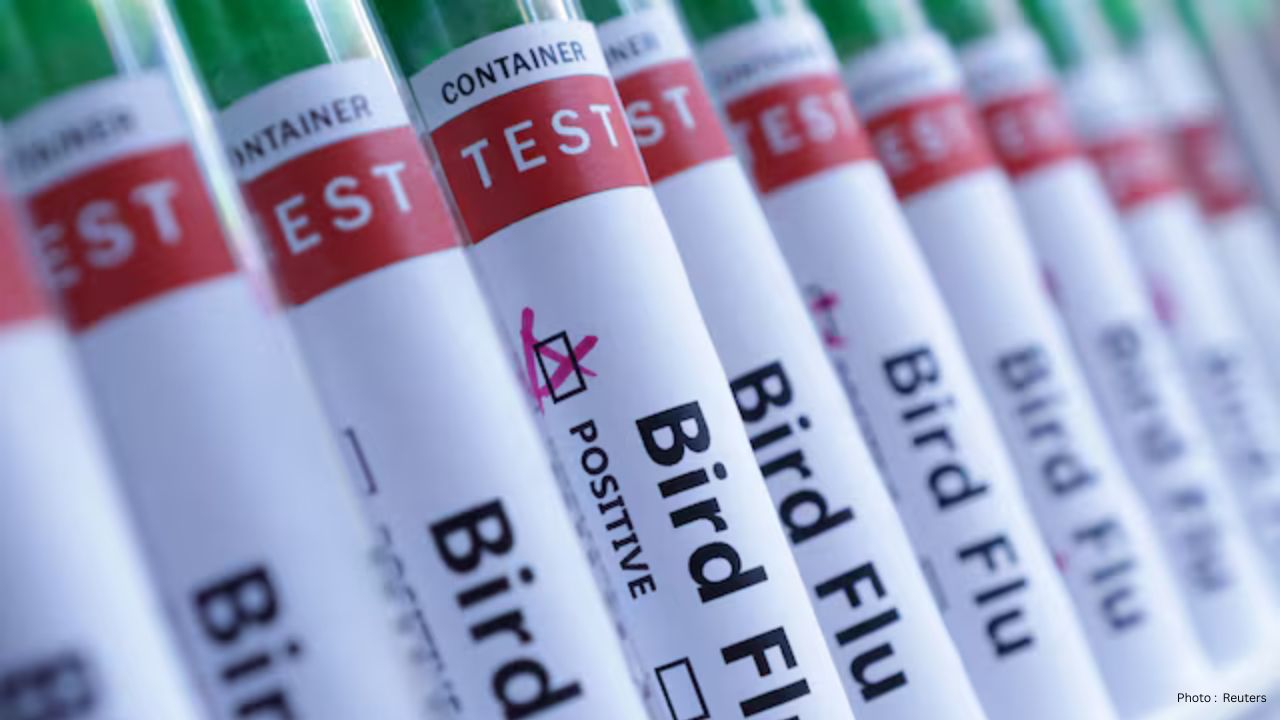
The Australian Agriculture Department reported on Friday that researchers are investigating potential signs of the H5 bird flu strain on Heard Island, a remote sub-Antarctic island in the Southern Ocean. This follows an alarming rise in elephant seal fatalities observed by scientists in the region.
While the virus has not been officially confirmed, the symptoms observed among the wildlife closely resemble those seen in other infected animals with the H5 strain. "At this stage, we cannot confirm the detection," stated the Agriculture Department. "It’s not unexpected to find signs of H5 bird flu in wildlife on Heard Island."
Findings by Researchers
Heard Island is positioned over 4,000 kilometers southwest of Perth and approximately 1,700 kilometers north of Antarctica. Researchers have noted a worrying number of deceased elephant seals, along with some penguin and seabird deaths, though seal mortality rates are significantly higher.
Animal samples have been collected and testing will commence once the scientific team returns to Australia by mid-November, which will help ascertain if the H5 bird flu strain is present.
Understanding H5 Bird Flu
The H5 bird flu strain is notably infectious among avian species, with sporadic cases reported in mammals, including humans. The virus has proliferated globally in recent years, affecting wild birds, poultry, and even dairy cows in the U.S., with a few human cases documented among those handling contaminated animals.
Australia remains free of confirmed H5N1 infections, attributed to its geographical isolation and its location away from the main migratory pathways of certain wild birds, such as geese, famed for spreading the virus.
Nevertheless, the virus has been detected in nearby areas. It was first recognized in Indonesia in 2022 and subsequently found in Antarctica in 2023. The French sub-Antarctic islands of Kerguelen and Crozet, located under 450 kilometers from Heard Island, have reported H5 virus cases.
Government Actions
Officials assured that even if H5 is identified on Heard Island, it is unlikely to pose significant risks to mainland Australia. The island's remote location and absence of major bird migration routes curtail the disease's potential spread.
"Heard Island is incredibly isolated and lacks a permanent human populace," the Department stated. "Should bird flu be confirmed, the risk to wildlife, livestock, and the community in Australia remains minimal."
Authorities confirmed that the Australian Antarctic Program is vigilantly overseeing the issue and coordinating with health and environmental experts to implement prompt testing and reporting protocols.
Past Clusters of Bird Flu in Australia
Last year, different strains of bird flu surfaced on several poultry farms in the country. However, none were linked to the H5N1 strain, which is recognized for its severity. Those earlier instances were swiftly managed through farm quarantines and the culling of affected birds.
Looking Ahead
Once the research team returns, they will dispatch the collected samples to specialized laboratories for analysis, expecting results by mid-November. These outcomes will determine whether the elephant seals and seabirds’ deaths are attributed to H5N1 or an alternate bird flu strain.
Experts emphasize the importance of monitoring wildlife in such isolated locations since bird flu viruses can mutate and escalate rapidly within animal populations. Tracking these illnesses helps avert future outbreaks that may encroach upon more populated regions.
The Agriculture Department plans to release more information following the test results. In the meantime, they are proceeding with caution and enhancing surveillance efforts in the surrounding areas.
Heard Island and McDonald Islands are recognized as some of the world's most secluded environments, renowned for harsh weather conditions and diverse wildlife, including elephant seals, penguins, and seabirds. These territories are part of Australia's domain and a UNESCO World Heritage site, visited infrequently by scientific teams.
Global Context of Bird Flu
The international spread of the H5N1 virus has emerged as a pressing concern for health and environmental agencies. Since 2021, it has led to substantial losses in poultry throughout Europe, North America, and Asia, necessitating the culling of millions of birds to contain its spread. Scientists are intensely studying the virus to mitigate potential human risks.