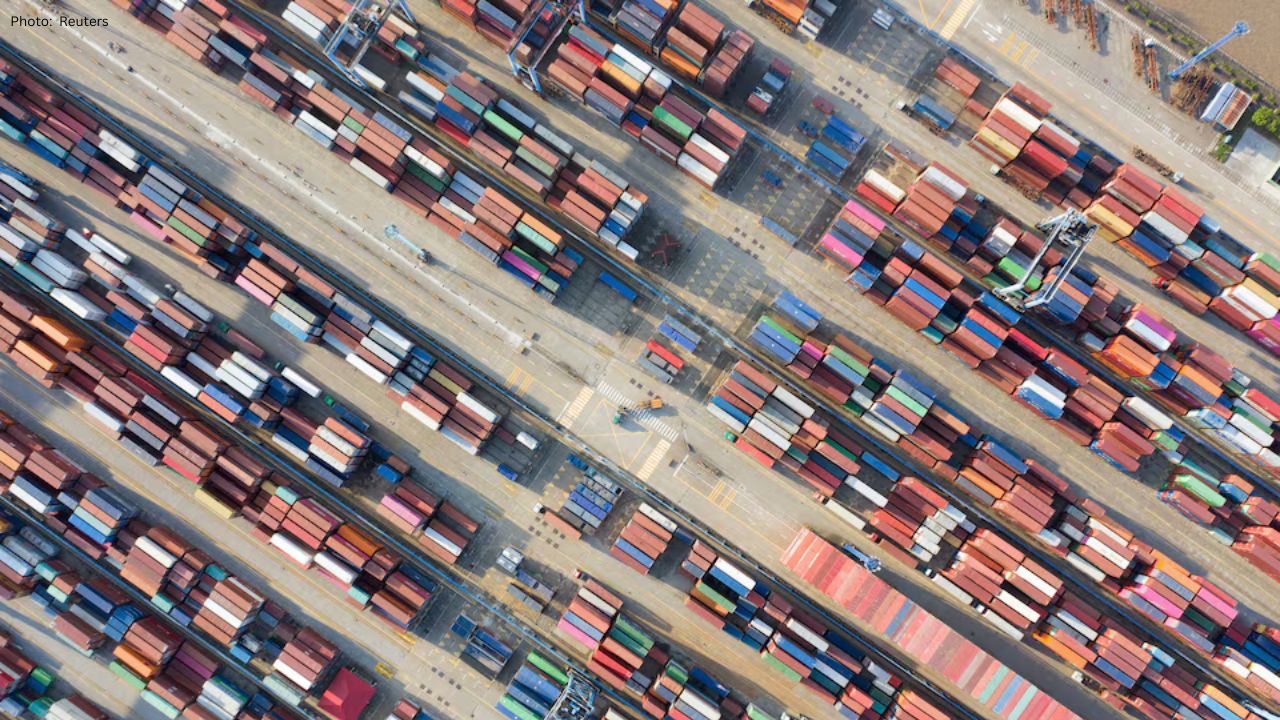
China has unveiled its intention to bolster both exports and imports by 2026, contributing to a broader initiative for more sustainable and balanced international trade. This announcement was delivered by a senior economic official at a significant policy conference, as reported by state media.
Han Wenxiu, the deputy director of China’s Central Financial and Economic Affairs Commission, emphasized the country's commitment to continuing the opening of its economy and fostering partnerships with global entities. He highlighted that the aim is to cultivate trade growth that is mutually beneficial rather than excessively reliant on exports.
Currently, China holds one of the largest trade surpluses globally, exceeding a trillion dollars. This surplus points to the robustness of its manufacturing capabilities but has also raised apprehensions among key trading nations. Agencies like the International Monetary Fund have cautioned that the country's export-centric growth strategy might not sustain itself over time and could escalate global trade tensions.
In an effort to mitigate these concerns, Han reiterated that China will not solely focus on enhancing exports but will also boost its imports. He mentioned that service exports—including tourism, finance, and digital services—will receive particular attention and support in 2026.
Additionally, the official laid out strategies to stimulate domestic consumption, which include initiatives to increase household earnings, raise minimum pensions, and eliminate what he termed as “unreasonable” consumer spending restrictions. This enhancement of consumer demand is viewed as a vital method to lessen China’s reliance on manufacturing and exports as the primary drivers of economic progression.
Han warned against detrimental price wars among enterprises, a phenomenon often referred to in China as “involution.” Such price wars arise when businesses compete excessively through price cuts, which can detrimentally affect profits and weaken the economy overall.
The IMF had previously urged China to embrace challenging yet vital adjustments by curbing export growth and promoting increased domestic spending. According to IMF Managing Director Kristalina Georgieva, China's current size necessitates a shift away from dependency on exports for future economic growth, as this could exacerbate trade conflicts with other nations.
Economists have long insisted that China's disparity between high output and low consumption may jeopardize its economy over time. While a growth model driven by exports can yield swift outcomes, it may fail to provide a stable and enduring economic framework.
On Thursday, Chinese leaders confirmed that the government will adopt a “proactive” fiscal policy in 2026 aimed at bolstering both consumption and investment. Analysts anticipate that China will target economic growth of approximately 5% in the coming year.
From an editorial viewpoint, China’s statement indicates a notable recognition of global apprehensions and domestic challenges. The effectiveness of these plans in initiating genuine change will hinge on Beijing's dedication to reforms that prioritize consumers rather than just factories.