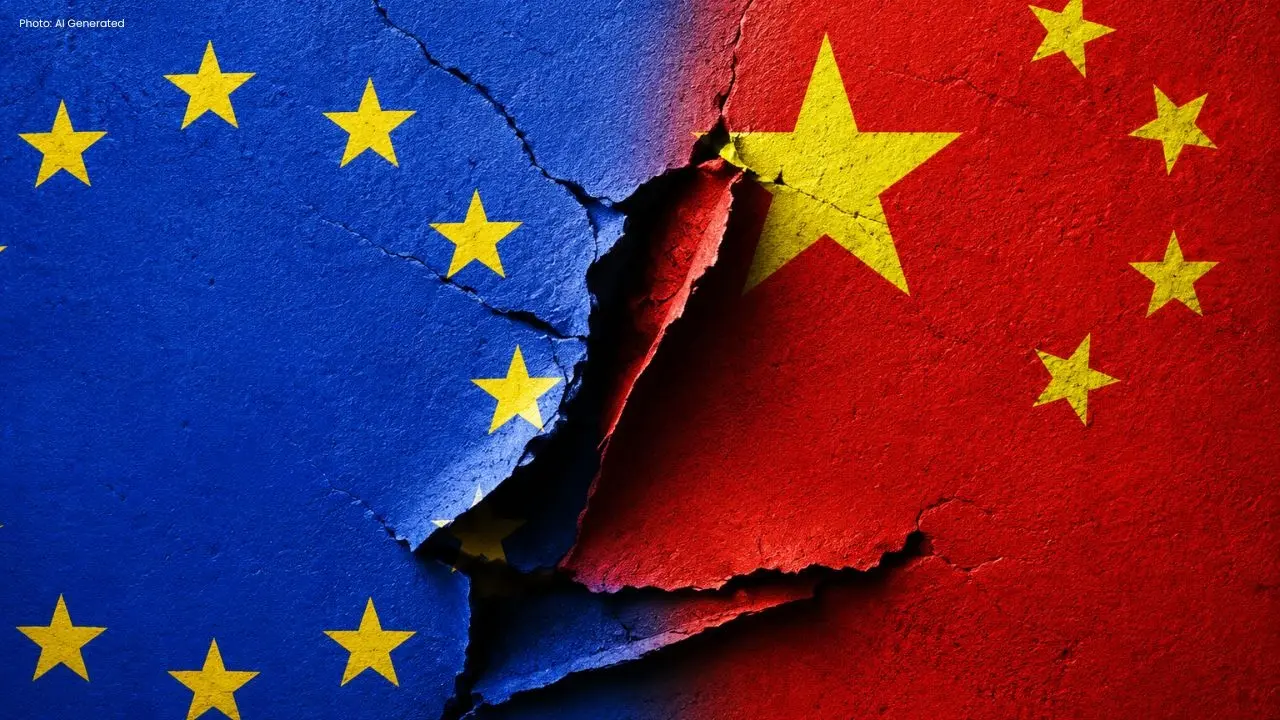
The China Association of Automobile Manufacturers has voiced strong opposition to the European Union's proposed Industrial Accelerator Act, highlighting rising tensions with Brussels regarding trade and industrial norms. The association raised significant concerns, stating that the legislation appears to unfairly target foreign businesses in the electric vehicle and battery sectors.
In a statement from Beijing, the association accused the European Union of enacting discriminatory rules that could adversely affect Chinese automakers and battery producers aiming to penetrate European markets. Officials cautioned that such measures may jeopardize the long-standing industrial collaboration between China and Europe.
The Industrial Accelerator Act was put forth by the European Commission earlier this year, aiming to enhance Europe’s clean energy framework and bolster its manufacturing capabilities. The aim is to elevate domestic output in crucial sectors like electric vehicles, semiconductors, and battery production.
Nevertheless, leaders within China's auto industry contend that certain elements of the proposal disproportionately benefit European firms while imposing additional limitations on foreign competitors. The association raised alarms that these provisions could hinder international competition and disturb global supply chains tied to electric vehicle manufacturing.
As one of the largest producers and exporters of electric vehicles and batteries globally, China’s EV manufacturers have swiftly solidified their presence in foreign markets, notably in Europe, where the demand for cost-effective electric vehicles is on the rise. This growing dominance has sparked increasing unease among European officials regarding competition and reliance on foreign technologies.
This latest contention symbolizes the broader economic frictions between China and the European Union, centering on trade practices, subsidies, and the accessibility of markets. Recently, European leaders have advocated for more robust protections for local industries, emphasizing concern that heavily subsidized Chinese imports could threaten domestic manufacturers.
In spite of the opposition from Beijing, the Industrial Accelerator Act is still under consideration within the European Union and has not yet been officially ratified. Experts suggest that negotiations will likely persist as both parties work to reconcile economic collaboration with the intensifying strategic rivalry in the global clean energy domain.