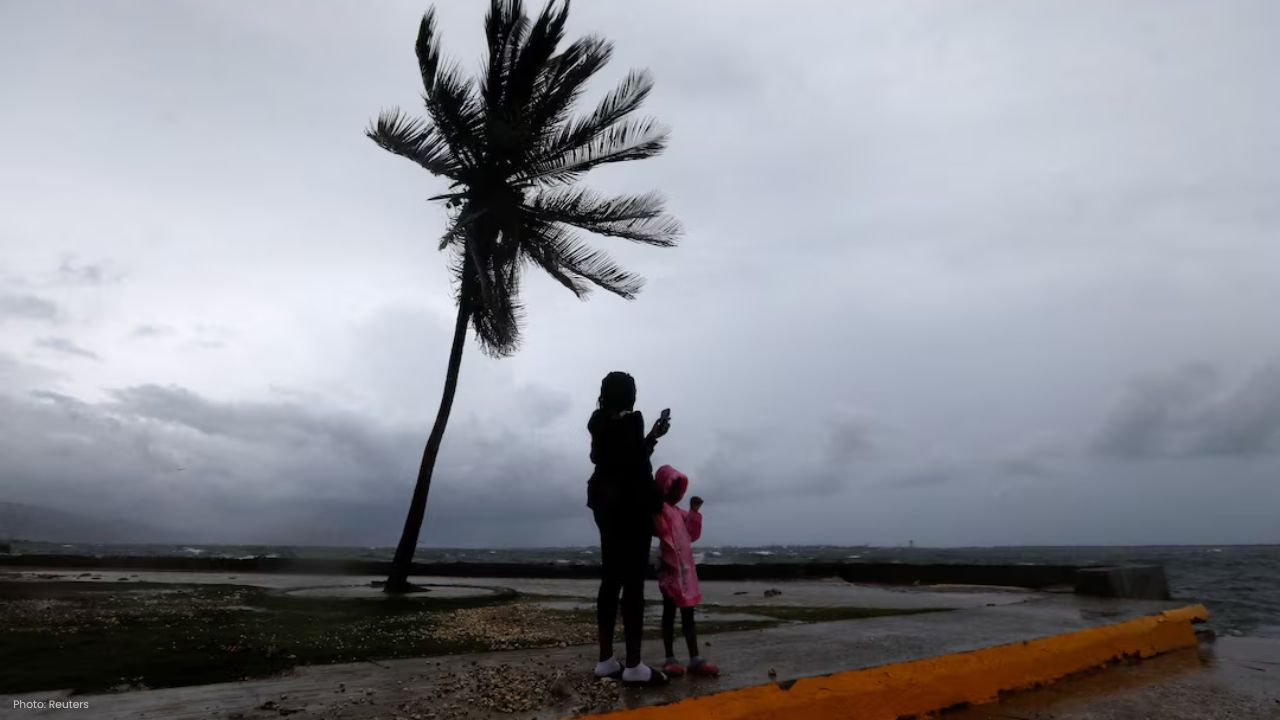
Heavy floodwaters swept across southwestern Jamaica on Tuesday as Hurricane Melissa made landfall as a catastrophic Category 5 storm, one of the strongest ever recorded in the Atlantic. Torrential rain, destructive winds, and massive storm surges battered the island, leaving widespread devastation in their wake.
Melissa came ashore near New Hope with sustained winds of about 295 km/h, flattening homes, tearing off roofs, and sending boulders tumbling onto major roads. Officials warned that assessing the damage could take days due to blocked routes and downed communication lines.
“There is no infrastructure in the region that can withstand a Category 5,” said Prime Minister Andrew Holness. “The question now is the speed of recovery. That’s the challenge.”
Communities Trapped by Floodwaters
In Black River, several families were trapped inside their homes after rising floodwaters made rescue attempts impossible. Desmond McKenzie, deputy chairman of Jamaica’s Disaster Risk Management Council, said crews were waiting for conditions to improve.
“Roofs were flying off,” he said. “We are hoping and praying that the situation will ease so rescuers can reach those persons.”
Residents described terrifying scenes as the storm passed. One person posted on social media: “I never knew concrete could shake like this. Three windows broken, doors rattling, and it sounds like a freight train outside.”
Large parts of St. Elizabeth Parish were reportedly submerged, with widespread crop and property damage. There were no confirmed deaths initially, though officials warned that it was too early to determine the full extent of losses as the hurricane continued to batter the island.
Historic Strength and Power Outages
Meteorologists said Melissa’s rapid escalation—from a tropical storm to a Category 5 hurricane within days—was driven by unusually warm Caribbean waters. It is the strongest storm to strike Jamaica in 174 years of recordkeeping.
As the hurricane moved northward, its counter-clockwise winds created dangerous surges along Jamaica’s northern coastline. Authorities confirmed that nearly 15,000 people had taken refuge in official shelters, while 540,000 households—about 77 percent of the island—were without electricity.
In Portmore, near Kingston, entire neighborhoods went dark after explosions from electrical transformers. “The noise is relentless,” said one resident. “People are anxious and just trying to hold on until the storm passes.”
Infrastructure and Safety Risks
By Tuesday evening, Melissa’s sustained winds had eased slightly to 205 km/h as it moved north-northeast at 13 km/h into the Caribbean Sea. Its eye was positioned about 80 km east-northeast of Montego Bay and 260 km southwest of Guantánamo, Cuba.
In Kingston, emergency officials warned residents to avoid flooded areas where crocodiles displaced from wetlands had been sighted. In Spanish Town, the historic Flat Bridge, dating back to the 1700s, was completely submerged.
Rescue teams equipped with boats and helicopters were ready to begin operations as soon as wind conditions improved.
The storm has been blamed for seven deaths across the Caribbean—three in Jamaica, three in Haiti, and one in the Dominican Republic—with another person reported missing.
Tourists and Locals Shelter in Place
On the island’s west coast, in Negril, tourists stranded by flight cancellations sheltered inside hotel conference rooms. “The storm is nothing like anything I’ve experienced,” said one visitor. “The winds just take your breath away.”
Authorities expect to reopen airports by Thursday, depending on damage assessments and power restoration.
Cuba Prepares for Landfall
Forecasters warned that Hurricane Melissa would hit eastern Cuba late Tuesday or early Wednesday, bringing up to 51 centimeters of rainfall and a significant coastal surge.
Cuban President Miguel Diaz-Canel urged citizens to take the storm seriously, describing it as “the strongest ever to hit national territory.”
Government agencies in the provinces of Granma, Santiago de Cuba, Guantánamo, Holguín, and Las Tunas were placed on high alert, with emergency crews preparing for flash floods, mudslides, and infrastructure collapse.
International Advisories and Relief
Countries with citizens in the region issued travel warnings and encouraged travelers to register with consular services for emergency updates. Relief agencies are coordinating with Caribbean governments to deliver aid once conditions allow.
Possible Impact on Eastern Canada
The Canadian Hurricane Center reported that Melissa’s core would likely stay offshore near the southern Grand Banks, but its moisture could enhance rainfall across parts of eastern Canada later in the week.
A large low-pressure system forming over the northeastern United States may merge with remnants of the hurricane, producing heavy rain and strong winds across Atlantic Canada.
With communications still disrupted and many roads impassable, Jamaican officials have appealed for calm as they begin damage assessments and rescue operations. Emergency teams plan to prioritize medical evacuations, restoring power lines, and reopening critical transport routes.