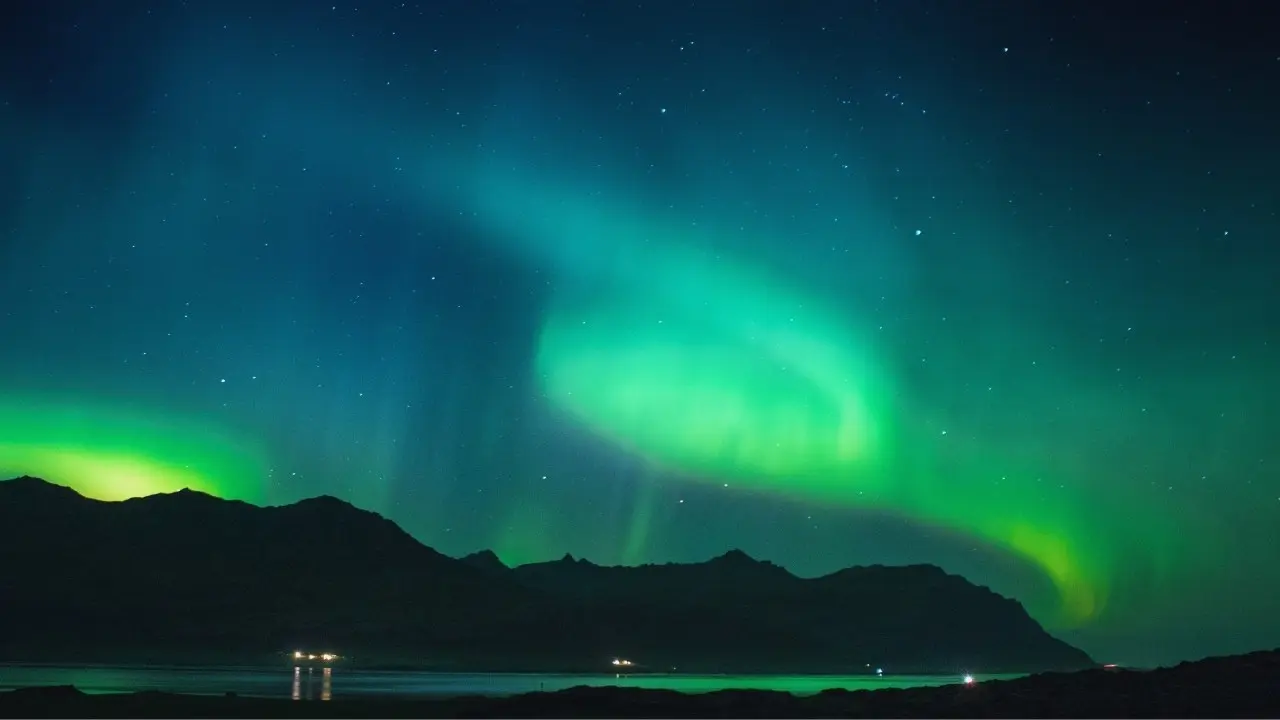
The Rise of Auroras and Geomagnetic Storms in 2026
The night sky has long captivated our imagination, but 2026 promises to draw even greater interest. Scientists, along with global space agencies, are gearing up for a year where geomagnetic storms and breathtaking auroras are set to captivate audiences. This uptick isn’t coincidental; it correlates to the Sun’s active cycle, approaching a pivotal peak.
As solar flares and coronal mass ejections increase in frequency, 2026 is emerging as a landmark year where celestial events will visibly affect life on Earth. Although auroras shine splendidly, geomagnetic storms come with potential hazards, amplifying the necessity for a deeper scientific comprehension.
The Solar Activity Cycle Explained
A Closer Look at the 11-Year Solar Cycle
The Sun operates on an 11-year cycle, oscillating between periods of low and high activity. In times of solar maximum, an uptick in sunspots, flares, and charged particles is observed.
As we near the peak of the current cycle, scientists document a rise in solar activity, contributing to auroras being witnessed at lower latitudes and intensifying geomagnetic outbreaks.
The Significance of Solar Maximum
During solar maximum, the Sun's magnetic field grows increasingly complex and susceptible to eruptions that can interact with Earth's own magnetic field.
Understanding Geomagnetic Storms
How a Perturbation in Space Weather Occurs
Geomagnetic storms materialize when particles from solar explosions collide with Earth’s magnetic field, disturbing the magnetosphere and leading to swift shifts in magnetic conditions globally.
These storms vary in strength—from mild disturbances to severe incidents capable of wreaking havoc on satellites, communication systems, and power grids.
Directional Eruptions Matter
Only eruptions targeting Earth with sufficient force can result in significant geomagnetic storms. The orientation and speed of solar particles significantly affect this interaction.
Earth’s Protector: The Magnetosphere
Defensive Mechanisms of the Magnetosphere
Earth’s magnetic field, produced by its molten core, encircles the planet, acting as a shield against harmful solar radiation and charged particles.
When solar storms ripple through this barrier, the magnetosphere absorbs and refracts energy, though highly intense events can temporarily destabilize this protective shield, resulting in geomagnetic disturbances.
Why Polar Regions Are Affected Most
The field lines converge at the poles, directing charged particles into Earth’s upper atmosphere. This is the primary reason auroras are visible predominantly near the Arctic and Antarctic circles.
Decoding the Wonder of Auroras
The Mechanism Behind Auroras
Auroras occur when charged particles from the Sun collide with atmospheric gases, resulting in energy release that manifests as light.
These define the spectacular light displays known as the northern and southern lights.
Reasons for Southern Expansion of Auroras in 2026
Increased geomagnetic storms enable charged solar particles to journey further from the poles, thereby making auroras discernible in areas not usually accustomed to such natural phenomena.
2026: A Peak Year on the Horizon
Escalating Solar Activity
Observations indicate a surge in solar flares and coronal mass ejections, aligned with predictions for the solar cycle’s apex.
Agencies like NASA and NOAA have heightened monitoring efforts to stay abreast of the potential for heightened geomagnetic activity.
The Technological Challenges of Geomagnetic Storms
Vulnerabilities for Satellites
Geomagnetic storms can disrupt satellite electronics and affect solar energy absorption, leading to inaccuracies in navigation systems like GPS.
Risks to Power Grid Integrity
Severe storms can induce currents that potentially overload transformers, a worrying scenario considering past instances of widespread power outages.
Disruptions in Aviation and Communication
Flight Modifications on Polar Routes
Airlines hovering near the poles may need to alter flight paths amidst severe geomagnetic storms to prevent radiation exposure and communication failures.
Challenges for Radio Signals
High-frequency radio communications, crucial for various services including aviation and maritime activities, can be disrupted by instability in the ionosphere during geomagnetic occurrences.
Are Humans at Risk During Geomagnetic Storms?
Minimal Ground-Level Threats
For individuals on the surface, geomagnetic storms present minimal direct health risks due to atmospheric and magnetic shielding.
Exposed Astronauts
Astronauts outside the protective reach of Earth’s magnetic field are more susceptible to higher radiation levels during solar storms, thus careful mission planning is essential.
Impact on Climate and Atmospheric Layers
Do Solar Events Influence Weather?
Primarily affecting the upper atmosphere, geomagnetic storms can cause layer heating and atmospheric expansion that may alter satellite drag.
While ongoing research seeks to establish links between solar activity and climate patterns, general consensus remains cautious.
The Importance of Space Weather Forecasting
Advanced Warning Systems
Modern forecasting utilizes satellites to detect incoming solar storms ahead of time, allowing for actionable responses from power and aviation sectors.
Enhancements in Predictive Accuracy
Improvements in solar observation methods, data modeling, and artificial intelligence are expected to enhance forecast accuracy, making 2026 a benchmark year for space weather vigilance.
The Public's Growing Fascination with Auroras
Increased Interest in Skywatching
As auroras grace locations far beyond their usual haunts, public enthusiasm has surged, with social media exploding with images of spectacular light shows.
Merging Science with Awe
Auroras serve as a vibrant reminder of Earth's place in a dynamic solar system, reminding humanity of the continuous interplay between cosmic forces.
gHistorical Insights from Prior Geomagnetic Events
The Carrington Event: A Cautionary Tale
The historic Carrington Event of 1859 stands as the strongest recorded geomagnetic storm, highlighting vulnerabilities in today’s technological environment should similar occurrences arise.
Adapting to Increasing Space Weather Challenges
Strengthening Infrastructure
Governments and utility companies are focusing on grid resilience, satellite protection, and communication redundancies to mitigate vulnerabilities.
The Need for International Collaboration
Space weather presents a global challenge; effective forecasting and responses necessitate coordinated data sharing between nations and agencies.
Why Understanding Geomagnetic Storms is Crucial
Resilience in Modern Society
As our civilization increasingly relies on satellites, digital networks, and electricity, the resilience of modern life is tested by geomagnetic storms.
Grasping these phenomena transcends academic interest—it’s now vital for technological safety.
The Year of the Sun: A Glimpse Ahead
2026 is set to be a pivotal year for cosmic weather phenomena. As geomagnetic storms escalate and auroras illuminate unexpected skies, the Sun reaffirms its profound impact.
These occurrences combine beauty with potential hazards, demanding careful study and preparation, not just to shield infrastructure, but to enhance our understanding of the star that sustains life on Earth.
Disclaimer
This article is for informational and editorial purposes only. The nature of space weather can vary, and forecasts may evolve based on real-time solar data. For up-to-date alerts and safety guidance, please refer to official advisories from relevant space agencies and scientific bodies.