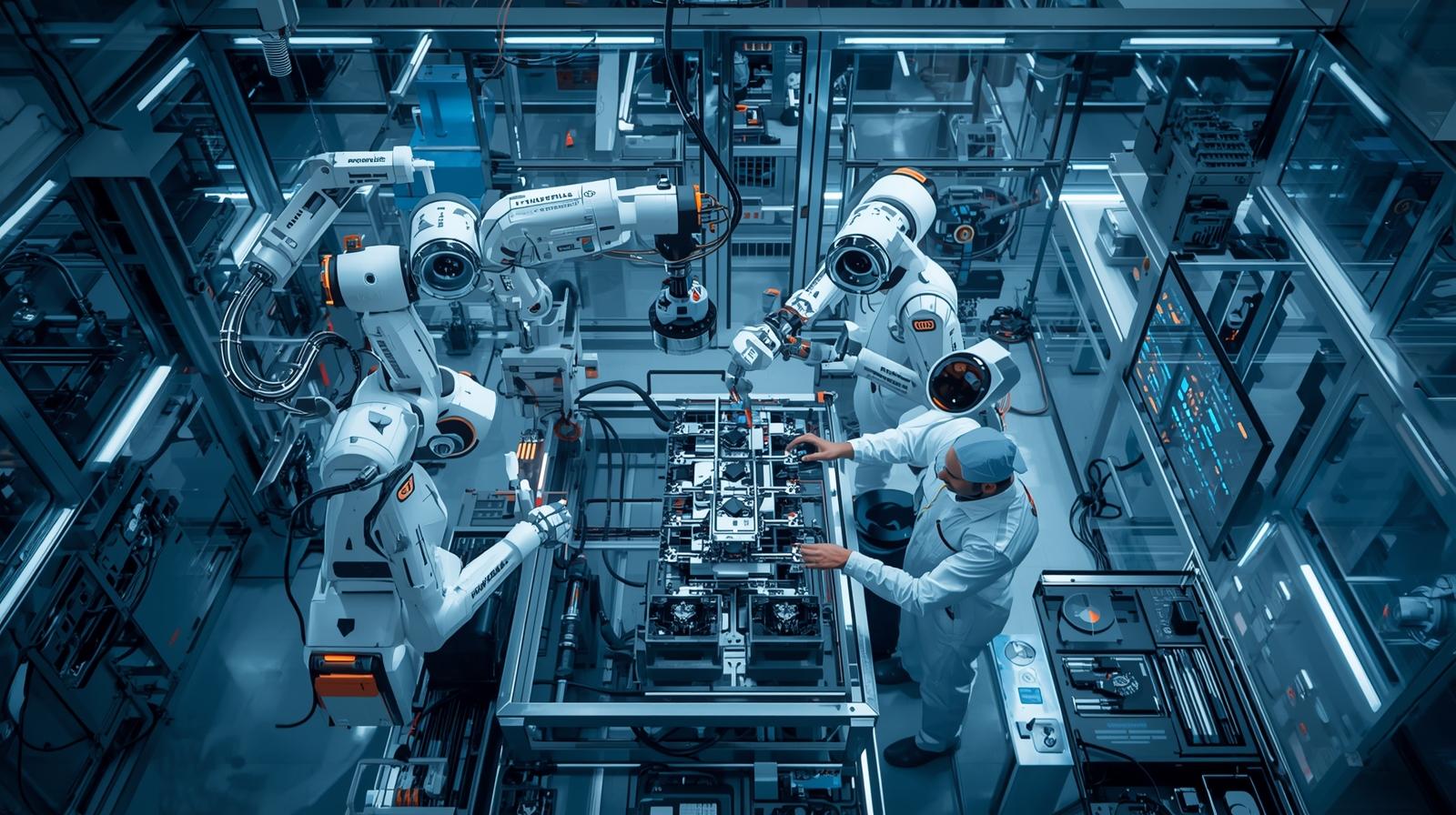
AI and Robotics Remake the Modern Factory: A Human-Centered Revolution
Factories are entering a new era. Where manual labour and simple machines once dominated, intelligent systems and robots are now driving production, bringing speed, accuracy and fresh ways of working to the workshop floor.
From automated lines to predictive upkeep and closer human-machine partnerships, the blend of AI and robotics is changing product design, manufacturing and delivery. This is not merely an upgrade—it is a reimagining of how industry operates.
The Shift Toward Smart Manufacturing
Where earlier industrial progress relied on scale and repetition, today's advances hinge on intelligent decision-making.
With machine learning, AI-driven analytics and robotic automation, plants can react to data instantly. This connected, responsive approach—often called Industry 4.0—bridges people, machines and information in real time.
Robotics: The New Workforce Partner
Robots have evolved from single-task machines into adaptable teammates that can safely share space with humans and take on more varied work.
Collaborative Robots (Cobots)
Cobots are built to operate beside people instead of behind fences, transforming how teams divide labour.
-
Cobots manage precision jobs such as welding, packing and inspection.
-
They can be reprogrammed quickly to perform new duties.
-
They help cut mistakes and raise throughput.
Manufacturers of note—ABB, KUKA and Universal Robots—have made cobots more accessible to small and medium firms.
Autonomous Mobile Robots (AMRs)
AMRs, guided by AI, are transforming logistics inside plants. These mobile machines move materials, navigate obstacles and manage tasks using sensors and vision systems.
They reduce manual hauling, improve safety and boost efficiency—especially in sprawling operations such as Amazon's fulfilment hubs.
Artificial Intelligence: The Brain Behind the Machines
Robots provide the hands; AI supplies the planning and insight.
AI digests vast production data to spot inefficiencies, forecast faults and tune operations for peak performance.
1. Predictive Maintenance
One standout use of AI is predictive maintenance, where sensors and analytics flag issues before breakdowns occur.
-
This lowers costly downtime.
-
Makes maintenance scheduling proactive rather than reactive.
-
Helps prolong equipment life.
McKinsey suggests predictive maintenance can trim maintenance expenses by about 25% and slash unexpected failures by up to 70%.
2. Quality Control
AI-driven computer vision is sharpening quality assurance. Systems now detect minute flaws invisible to the human eye, ensuring products meet tight specifications.
Sectors like semiconductors, automotive and pharmaceuticals depend on these capabilities to preserve standards and avoid costly recalls.
3. Supply Chain Optimization
AI provides a clearer view across the entire supply chain. Advanced models help businesses:
-
Forecast demand with greater accuracy.
-
Manage inventory dynamically.
-
Streamline delivery routes.
These gains cut waste, speed deliveries and lower costs, making supply networks more resilient.
Human + Machine Collaboration: A Powerful Duo
Automation is expanding, but people remain central. The emerging model pairs machines with human skills rather than replacing them.
AI and robots take on repetitive or hazardous tasks, freeing people to focus on creative problem-solving, oversight and higher-value work.
Firms that invest in upskilling and simulation-based training see better productivity and more innovation as staff learn to work alongside intelligent systems.
Data Is the New Fuel of Manufacturing
Modern plants generate streams of data from sensors and systems—often measured in terabytes daily.
AI converts this raw information into practical insights for real-time decisions.
Connected factories use these signals to:
As data accumulates, systems grow more responsive and continually refine performance.
The Role of 3D Printing and AI Integration
The marriage of 3D printing and AI is another transformative trend.
AI-driven design optimization produces parts that are lighter, stronger and cheaper to print, speeding up the creation of custom components.
Fields such as aerospace, automotive and healthcare use this pairing to produce bespoke parts faster and with far less waste than traditional methods.
Sustainability Through Smart Manufacturing
AI and robots can also drive greener production.
Intelligent factories can:
-
Cut energy waste through continuous monitoring.
-
Reduce material use thanks to precise robotics.
-
Lower emissions via smarter logistics.
For instance, Siemens applies AI in energy management to lower emissions across its sites, showing that efficiency and environmental goals can align.
Challenges Ahead
Progress brings hurdles:
-
Significant upfront costs that can deter smaller firms.
-
Cybersecurity vulnerabilities as systems become interconnected.
-
Concerns about job displacement as roles change.
-
Shortages of skills in AI, data science and robotics upkeep.
Governments and companies are responding with training initiatives and public-private programs to spread the benefits of Industry 4.0 more widely.
The Global Impact: Smart Factories on the Rise
Leaders in smart manufacturing include Germany, Japan, South Korea and China.
Governments in places such as India and the UAE are promoting Industry 4.0 to attract investment and modernise industry.
Companies like Tesla, Foxconn and Bosch are showcasing how AI and robotics can scale output while maintaining quality.
Projections suggest the global smart manufacturing market could top $800 billion by 2030, driven by automation and AI advances.
The Future: Fully Autonomous Factories
The long-term vision is factories that run largely on their own—AI coordinating production end to end with minimal human intervention.
Imagine:
-
Systems forecasting demand and altering output seamlessly.
-
Robots assembling, checking and packing at pace.
-
AI negotiating supply and logistics in real time.
Advances in AI, robotics, IoT and 5G are bringing that future closer every year.
Conclusion
The fusion of AI and robotics is remaking manufacturing into a smarter, safer and more sustainable endeavour. While costs and skills gaps remain, the upside—from productivity gains to environmental benefits—is clear.
As factories become more autonomous and data-driven, they will not only produce goods differently; they will reshape the way industries and communities work and thrive.
The manufacturing renaissance is underway—and it promises to be creative, connected and deeply human.