Photo : X / Mario Nawfal
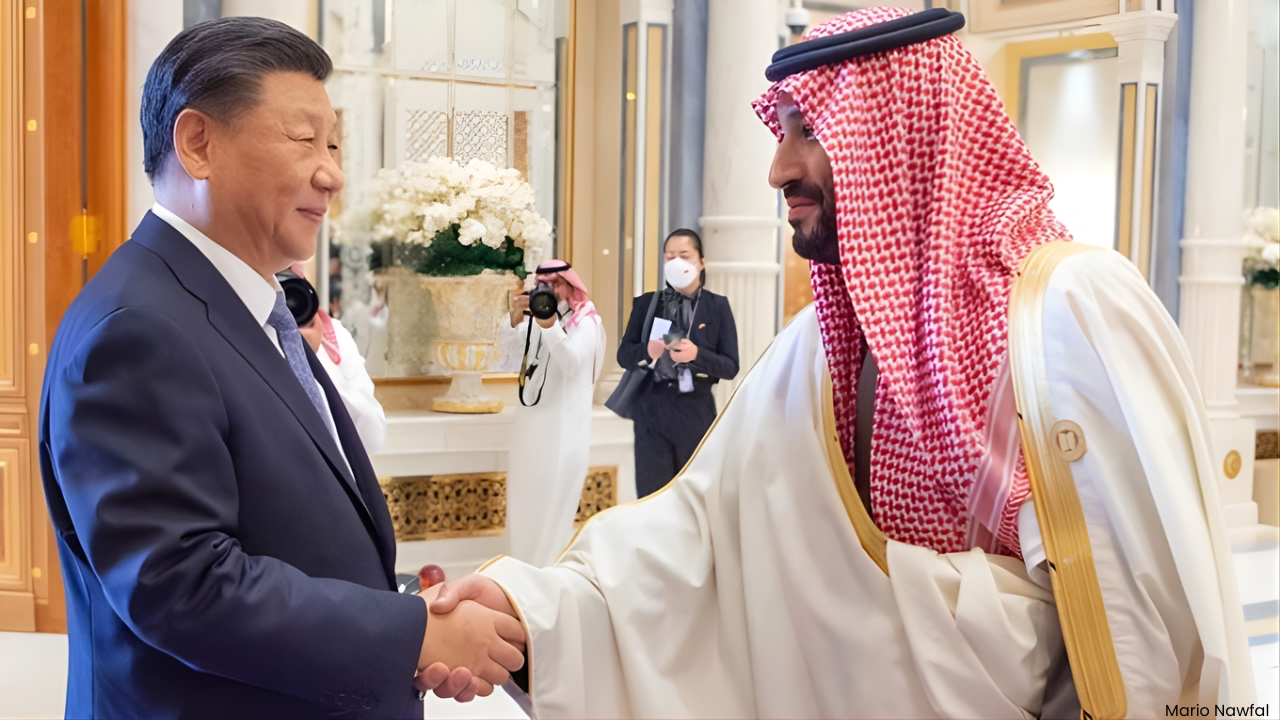
The United Arab Emirates and China have taken significant steps to strengthen their economic relationship by signing 24 landmark agreements aimed at boosting trade, investment, and cross-industry collaboration. This pivotal move comes as their bilateral non-oil trade exceeds the $100 billion mark, highlighting a substantial evolution in global trade dynamics. The rise in trade between these two influential economies exemplifies a visionary strategy to position themselves at the heart of global supply chains, innovation hubs, and interconnected infrastructures.
The economic ties between the UAE and China have never been stronger, with non-oil trade projected to reach over $111.5 billion by 2025—an astounding growth of more than 24%. China has cemented its status as the UAE's largest trading partner, while the UAE acts as China's crucial entry point to the Middle East and Africa. This landmark achievement signifies not just a numerical growth but a reconfiguration of global trade routes. The collaboration leverages the UAE’s strategic location alongside China’s manufacturing prowess to forge a formidable economic corridor servicing Asia, the Middle East, and beyond.
The agreements forged during the UAE-China Business Promotion Conference address diverse sectors, including logistics, energy, technology, and investment, embodying a multifaceted approach to economic cooperation. Aiming to transcend traditional trade, these deals focus on long-term value creation through innovation and sustainable growth. The concept of “From Vision to Value” underscores a transformative shift towards concrete outcomes, enabling partnerships to yield real projects, investments, and infrastructure advancements. Such integrative collaboration will unlock new possibilities for businesses, fortify industrial ecosystems, and enhance competitiveness in a tightly knit global marketplace.
Key to these agreements is the transportation sector, the very foundation of international trade. As the UAE positions itself as a global logistics hub, the enhanced partnership with China is expected to pave the way for streamlined supply chains, improved port access, and advanced multimodal transport networks. This alignment in trade flows between Asia and the Middle East is likely to catalyze investments in vital sectors like ports and aviation, thereby reaffirming the UAE’s crucial role as a transit nexus for goods across continents. This collaboration marks a new era in which infrastructure and trading partnerships go hand in hand, facilitating swifter, more efficient global exchanges of goods and services.
The UAE’s role as a gateway economy is integral to this alliance. By facilitating China’s entry into regional markets, the UAE is solidifying its status as a bridge linking the East and West, thus enhancing accessibility for businesses to explore new markets. Concurrently, Chinese investments are supplying the scale and resources necessary for expansive projects, from manufacturing to digital solutions. This synergistic relationship constitutes a powerful dynamic benefitting both nations while redefining global trade frameworks. Additionally, these initiatives resonate with larger economic agendas, including diversification and sustainable growth which are paramount for both nations navigating a transforming global context.
Amidst geopolitical uncertainties and evolving alliances, the UAE-China partnership underscores the critical role of economic diplomacy. By prioritizing trade, investment, and mutual collaboration, both nations are laying a foundation for shared prosperity and stability. This strategy reflects a worldwide trend in which economic alliances serve as pivotal driving forces of geopolitical influence, affecting markets and international relations alike. For industries and governing bodies, the salient message is evident: economic resilience and strategic partnerships are imperative for thriving in an increasingly intricate world.
As economic ties between the UAE and China solidify, the ramifications of these agreements will extend far beyond their bilateral interactions. This strengthened partnership is poised to influence global supply chains, stimulate innovation, and set new standards for international collaboration, especially in the transportation and logistics domains—where infrastructure, trade, and technological advancements intersect to form robust global networks.