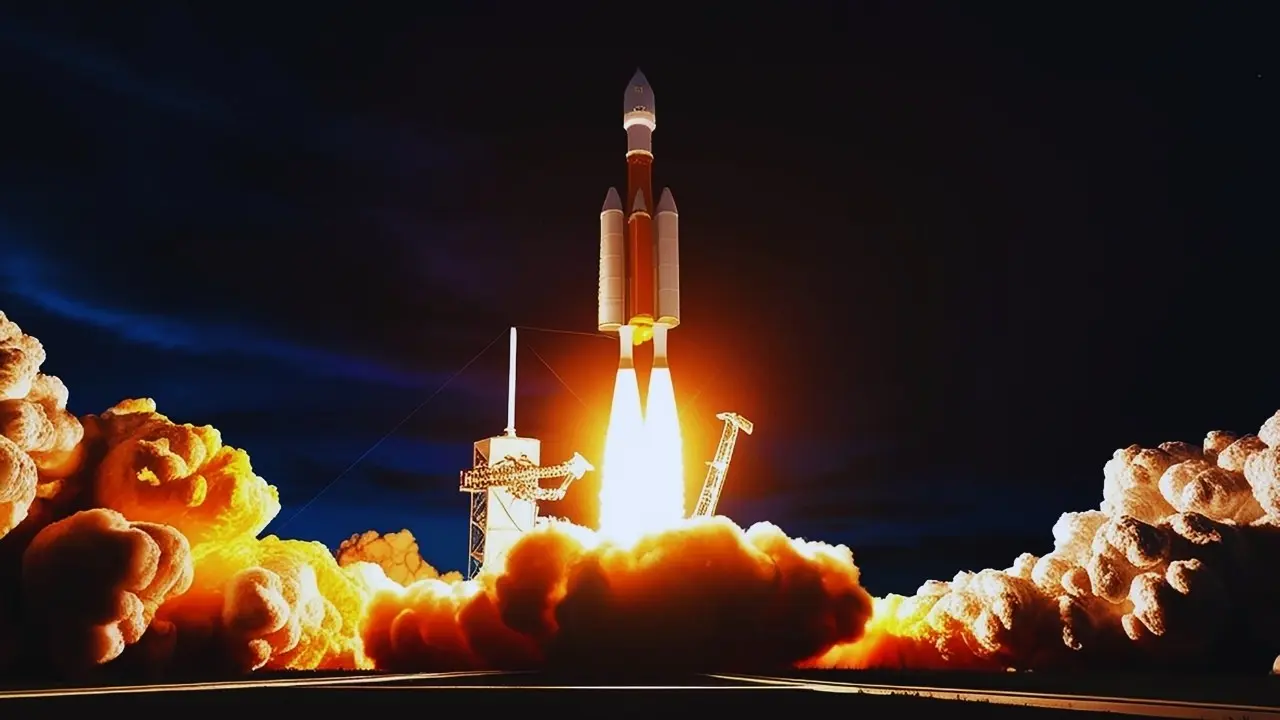
The Significance of 2026 in Space Exploration
As we head into a revitalized era of space exploration, 2026 emerges as a pivotal year that marks the transition to sustained scientific endeavors. A departure from the solitary race of superpowers, today's missions involve a collaborative blend of national agencies, commercial entities, and international partnerships aimed at establishing a long-term footprint in space.
In this year, humanity will once again set foot on the Moon, delve deeper into asteroid territory, advance our capabilities with new space telescopes, and test vital technologies that pave the way for future missions to Mars. Together, these initiatives signify a commitment to make space exploration enduring, scientific, and cooperative on a global scale.
The Moon's Resurgence
From Flags to Foundations
The focus on the Moon is rekindled, with 2026’s missions designed to create robust infrastructures, discover vital resources, and facilitate sustainable human habitation.
Leading this initiative is NASA's Artemis program, which continues to energize global collaboration in lunar exploration.
Landing Milestones under the Artemis Program
Paving the Way for Permanent Inhabitance
With the Artemis roadmap, NASA is set to not only return humans to the Moon but also establish a permanent presence. Following earlier missions that focused on trials, 2026 will prioritize essential technologies such as habitats and landing modules.
These endeavors are expected to lay the groundwork for lunar outposts near the Moon's southern region, a site rich in essential water ice for sustaining life and fuel production.
International Unity in Lunar Exploration
A Global Endeavour
The lunar race of 2026 is a shared global effort. Space agencies from various nations are launching their missions in synergy rather than rivalry.
Europe's involvement through the European Space Agency adds pivotal scientific equipment and human resources, while India’s ISRO progresses further with its lunar objectives.
China's Ambitions in Lunar Strategy
Exploring the Lunar South Pole
China’s lunar initiatives in 2026 are bold and ambitious. Missions are set to scrutinize the Moon's south pole, encompassing tasks like surface mapping and resource analysis.
This aligns with China's ambitious vision of developing a permanent research facility on the Moon in the next few decades.
Asteroid Exploration Takes Center Stage
The Importance of Asteroids
Asteroids hold vital clues about the early solar system, offering insights into planetary formation and potential threats to Earth.
In 2026, efforts will shift to thorough scientific assessments of asteroids, concentrating on their composition and behavior.
Safeguarding Earth through Planetary Defense
Aiming for Impact Prevention
Planetary defense is a pressing issue, with missions planned around this time aimed at exploring methods to avert potential asteroid impacts.
The data gathered will enhance predictive models and response strategies, transitioning from theoretical concepts to actionable plans.
Returning Samples from Space
Analyzing Space Materials
Asteroid missions' sample return capabilities are invaluable. Analyzing physical materials here on Earth will enrich our understanding significantly.
Several missions scheduled for 2026 aim to either acquire new samples or study those already on their way to our planet.
Next-Gen Telescopes Set for Launch
Enabling Deeper Cosmic Observations
The year is also critical for astronomical advancements as new space telescopes begin operational sequences, enhancing our capability to study distant galaxies.
These observatories will provide higher resolution and longer mission durations, expanding our cosmic horizons.
Searching for Extraterrestrial Life
Investigating Habitability
Advanced telescopes ready for deployment will focus on discovering atmospheric markers on exoplanets that might suggest conditions suitable for life.
This research inches humanity closer to the profound question of our existence in the universe.
Future Mars Missions on the Horizon
Setting the Stage for Human Exploration
While no crewed Mars missions are expected in 2026, critical groundwork will be laid through robotic missions that test essential technologies for future human endeavors.
These include various systems necessary for successful entry, descent, and landing alongside advanced resource utilization strategies.
Private Sector's Role Expands in Space
Commercial Partnerships in Exploration
Private companies are evolving from mere launch service providers to integral players in spacecraft development, lunar missions, and satellite operations.
This evolution fosters innovation, reduces costs, and enhances collaborative models that bridge public and private sectors.
Future Platforms Beyond the ISS
New Research Hubs in the Works
While the International Space Station continues to play its crucial role, groundwork for its successors is already in progress, with experimental commercial space stations on the agenda.
The knowledge gained during 2026 will serve pivotal for future human activity in low Earth orbit.
Technological Innovations Shaping Tomorrow
Enhancing Propulsion and Autonomy
Many missions this year will explore state-of-the-art propulsion systems, autonomous navigation, and sustainable energy solutions necessary for deep-space operations.
Success in these avenues will be essential for future missions targeting Mars and other distant locations.
The Geopolitical Dimensions of Space
Collaboration Amidst Competition
Exploration endeavors in 2026 illustrate a unique intersection of teamwork and national interests. Even as global tensions rise, space often becomes a battleground for cooperative science over rivalry.
Why 2026 Holds Global Importance
Shifting from Exploration to Presence
The missions set for 2026 symbolize a pivotal shift from mere exploration to enduring human presence in space, impacting scientific innovation and existential perspectives.
The Educational Impact of Space Exploration
Inspiring Future Generations
Landmark events have a history of igniting interest among youth. The diverse scope of 2026’s missions will likely stimulate enthusiasm for STEM fields.
Education institutions are already gearing up to maximize this renewed interest among students.
Challenges Ahead
Technical and Fiscal Obstacles
All space missions come with their shares of risks. Challenges such as budget issues and technical malfunctions persist.
The integration of redundancy measures and collective efforts aim to curb these challenges.
The Potential of 2026's Success
A Foundation for Mars and Beyond
If the majority of missions succeed, 2026 may well be dubbed the year humanity set the stage for interplanetary existence.
The insights garnered will influence exploration strategies extending into the 2030s and 2040s.
Redefining Space Exploration in 2026
The upcoming missions in 2026 encapsulate a global mindset where space is recognized as a vital frontier—integrating science, security, and survival. With initiatives aimed at permanent Moon bases and asteroid surveillance, this year signifies both ambition and accountability.
As these missions unfold, 2026 stands poised to mark an unprecedented chapter in humanity's quest beyond Earth, drawing us closer to the Moon, revealing asteroids as destinations, and enhancing our understanding of the universe.
Disclaimer
This article serves informational and editorial purposes. Mission timelines, goals, and launch dates may be subject to adjustments based on various factors. Please consult official announcements for current updates.