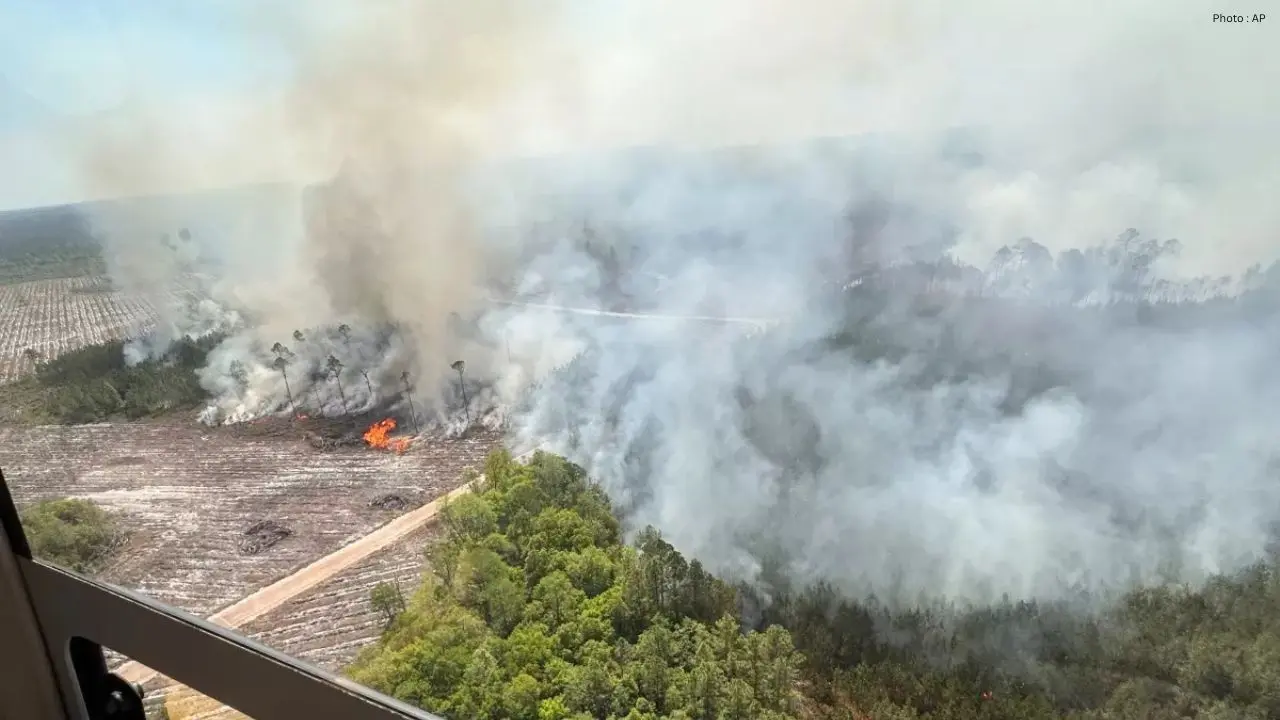
Severe wildfires are wreaking havoc across Georgia and Florida, driven by extreme drought and strong winds. Homes have been destroyed, leading to mandatory evacuations and escalating fears over safety and environmental conditions.
In southeastern Georgia, one of the largest wildfires has already consumed significant areas of land, with officials reporting it as only partially contained. Winds are exacerbating the situation, making it increasingly difficult for firefighters, and authorities are cautioning that further evacuations might be necessary if the weather doesn't improve.
Numerous wildfires are currently ablaze throughout Georgia and Florida, reflecting the severity of the crisis. Emergency teams are tirelessly working to manage the blazes, although weather conditions are hindering their efforts.
The underlying cause of these devastating fires is the prolonged drought affecting the region. A lack of rainfall has led to extremely dry conditions, making the landscape highly susceptible to fires. High temperatures and gusty winds further accelerate the spread of flames.
Many families have been forced to evacuate their homes for safety. Some have lost their residences and treasured belongings. The wildfires have deteriorated air quality as smoke drifts into nearby communities, creating breathing difficulties, particularly for children and the elderly.
Firefighters are bravely battling tough conditions, as dry vegetation, fallen trees, and unpredictable winds complicate their efforts. These factors allow fires to spread rapidly, presenting a considerable risk to both residents and rescue workers alike.
The situation's severity has unfortunately resulted in fatalities, underscoring the risks faced by emergency personnel. Firefighters continue to jeopardize their safety to protect communities, which illustrates the crisis's gravity.
Local authorities are taking decisive emergency measures. Some regions have declared a state of emergency, imposing strict regulations to prevent new fires. Residents are strongly urged not to ignite outdoor flames and to adhere to safety protocols.
Experts suggest that shifting climate patterns may be amplifying the frequency of such catastrophic events. Extended dry spells, elevated temperatures, and decreased rainfall are heightening wildfire risks in various locations, including areas that were previously less vulnerable.
The current conditions illustrate how rapidly wildfires can escalate during extreme weather. This scenario emphasizes the need for proactive measures, community awareness, and effective emergency response capabilities.
As firefighting efforts continue, many are holding onto hope for rain, which could alleviate the situation. In the meantime, the priority remains on safeguarding lives, protecting properties, and halting the flames' spread.