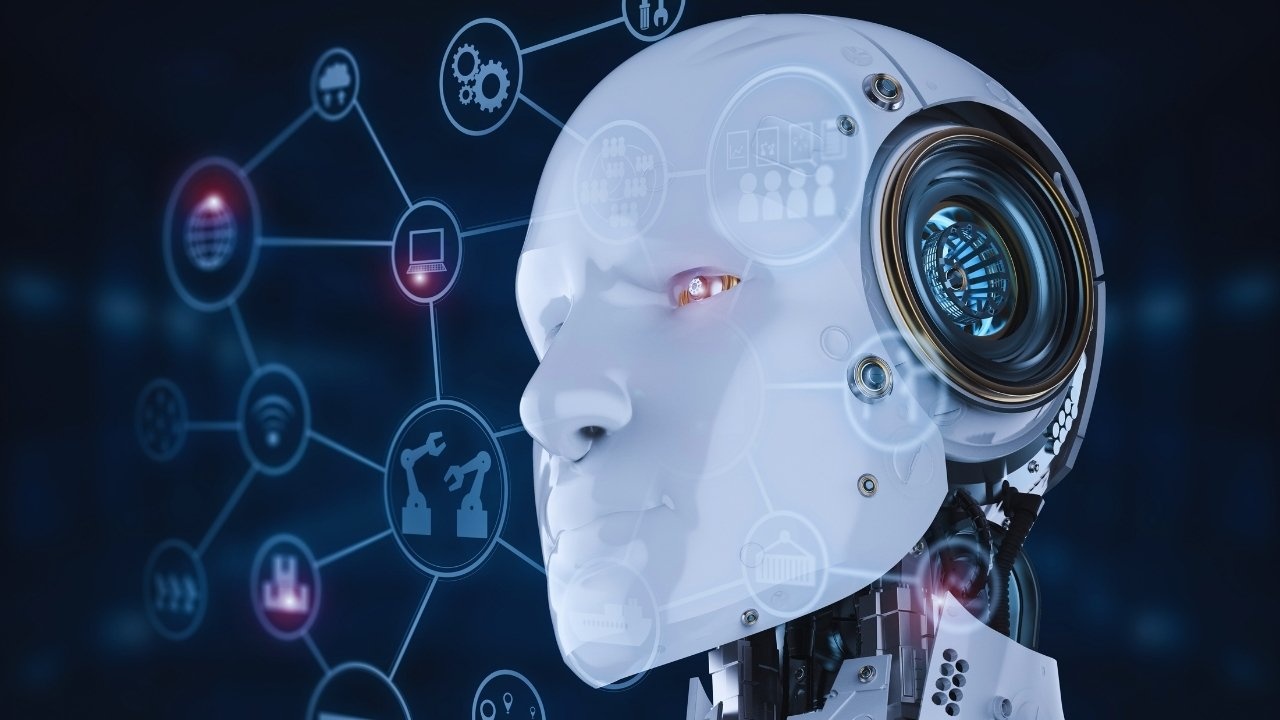
For years, the dream of a world where robots smoothly integrate into daily life has been championed by innovators and futurists, envisioning machines that can assist in households, contribute in healthcare, and even venture to far-off planets. With advancements in artificial intelligence, many believed we were on the brink of achieving general-purpose robotic intelligence.
However, ongoing research and practical trials expose a stark reality: robots are still considerably behind in replicating the flexible and adaptive thinking innate to humans. While AI can devise plans, interpret images, and communicate effectively, adapting these capabilities to dynamic, unpredictable environments proves to be an immense challenge.
Latest findings indicate that sheer algorithmic progress cannot alone pave the path to advanced robotic intelligence. Instead, the development requires a harmonious blend of mechanical durability, sensory awareness, instant reaction capabilities, ethical reasoning, and an unwavering focus on safety—elements that today's robotics systems are yet to master.
Why are robots not ready for prime time? What advancements must take place to bridge this gap?
Differentiating Task-Specific from General-Purpose Robots
The Success of Task-Specific Robots
Robots thrive when assigned particular tasks with defined boundaries. From assembling microchips to efficiently sorting products, industrial robotic arms perform with impressive accuracy. Similarly, vacuum bots and warehouse robots excel in predictable settings.
These machines operate in controlled surroundings, where unforeseen variables are minimized.
The Struggles of General-Purpose Robots
A general-purpose robot must accomplish manifold objectives, including:
Adapting to changing contexts
Navigating new environments
Avoiding obstacles and maneuvering through crowds
Safely handling a variety of objects
Responding to human actions and uncertainties
Making decisions while ensuring safety
Ultimately, they need to combine dexterity, contextual intelligence, and intrinsic common sense—traits that humans develop organically, yet machines must learn from the ground up.
The Disparity Between Simulation and Reality
Simulation Doesn’t Equate to Real-World Efficacy
AI training largely occurs in simulated environments where the conditions are predictable, with elements like gravity and lighting controlled perfectly. In contrast, real life is far more chaotic.
Factors such as temperature, angles, material properties, shadows, and unpredictable interior conditions render reliable robotic performance challenging. Even minor variations can lead to failures in execution.
The Difficulty of Robust Generalization
Humans can seamlessly carry various items without mishaps; on the other hand, instructing a robot to pour tea requires advanced adjustments in grip, liquid dynamics, and temperature control—a significantly complex task.
Real-world scenarios are messy, while robots yearn for predictability.
The Limits of Robotic “Common Sense”
Challenges in Everyday Logic
A child understands that a balloon floats while a ball rolls, skills that a robot must be meticulously programmed to grasp.
Human intuition emerges from lived experiences and emotions, while machine intelligence is built on data and learned patterns.
Understanding common-sense reasoning is a formidable challenge for AI.
Context and Intent Recognition
Robots struggle to deduce intent—they may not differentiate between a greeting and a warning. Humans can sense the difference instantly, a context that machines currently lack the nuance to interpret.
Accurate interpretation of emotional or situational cues is critical for the safe and effective interaction between humans and robots, a domain where robots still need improvement.
Obstacles in Sensing and Perception
Recognition vs. Understanding
While robots can identify objects, grasping deeper perceptions such as danger, texture, or temperature remains a challenge. A robot might recognize a glass but fail to detect its slipperiness, leading to potential accidents.
Touch and Dexterity Shortcomings
Human fingers can sense minute changes in pressure or texture, while robotic hands still fall short in terms of sensitivity and adaptability. Tasks requiring fine manipulation of delicate objects often result in unpredictable outcomes.
Real-Time Decision Making and Safety Concerns
Immediate Judgment Necessities
Humans instinctually respond to abrupt dangers, while robots depend on programmed parameters. Delays or wrong assessments can have dire consequences.
Prioritizing Safety
A general-purpose robot should ensure:
Even minor mistakes in home or crowded environments are unacceptable. Safety is not optional; it is paramount.
Challenges in Engineering: Hardware and Power
Importance of Robust Hardware
Advanced algorithms fall short without capable hardware. Weak motors and limited energy supply impede performance. Achieving human-like energy efficiency and movement appears distant, often leading to robots requiring frequent recharging breaks.
The Need for Maintenance
Unlike humans, who recuperate naturally, robots demand constant upkeep, adjustments, and parts replacement which complicates their broader implementation.
Ethical and Regulatory Complexities
Assigning Responsibility
Who holds accountability if a robot:
Fails to assist a patient in a healthcare setting?
Makes an erroneous judgment?
Damages property?
Neglects action in emergencies?
As legal structures evolve, widespread adoption remains a hurdle until clear regulations are established.
Building Trust with the Public
While people may tolerate software glitches in devices, they expect reliability from machines interacting physically within their environment. Trust requires proven dependability, openness, and consistency.
Economic Considerations and Practical Issues
Financial Hurdles
Developing general-purpose robots necessitates high-tech sensors and components, contributing to prohibitively high expenses, which hampers widespread use.
Investment Returns
Industries welcome robotic innovations that promise efficiency or risk mitigation. Until general-purpose robots deliver undeniable advantages, task-specific machines will remain the norm.
Looking Ahead: Required Innovations
Necessary Breakthroughs
For the success of general-purpose robotic intelligence, progress is essential in:
Real-time perception
Advanced dexterity
Adaptive learning capabilities
Sensors functioning together effectively
Efficient hardware solutions
Robust ethical standards
Self-improvement mechanisms without hazards
Synergistic Human-Robot Interactions
Upcoming robotics will complement human efforts—rather than replace them. Collaborative robots (cobots) are likely to emerge first, setting the stage for truly autonomous and multi-skilled machines.
Incremental Adoption
We anticipate significant integrations in:
Healthcare support systems
Mobility assistance for the elderly
Warehouse robotic pickers
Service roles in public spaces
Disaster response automation
Agricultural technologies
Robotics growth will be defined by gradual evolution instead of sudden transformations.
Final Thoughts
The pursuit of general-purpose robotic intelligence represents an audacious aspiration of humanity. Significant advancements have been made in AI capabilities, mobility, and robotic skills, but we are still distant from having safe and adaptable robotic minds that can operate seamlessly in the real world.
This challenge encompasses not only technological advancements but also cognitive, mechanical, ethical, emotional, and regulatory complexities. While progress is substantial, it is essential to proceed with caution and humility; machines do not yet comprehend the world in the way humans do, and until they do, their role as autonomous partners remains limited.
The future of robotics presents vast possibilities, yet it remains pragmatic, suggesting that while robotic helpers, caregivers, and companions may eventually emerge, that future is not quite here. For now, the vision continues to develop, one innovation at a time.
Disclaimer
This article is intended solely for educational and informational purposes. It does not furnish technical, financial, or safety advice, and real-world robotic capabilities may shift as technology progresses.