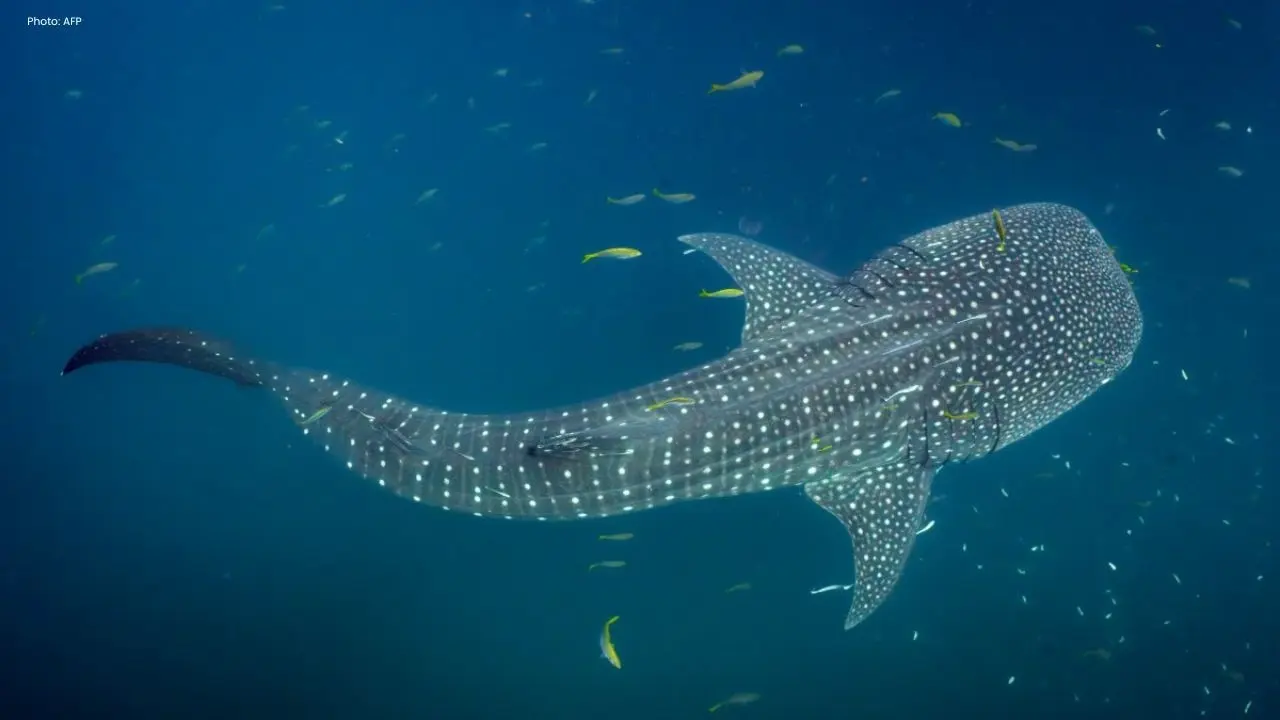
A significant scientific inquiry has brought to light crucial insights regarding whale sharks in Indonesia's maritime regions. Conducted over ten years, this research has enhanced scientists’ understanding of whale shark migration patterns and year-round congregation sites.
Focusing on Indonesia’s whale shark populations, among the world’s largest, researchers utilized advanced tracking technology to surveil these magnificent creatures across vast ocean stretches, revealing intricate details of their behavior.
Throughout the study, approximately seventy whale sharks were tagged at various locations, with some tracked for up to three years, yielding invaluable long-term data. The findings highlighted their migration across international waters, illustrating the extensive nature of their travels.
Crucially, the study pinpointed two significant hotspots where whale sharks consistently congregate: Cenderawasih Bay and Saleh Bay. These areas have emerged as permanent residences rather than mere seasonal gathering spots for this magnificent species.
Researchers noted that these bays offer favorable conditions for whale sharks, including abundant food sources like small marine organisms and a protective environment against predators. Such conditions are vital for the species' longevity.
Despite their ecological importance, whale sharks contend with numerous threats in these zones. Pollution, the rise of tourism, and potential collisions with vessels pose serious risks, jeopardizing both the sharks and their habitats.
The study highlighted that anthropogenic activities, including farming and aquaculture, can compromise water quality. The introduction of chemicals and waste into the marine environment may be a contributing factor to recent instances of stranded whale sharks.
Conservation organizations are actively collaborating with governmental bodies to enhance protections in these vital regions. Plans are in motion to establish a designated marine protected area in Saleh Bay, aimed at shielding whale sharks and mitigating human interference.
Experts emphasize that safeguarding these crucial habitats is vital for the future of whale sharks. With improved conservation measures and heightened awareness, Indonesia has the potential to become a leader in the preservation of this extraordinary and vulnerable species.