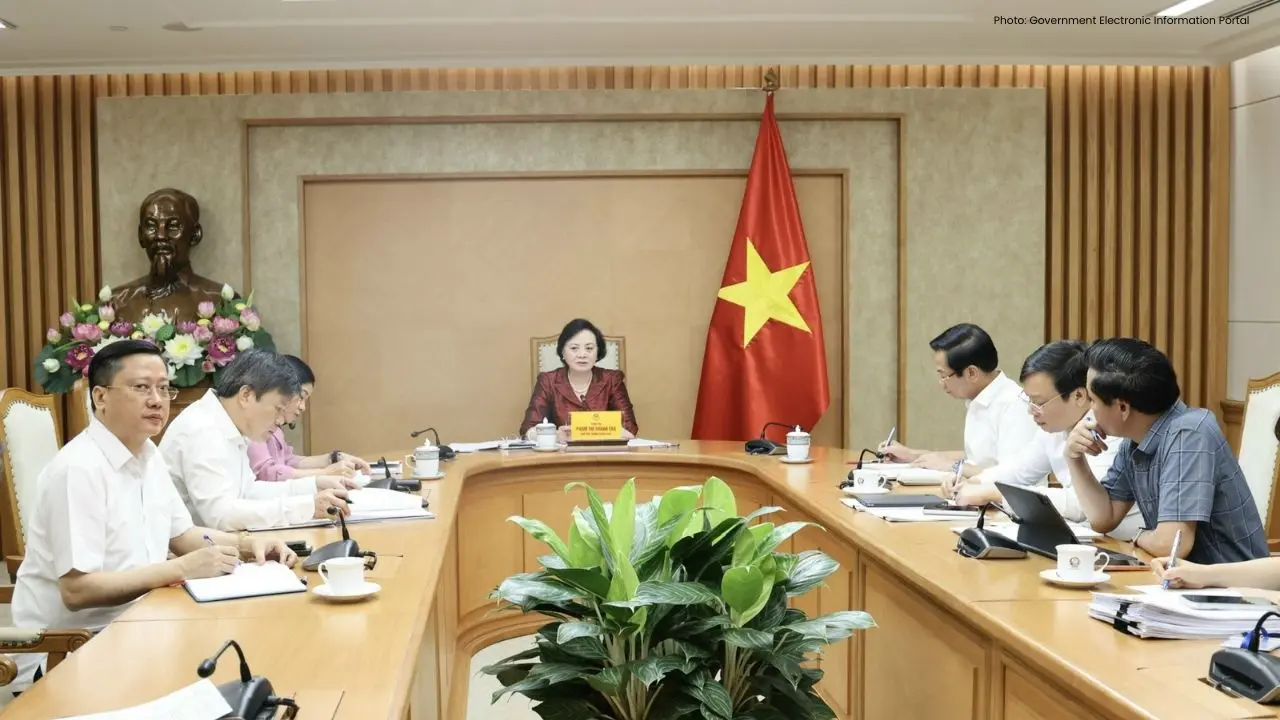
Vietnam has initiated an extensive examination of its new political setup and two-tier local governance structure following a year of its nationwide rollout. This evaluation was a central point of discussion in a meeting led by Deputy Prime Minister Pham Thi Thanh Tra in Hanoi on May 15, 2026.
The focus of the meeting was on creating an in-depth assessment report to analyze the operational effectiveness of the revamped administrative system across various ministries, sectors, and local authorities. High-ranking officials from the Ministry of Interior, Government Office, and other governmental bodies participated to finalize the review plans.
Deputy Prime Minister Pham Thi Thanh Tra emphasized that the aim of the preliminary review is to produce a thorough and unbiased evaluation of the newly implemented governance model. The government intends to pinpoint successful reforms, operational successes, persisting challenges, and key takeaways from the inaugural year.
Vietnam's adoption of the two-tier local government model is a part of an overarching administrative reform initiative designed to enhance operational efficiency, elevate state management, and modernize governance frameworks. This initiative has also involved the restructuring of administrative entities and public service institutions across numerous regions and ministries.
Ministries and provincial governments are expected to draft individual reports that will culminate in a cohesive national review document. The Ministry of Interior has been tasked with outlining the primary report and overseeing the data gathering from various agencies and local levels.
The review will place significant emphasis on areas such as decentralization, power delegation, reform of administrative procedures, and the integration of digital technologies. Authorities are set to assess the performance of public administrative service centers, infrastructure, financial management, and the utilization of surplus public assets arising from the restructuring.
Officials noted that several ministries have already made notable headway in restructuring public service sectors, particularly those related to science, finance, and industry, which have advanced quickly in their reforms. Nevertheless, some fields, like education and training, have seen slower progress.
Deputy Prime Minister Tra has stressed the need for timely completion of the review process and has directed ministries to keep their reports and statistical data up-to-date. She also urged an honest appraisal of workforce restructuring, staff reductions, and the effectiveness of local governance operations after the first year.
The Vietnamese government is optimistic that the insights gleaned from this review will inform future reforms slated for 2026 to 2030. Officials are hopeful this initiative will bolster governance frameworks, enhance administrative efficacy, and align with the nation’s long-term developmental aspirations.
Additionally, a dedicated working group may be formed to oversee the review process, compile relevant data, and finalize the reports for the national assessment. Authorities anticipate that this evaluation will serve as a crucial guide for shaping future policies and modernization efforts across Vietnam.