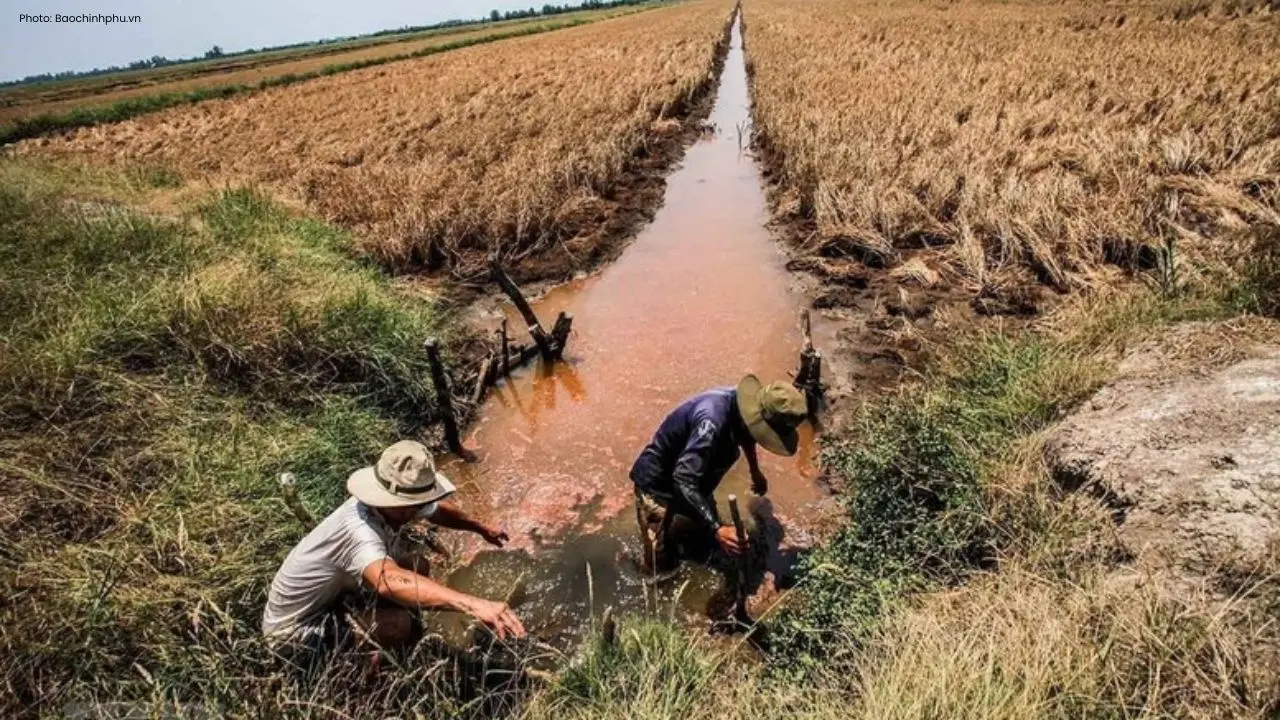
As the Mekong River's water flow continues to dwindle, the Mekong Delta faces an increasing risk of saltwater intrusion. Predictions suggest worsening conditions from April to May 2026, prompting serious concerns for both agriculture and freshwater supply.
The National Center for Hydro-Meteorological Forecasting reports significant saltwater penetration in the region, with salinity levels reaching up to 55 kilometers inland and extending to 70 kilometers in certain river systems. Although the outlook is less dire compared to past extreme occurrences, authorities advise local communities to remain vigilant.
To combat this issue, the government has initiated various preventive measures, including advancements in irrigation technology and enhanced water management systems aimed at controlling salinity and safeguarding freshwater reserves. While reservoir levels remain reasonably stable to support agricultural efforts, the importance of proactive planning cannot be overstated.
Experts advocate for an integrative approach that includes modifying crops, water conservation techniques, and ongoing weather monitoring. Furthermore, rising tidal levels and possible flooding in coastal areas could exacerbate the situation, necessitating coordinated actions to mitigate risks and sustain local livelihoods.