Vietnam’s ruling Communist Party began its national congress on Monday, convening hundreds of senior delegates amid strict security measures. This pivotal event, marking a significant moment in the country’s five-year political cycle, is set to determine the highest leadership and establish the economic and political frameworks for Vietnam's future.
Taking place over a week, the congress is held every five years and is generally inaccessible to the public. The discussions and decisions are made behind closed doors, governed by a carefully controlled internal process. Despite the lack of transparency, the congress's outcomes historically hold immense significance, shaping the governance, policy orientation, and economic priorities of Vietnam.
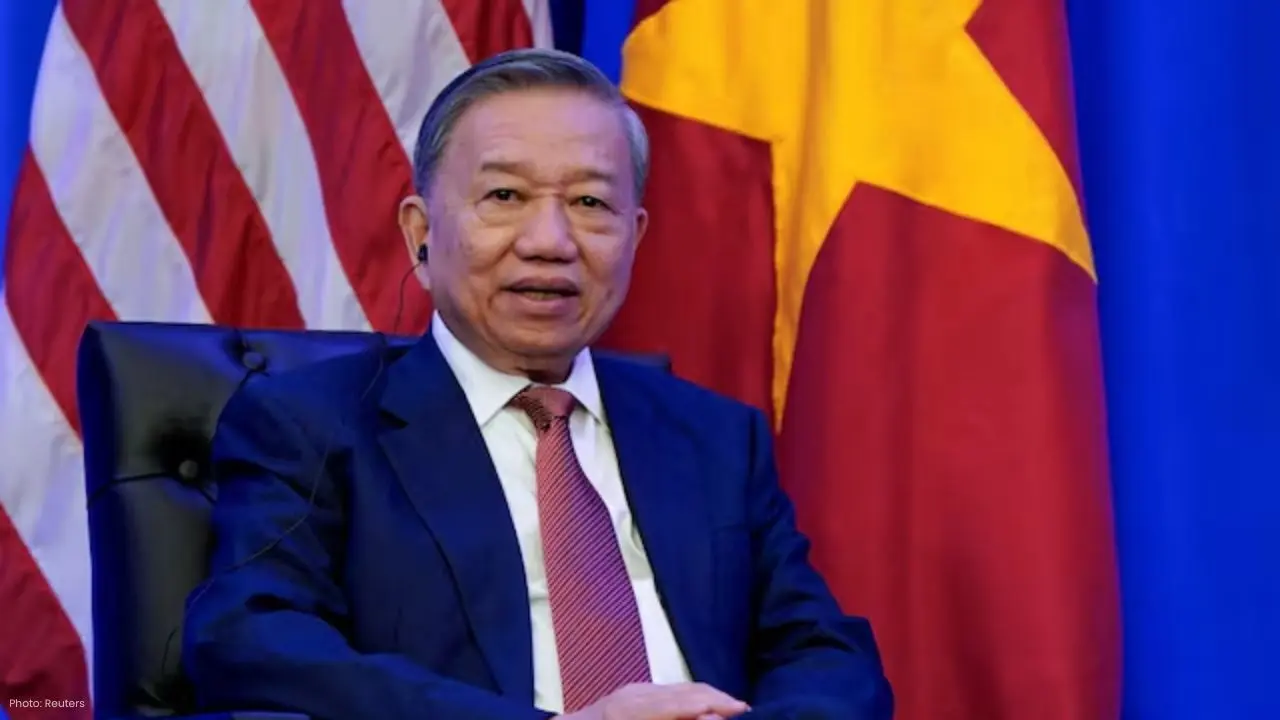
Observers are keenly interested in how this congress could bolster General Secretary To Lam’s position, who has emerged as a leading influence within the party. Since taking office, he has implemented wide-ranging reforms to enhance efficiency, reinforce centralized governance, and tighten discipline within state agencies.
His administration has adopted a more assertive governance style, aiming to streamline the party-state structure and boost accountability across various ministries and local administrations. These reforms are part of a comprehensive initiative to modernize Vietnam’s political landscape while preserving the Communist Party’s preeminent role.
To Lam has also gained prominence on the international stage, effectively representing Vietnam in diplomatic dialogues, strengthening crucial partnerships, and positioning the country as a reliable manufacturing hub and a favorable foreign investment site in Southeast Asia. His elevated profile aligns with Vietnam’s growing economic significance amidst changing global supply chains.
During the congress, delegates will likely endorse key leadership roles, affirm the party’s highest positions, and approve long-term policy objectives. Expected focal points include targets for economic growth, industrial expansion plans, and strategies to harmonize domestic reforms with international cooperation.
As discussions unfold, analysts assert that the choices made during this congress will have profound repercussions for Vietnam's political stability, economic pathways, and global positioning. The outcomes are anticipated to shape not only the leadership landscape but also the strategies Vietnam will adopt in meeting both domestic issues and global opportunities in the future.