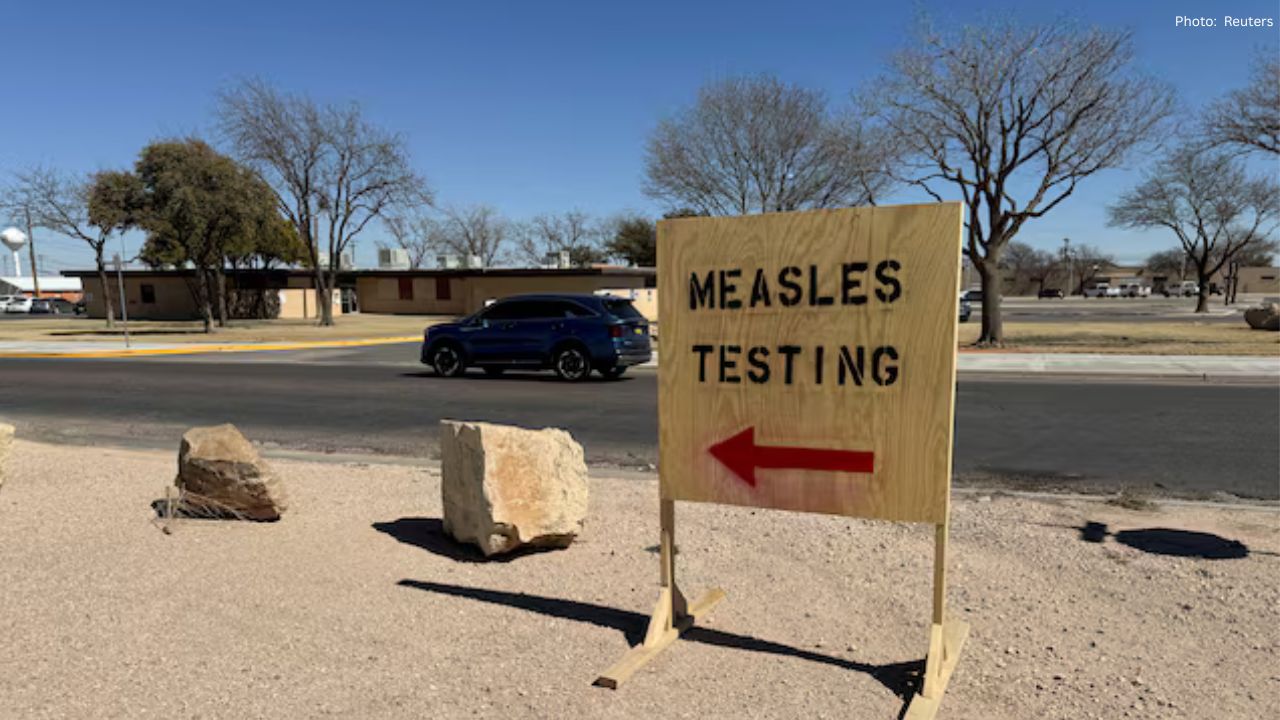
The United States is intensively working to safeguard its esteemed status of measles elimination, even as infection rates sharply rise across various states. Health authorities are under pressure to demonstrate that these recent outbreaks are not linked, preventing measles from becoming a persistent threat again.
Measles is officially considered eliminated when there is no local transmission of the same virus strain for an entire year, a recognition the US achieved in 2000. However, new cases surfacing in Texas, South Carolina, Utah, Arizona, and others are raising significant alarms.
According to the Centers for Disease Control and Prevention, weekly measles cases have surged fivefold from earlier periods. More than 2,000 confirmed instances have emerged, marking the highest count in thirty years. This situation is now prompting a reassessment by relevant health authorities regarding the US’s elimination claim.
A significant outbreak originated in Texas in early 2025, spreading to adjacent states. Additional outbreaks have characterized areas along the Arizona-Utah border and in South Carolina. To maintain its elimination status, the US must demonstrate that these recent cases are unconnected to the Texas outbreak and are instead due to incoming travelers.
Experts acknowledge that this is a challenging endeavor. Monitoring measles requires thorough patient interviews, travel histories, and genetic analysis of virus samples. Incomplete information from patients and underreporting of infections complicate tracking efforts.
Scientists are employing advanced genetic methods to analyze the full viral codes from various outbreaks. Preliminary insights indicate that the viral strains identified in Utah and South Carolina differ significantly from that in Texas, suggesting they are unrelated. According to the CDC, no clear connection is presently evident among these outbreaks.
Despite these findings, experts caution that data gaps may conceal interconnections between cases. Certain communities impacted by measles lack trust in public health entities, possibly leading to a reluctance to undergo testing or cooperate with contact tracing efforts. This increases the chance of undetected infections and missed links.
Specialists in public health warn that loss of the elimination status would represent a serious setback, highlighting deeper issues in vaccination rates, disease monitoring, and public confidence. Canada recently encountered a similar fate, losing its measles-free status after failing to curtail an extensive outbreak, illustrating the fragility of such advancements.
Officials emphasize that vaccination remains the most robust defense against measles. The virus is extremely contagious but can be prevented through regular immunization. Lower vaccination rates open the door for the virus to spread more freely.
In the upcoming months, health authorities will scrutinize all relevant data before arriving at a conclusion. The decision will not only bear implications for the US’s international health reputation but will also underscore the critical need for resilient public health systems and collaborative community engagement.