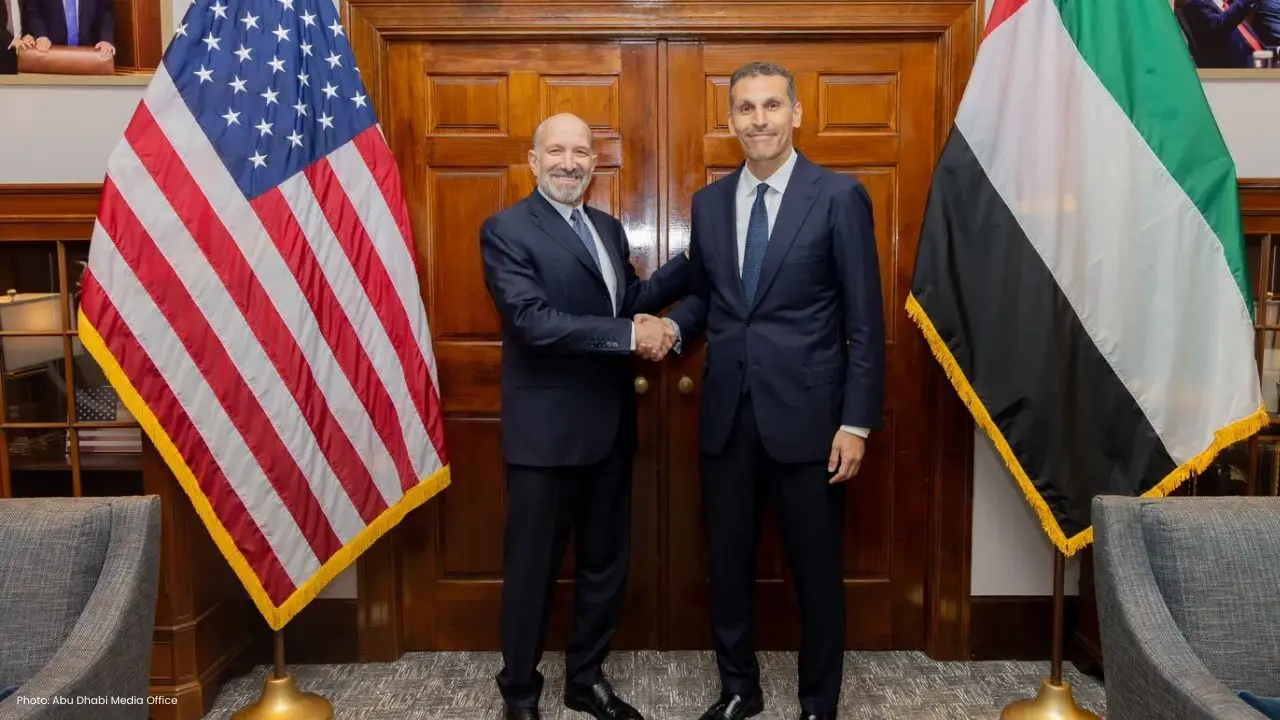
The United States government has taken a historic step by buying a 10% stake in Intel, one of America’s most iconic technology companies. The announcement was made by President Donald Trump alongside Commerce Secretary Howard Lutnick after weeks of tense negotiations with Intel’s chief executive, Lip-Bu Tan.
The decision has stunned Wall Street, Washington, and the global technology industry because it marks one of the most direct interventions by the U.S. government in a private company in modern times. Supporters are calling it a bold step to save America’s chip industry, while critics warn it could open the door to dangerous government overreach.
Why This Move Is Historic
For decades, the U.S. government has generally avoided owning large stakes in private corporations. Interventions usually came only during times of crisis, such as the 2008 financial meltdown, when the Treasury took temporary stakes in banks and carmakers to keep them afloat. But what makes this different is that Intel, while struggling, is not collapsing.
Instead, this deal shows a new philosophy: Washington is willing to take ownership positions in strategic industries, not just to rescue them from disaster but to strengthen America’s competitive position against foreign rivals.
Commerce Secretary Howard Lutnick captured the tone of triumph in his post on X, writing:
“BIG NEWS: The United States of America now owns 10% of Intel, one of our great American technology companies. Thanks to Intel CEO Lip-Bu Tan for striking a deal that’s fair to Intel and fair to the American people.”
How the Deal Happened
The deal is valued at around $10 billion, which matches the funding Intel was supposed to receive under the Chips and Science Act. That law was passed in 2022 to encourage more semiconductor manufacturing inside the United States, after the COVID-19 pandemic revealed just how dependent America had become on foreign supply chains.
President Trump personally pushed for this agreement. Earlier this month, he summoned Intel’s new CEO, Lip-Bu Tan, to the White House and even demanded his resignation over his past ties to Chinese firms. But instead of stepping down, Tan offered negotiations.
Trump later described the meeting in his trademark blunt style:
“He walked in wanting to keep his job, and he ended up giving us $10bn for the United States. So we picked up $10bn.”
In the end, Tan kept his job, Trump got his stake, and the U.S. government entered corporate America in a way unseen since the 20th century.
Intel’s Struggles
Founded in 1968, Intel once stood as the crown jewel of Silicon Valley. For decades, it was the world leader in microchips, powering most of the world’s personal computers and servers. Its famous slogan, “Intel Inside,” became a global brand.
But in the past ten years, Intel has steadily lost ground. Rivals like Taiwan Semiconductor Manufacturing Company (TSMC) and Samsung in South Korea have leapt ahead in producing the most advanced chips. Intel, meanwhile, faced delays, design flaws, and failed to deliver on new technologies.
The financial toll has been severe. In 2024, Intel reported a loss of $18.8 billion, its first annual loss since 1986. That shocking figure highlighted how far the company had fallen and how urgently it needed a turnaround.
Lip-Bu Tan, who took over in March 2025, inherited a company in crisis. His mission: restore Intel’s place at the top of global chipmaking.
Why Chips Are So Important
Microchips are the invisible backbone of modern life. They run smartphones, computers, electric cars, satellites, artificial intelligence systems, and even advanced military equipment.
During the pandemic, a shortage of chips disrupted industries worldwide, grounding car factories and delaying electronics production. The crisis made clear that whoever controls chip supply controls the future of technology.
Currently, most of the world’s most advanced chips are made in Taiwan by TSMC. That creates a huge geopolitical risk because Taiwan is under constant pressure from China, which claims the island as its territory. If Taiwan were ever attacked or blockaded, the global economy could be thrown into chaos.
For the United States, relying on foreign chipmakers is seen as a national security threat. That is why Washington is now directly backing Intel.
Trump’s Pattern of Corporate Deals
This Intel deal is not the first unusual intervention by the Trump administration. In recent months, Washington has struck similar arrangements with other major companies:
-
Nvidia Deal: The government allowed Nvidia to sell certain AI chips to China but demanded 15% of those sales for the U.S. Treasury.
-
AMD Deal: A nearly identical arrangement was made with AMD.
-
Rare-Earth Mining: The Pentagon became the largest shareholder in a small American company that produces rare-earth magnets, vital for fighter jets, missiles, and electric vehicles.
-
U.S. Steel Sale: When Nippon Steel of Japan wanted to buy U.S. Steel, the government negotiated a “golden share” giving it veto rights over major decisions.
Together, these moves show a government no longer satisfied with regulating business from a distance. Instead, it is taking ownership stakes, sharing in profits, and securing control over strategic resources.
SoftBank’s Earlier Rescue
Before the U.S. stepped in, Intel had already received a $2 billion investment from Japan’s SoftBank Group. That was seen as a vote of confidence, but experts argued it was not nearly enough.
Daniel Morgan, a senior portfolio manager at Synovus Trust, said:
“Without government support or another financially stronger partner, it will be difficult for Intel’s foundry unit to raise enough capital to continue to build out more fabs at a reasonable rate. Intel needs to catch up with TSMC from a technological perspective to attract business.”
In other words, Intel’s problems cannot be solved by money alone. It needs to prove it can build the best chips again.
Non-Voting Stake
One detail of the deal is crucial: the government’s 10% stake is non-voting. That means Washington will not interfere in daily management decisions. The U.S. will not appoint directors or dictate Intel’s corporate strategy.
Commerce Secretary Lutnick stressed this point, saying the stake is designed to support Intel financially, not to control it. This reassurance is meant to calm fears that the government is trying to nationalize private businesses.
Supporters vs. Critics
Reactions to the deal have been mixed.
Supporters say:
-
The deal secures America’s future in chipmaking.
-
It ensures jobs remain in the United States.
-
It strengthens national security by reducing dependence on Taiwan and China.
Critics argue:
-
The government is setting a dangerous precedent by demanding ownership stakes.
-
Taxpayers could be left holding losses if Intel fails.
-
Investors may see new risks in American companies, slowing private investment.
Some analysts warn that while Trump’s approach is bold, it could blur the lines between free-market capitalism and state-driven industrial policy.
Intel’s Road Ahead
For CEO Lip-Bu Tan, the task is enormous. With both SoftBank and Washington behind him, he has resources. But success will depend on execution. Intel must:
-
Build New Factories (Fabs): Several are already planned in Arizona and Ohio, but delays or cost overruns could doom the recovery.
-
Improve Technology: Intel must close the gap with TSMC in advanced chip designs.
-
Win Customers: Convincing Apple, Microsoft, Amazon, and other giants to buy Intel-made chips will be essential.
-
Regain Trust: Intel must show Wall Street, Washington, and global partners that it can still innovate at the highest level.
The Bigger Picture
The semiconductor battle is not just about business. It is about who controls the future of global technology. Chips power artificial intelligence, advanced weapons, space exploration, and the digital economy.
By taking a direct stake in Intel, the United States is declaring that chips are too important to be left to market forces alone. They are now part of national security policy.
For Trump, the move is also political. It shows him as a defender of American industry and jobs, willing to fight global competition head-on.
The U.S. government’s purchase of a 10% stake in Intel is more than just a corporate deal. It is a turning point in American economic policy.
For Intel, it provides time and resources to attempt a comeback. For Washington, it secures influence in the world’s most strategic industry. For the global community, it signals that the fight over semiconductors has moved from boardrooms to government offices.