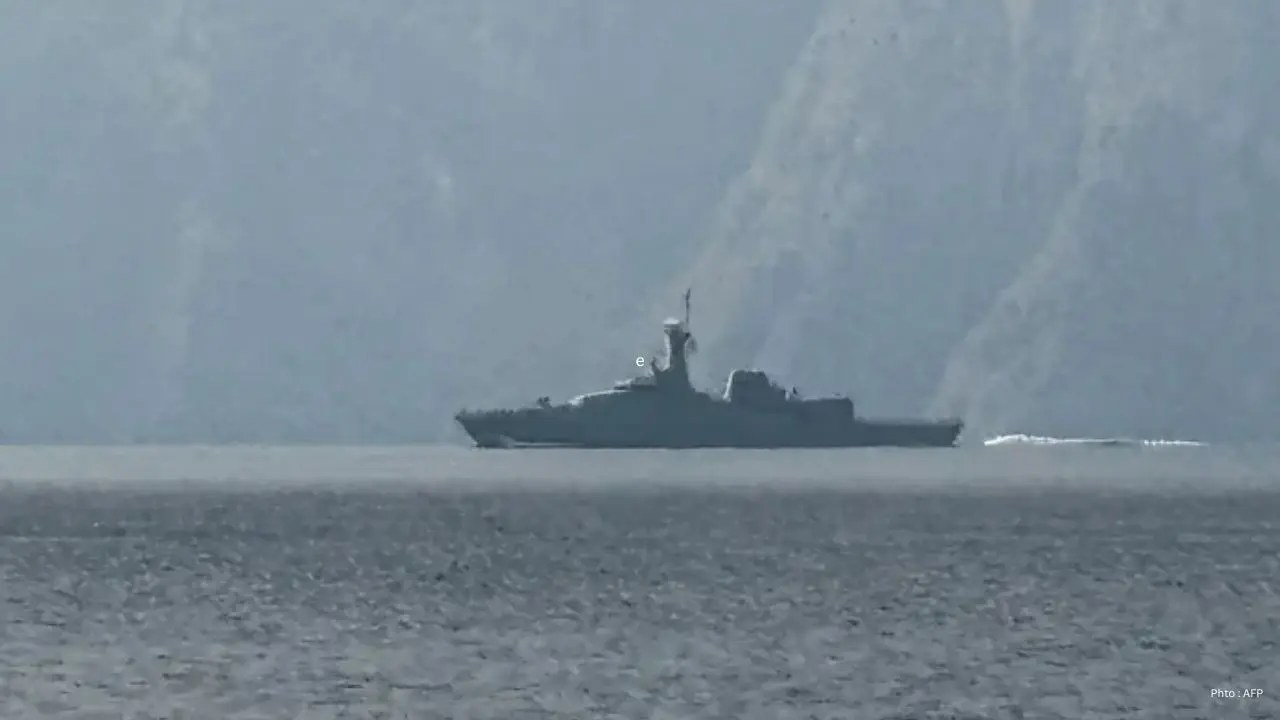
The United States military has said that American naval forces successfully intercepted Iranian drone and missile attacks targeting three US Navy ships operating in the Strait of Hormuz. The incident marks another serious escalation in tensions between Washington and Tehran at a time when regional stability in the Middle East remains fragile.
According to US defence officials, the attacks involved a combination of drones, anti-ship missiles, and fast attack boats launched by Iranian forces or groups linked to Iran near the strategic waterway. American naval systems reportedly detected the incoming threats early and activated defensive measures to destroy or block the projectiles before they could strike the ships.
The Pentagon stated that no US sailors were injured and none of the naval vessels suffered major damage during the confrontation. Officials described the American response as “successful and defensive,” emphasizing that US forces acted to protect military personnel and ensure freedom of navigation in international waters.
The Strait of Hormuz is considered one of the world’s most important maritime trade routes because a large percentage of global oil shipments pass through the narrow waterway every day. Any military incident in the area immediately raises concerns about global energy security, shipping safety, and rising oil prices.
US military sources said the targeted ships were conducting routine operations in the region when the attacks occurred. American fighter aircraft and naval defence systems were reportedly involved in intercepting the threats, while additional US forces in the Gulf were placed on high alert following the incident.
Iranian officials accused the United States of increasing military pressure near Iranian territorial waters and claimed that Tehran has the right to defend its regional interests. While Iran did not immediately confirm direct involvement in the attacks, Iranian state-linked media described the growing American military presence in the Gulf as provocative and dangerous.
The latest confrontation comes during a period of already heightened tensions between Iran and the United States over regional security, sanctions, and military operations in the Middle East. Recent weeks have seen repeated drone incidents, missile exchanges, and naval standoffs involving Iran, the United States, and Gulf allies.
Security experts warned that continued military incidents in the Strait of Hormuz could create serious risks for international trade and global markets. Shipping companies operating in the region are reportedly reviewing security procedures while several countries continue monitoring developments closely.
The US government reaffirmed its commitment to protecting international shipping routes and maintaining stability in the Gulf region. American officials also warned that any further attacks on US military assets would receive a strong response.
International diplomatic efforts are continuing as regional powers and global leaders push for restraint to avoid a larger military conflict. Analysts believe the situation remains highly sensitive, with fears growing that repeated confrontations could eventually trigger wider instability across the Middle East.