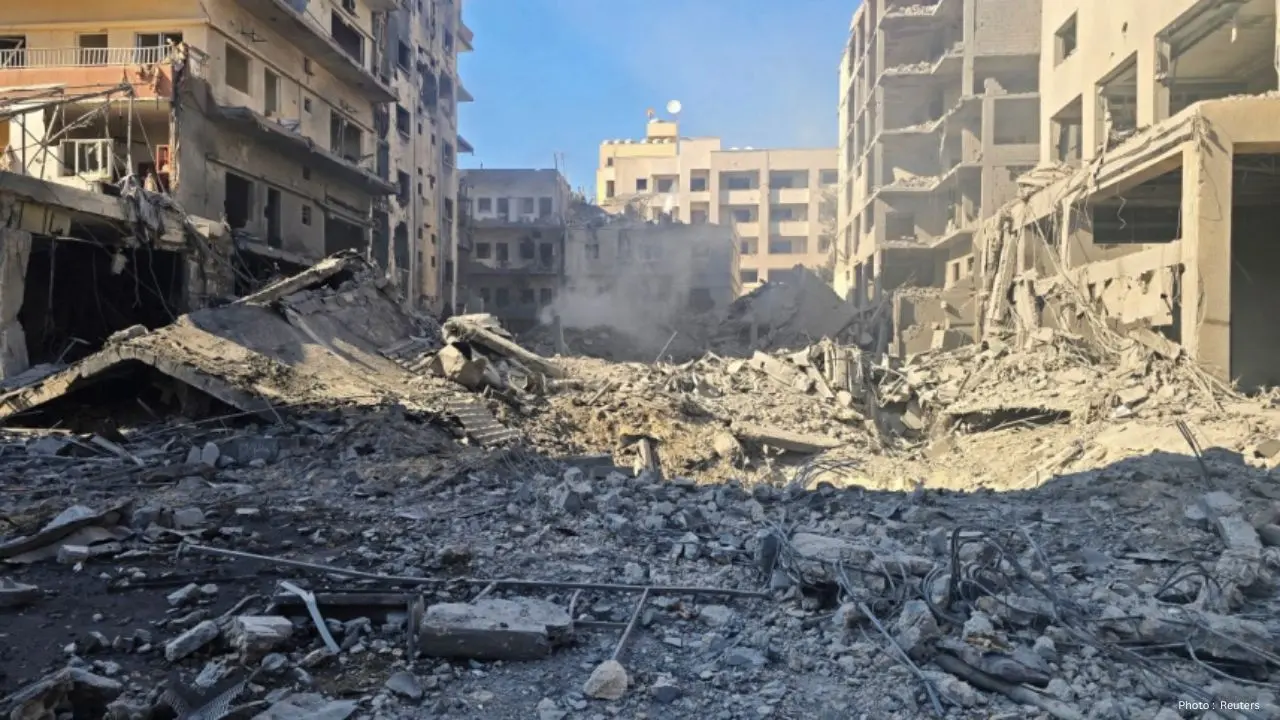
In a significant escalation of hostilities, the United States conducted military strikes on Iranian military installations, which resulted in a retaliatory attack by Tehran targeting a U.S.-affiliated air base. The situation has alarmed observers across the Middle East and beyond, raising fears of a broader regional conflict.
This military engagement marks one of the most serious confrontations in recent times between Washington and Tehran. American officials defended the strikes as a necessary defensive response to threats posed by Iran's military activities, aiming to safeguard U.S. personnel and interests in the area.
In retaliation, Iran targeted a military air base linked to U.S. operations, justifying its actions as a necessary response to previous strikes on its territory. This back-and-forth illustrates the fragile and contentious nature of U.S.-Iran relations.
Decades of discord over military presence, regional power dynamics, and security issues have long fueled tensions between the two nations. While diplomatic efforts have intermittently alleviated strains, substantial unresolved disputes persist. The current situation reflects the volatile nature of military engagement and its propensity to escalate quickly.
The ramifications of these military actions extend well beyond the U.S. and Iran. Neighboring countries are observing closely, as rising tensions threaten to destabilize the entire region, which is often left vulnerable amid major power confrontations.
Global energy markets are also reacting with caution, given the Middle East's pivotal role in oil production and transport. Any escalation that disrupts critical shipping routes or energy infrastructures could adversely affect global fuel prices and instill uncertainty among consumers and businesses alike.
Investor sentiments in financial markets have shifted cautiously, as geopolitical uncertainty tends to spur worries about trade and economic prospects. Companies operating within the region could face significant hurdles if the instability persists.
Humanitarian concerns are mounting too, with the potential for military confrontations to disrupt civilian life, damage infrastructure, and engender long-term socio-economic challenges. International entities continue to stress the importance of civilian protection and the avoidance of actions that could exacerbate existing tensions.
Global leaders are anticipated to keep working toward diplomatic resolutions, striving to minimize escalation risks. Calls for restraint and dialogue among all parties remain prevalent, despite ongoing significant disagreements. Diplomacy is broadly viewed as the best way to foster stability and reduce hostility in the region.
The recent exchanges between the U.S. and Iran underscore the precarious security landscape of the Middle East. The cycle of military actions and retaliatory measures can escalate rapidly, generating widespread unease about broader consequences. As events unfold, the focus will be on whether sustained diplomatic efforts can mitigate escalation and enhance long-term peace.