In a move that could reshape regional dynamics, the United States and Armenia have signed a significant strategic partnership agreement in Yerevan, just as the nation gears up for important parliamentary elections. This agreement underscores Armenia’s increasing collaboration with Western powers amidst rising tensions with Russia.
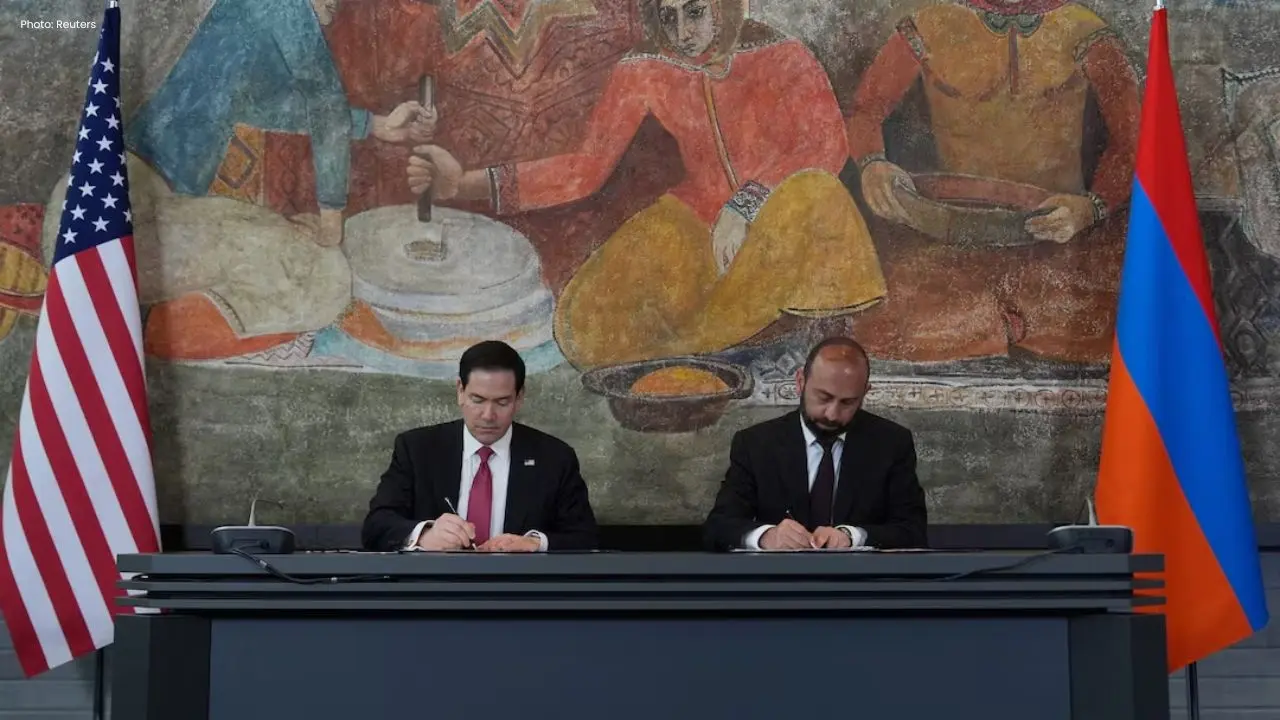
The signing ceremony took place on Tuesday, attended by U.S. Secretary of State Marco Rubio and Armenian Foreign Minister Ararat Mirzoyan. The agreement encompasses collaboration on essential minerals, improvement of regional transport links, and economic growth.
This visit by U.S. officials occurs less than two weeks before parliamentary elections slated for June 7, where Prime Minister Nikol Pashinyan's Civil Contract party faces significant opposition from groups favoring closer ties with Russia.
Included in the partnership is a framework for critical mineral resources, with both countries committed to ensuring dependable access to vital minerals necessary for modern technologies and industries.
A pivotal aspect of the agreement is the support for a proposed transit corridor spanning 43 kilometers through southern Armenia, aimed at connecting Azerbaijan to its Nakhchivan exclave and Turkey. Dubbed the “Trump Route for International Peace and Prosperity,” or TRIPP, this corridor is considered crucial for the peace process between Armenia and Azerbaijan after years of conflict.
This new route holds potential to enhance trade between Asia and Europe, reducing reliance on transportation through Russia and Iran. Analysts suggest it could play a vital role in global trade and energy supply routes.
Armenia’s increasing alignment with Western nations has induced new strains with Moscow. Russia has cautioned Armenia of possible economic repercussions, such as rising gas prices, in response to deeper Western ties. Recently, Moscow has limited imports of Armenian flowers, mineral water, and brandy, reflecting discontent over Yerevan’s foreign policy inclinations.
Despite facing such pressures, Armenian leaders are committed to forging stronger relationships with Western allies, including the EU and the United States, evident in Armenia’s recent hosting of a significant European Union summit.
Analysts note that the election outcome could significantly influence Armenia's geopolitical strategy for the foreseeable future, as the nation seeks to balance its historical ties with Russia while fostering relationships with Western nations and neighboring allies.