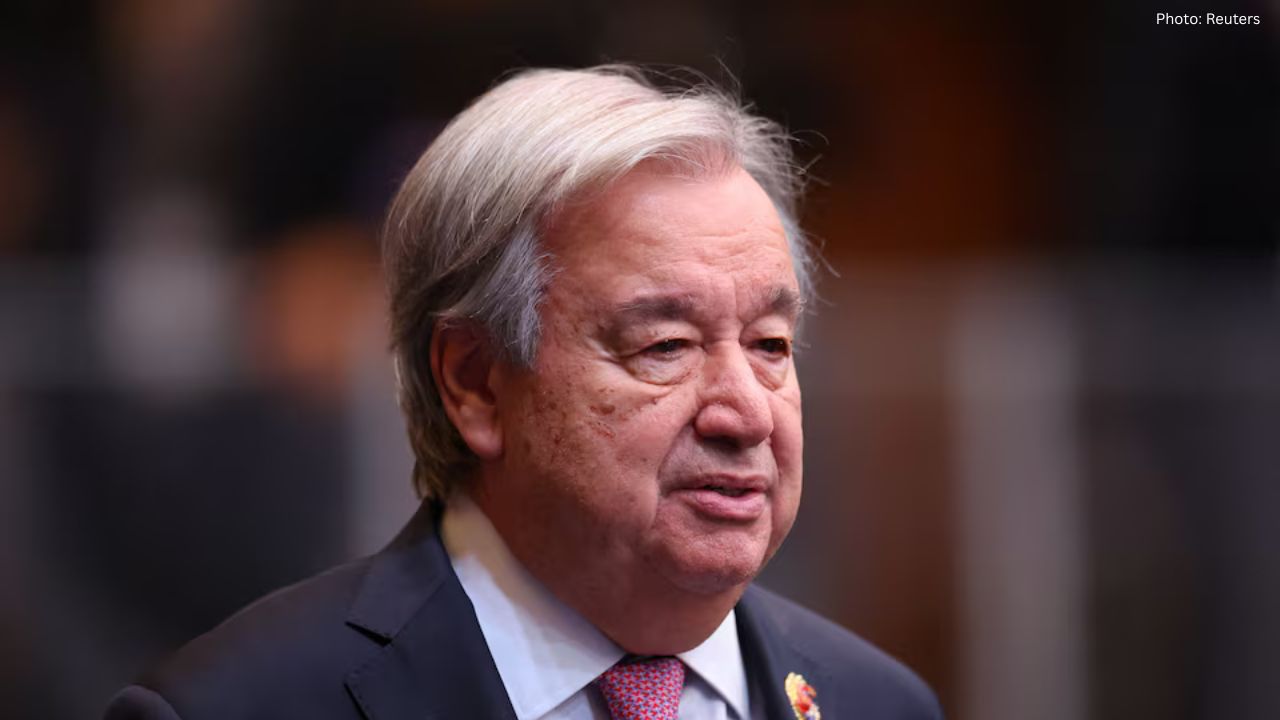
United Nations Secretary-General Antonio Guterres has expressed strong disapproval of a new Israeli law permitting the blockage of electricity and water to facilities governed by the UN agency dedicated to Palestinian refugees. The UN cautioned that this legislation might severely undermine humanitarian operations and exacerbate the challenging conditions faced by millions of Palestinians relying on such services.
A spokesperson for the UN remarked that discontinuing essential utilities would impede the United Nations Relief and Works Agency for Palestine Refugees in the Near East, famously known as UNRWA, from functioning efficiently. The agency is crucial in providing education, healthcare, and emergency assistance to Palestinians across Gaza, the West Bank, East Jerusalem, Jordan, Lebanon, and Syria.
The UN emphasized that international law affords protection to UNRWA and its facilities. Per the Convention on the Privileges and Immunities of the United Nations, UN properties are deemed inviolable and must not be interfered with in any manner. The spokesperson stressed that UNRWA is an essential component of the United Nations, playing a vital role in supporting refugees.
Philippe Lazzarini, the UNRWA Commissioner-General, also condemned the decision, describing it as part of a systematic attempt to weaken the agency. He articulated that blocking essential utilities represents another phase in a broader initiative to delegitimize UNRWA and obstruct its efforts, especially amid escalating humanitarian demands.
In 2024, Israel's parliament enacted a law prohibiting UNRWA from functioning within Israel and preventing Israeli officials from engaging with the agency. Consequently, UNRWA continues its operations primarily in East Jerusalem, which the UN considers occupied territory, despite Israel deeming the entire city as its sovereign territory.
Historically, relations between Israel and UNRWA have been strained, but recent events have intensified following the onset of the war in Gaza. Israel has persistently urged for the dismantling of the agency and the reassignment of its functions to alternative UN bodies. The United Nations has firmly rejected these proposals, asserting that no other agency can currently fulfill UNRWA's critical role.
The restriction on essential utilities was implemented alongside Israel's suspension of numerous international NGOs operating in Gaza. These organizations were halted after failing to comply with newly introduced vetting standards. Aid groups and governments have raised alarms that such actions could drastically reduce access to food, medical care, and clean water.
A coalition of countries, including Canada, France, the United Kingdom, Japan, and several European nations, has released a joint statement cautioning that the cessation of international aid efforts would have grave repercussions. They stated that if aid operations were hindered, nearly one-third of healthcare facilities in Gaza could face closure.
As the humanitarian situation deteriorates, the United Nations, along with many global leaders, is urging Israel to rethink its decisions. They warn that reducing essential services to UN agencies could exacerbate human suffering and further destabilize an already precarious atmosphere.