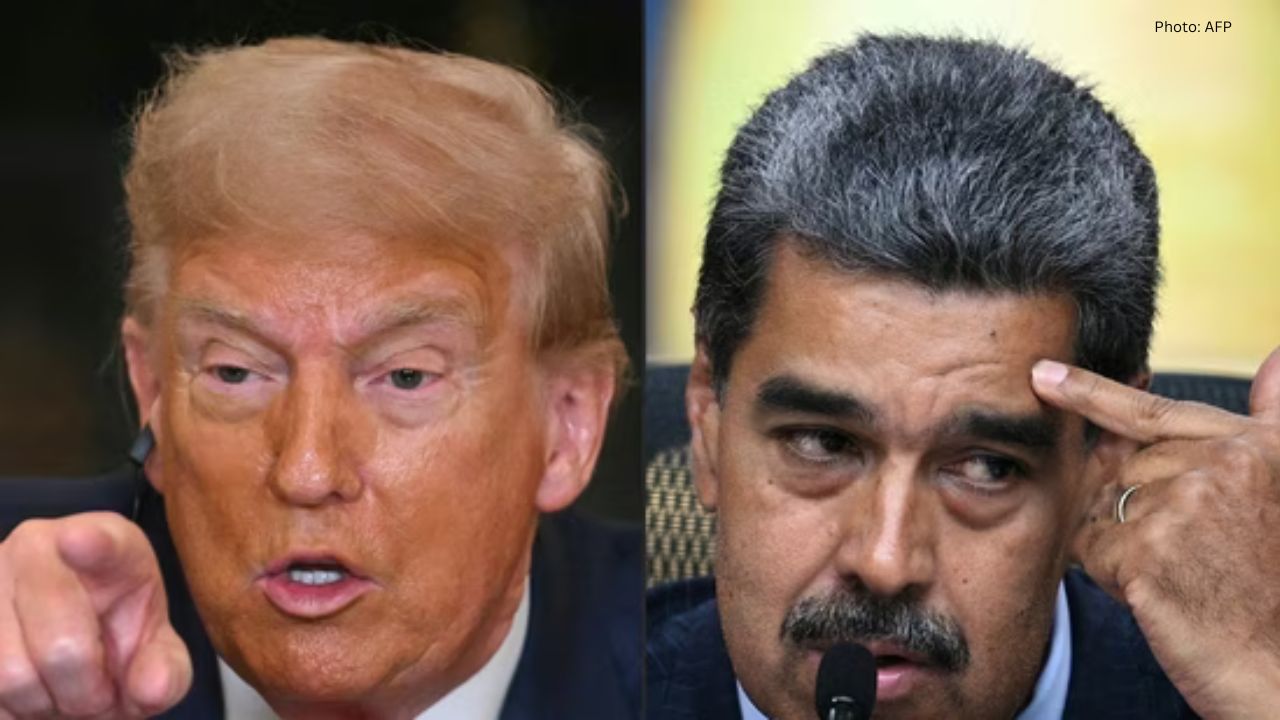
The abrupt U.S. military intervention in Venezuela has sent shockwaves throughout Latin America and ignited global unease. Explosions rocked Caracas, coinciding with U.S. President Donald Trump’s announcement that President Nicolas Maduro and his spouse were captured, marking a significant shift in the already strained relations between the two nations. The Venezuelan administration responded by declaring a national emergency, labeling the U.S. strikes as military aggression.
For an extended period, Washington and Caracas found themselves in a fierce impasse. President Trump exerted overt pressure on Maduro to resign, suggesting it would be “wise” for him to abdicate power. The U.S. has persistently refused to recognize Maduro as a legitimate leader, accusing him of fraudulent elections, oppression, and causing the nation’s economic downfall. Maduro, in power since 2013, consistently denies these allegations and accuses the U.S. of attempting to oust him through force.
Drug trafficking is a focal point cited by the Trump administration. The U.S. claims that Venezuela has evolved into a significant conduit for cocaine and other narcotics bound for North America. Trump has continuously placed blame on Maduro for facilitating or even orchestrating the criminal networks tied to drug smuggling. Two particular Venezuelan factions, the Tren de Aragua and Cartel de los Soles, have been designated as Foreign Terrorist Organizations by the U.S. Washington asserts that the Cartel de los Soles operates with the backing of high-ranking officials, including Maduro. Venezuelan officials strongly contest this, asserting that these accusations are politically motivated.
Another contributing factor to U.S. action is illegal migration. Over the last decade, millions of Venezuelans have been forced to flee their homeland due to economic collapse, scarcity of essentials, and political repression. A considerable number have sought refuge in the United States, placing strain on border control and social services. Trump has pointed directly at Maduro’s policies as the root of this large-scale migration crisis, arguing that the leadership in Venezuela has instigated the conditions that compelled people to abandon their homes.
Oil and economic factors also play a pivotal role in this turmoil. Venezuela possesses the largest proven oil reserves in the world. The Maduro regime has long claimed that Washington’s true objective is to gain control over these resources. The U.S. has enacted stringent sanctions, advocated for a blockade on Venezuelan oil, and amplified its military presence in the Caribbean. Supporters of Maduro see the recent military actions as a broader scheme to alter the regime and seize control over Venezuela’s energy wealth.
In recent weeks, U.S. military activities in the region have surged, with the deployment of warships, an aircraft carrier, and fighter jets. Trump asserted that these actions aim to combat drug trafficking. The U.S. has also conducted multiple strikes on vessels allegedly transporting narcotics from South America. Critics argue that these operations raise significant legal and humanitarian concerns.
Maduro now confronts charges of narco-terrorism in the U.S., while nations like Russia have condemned the American military actions, labeling them as a breach of Venezuela’s sovereignty. Many Latin American countries are apprehensive, as this situation evokes memories of past U.S. interventions in the area.
The developments in Venezuela underscore how interconnected issues like drugs, migration, ideology, and natural resources can converge to spark severe international crises. As new developments unfold, the world is watching closely to ascertain how this conflict will alter regional stability and the dynamics of global diplomacy.