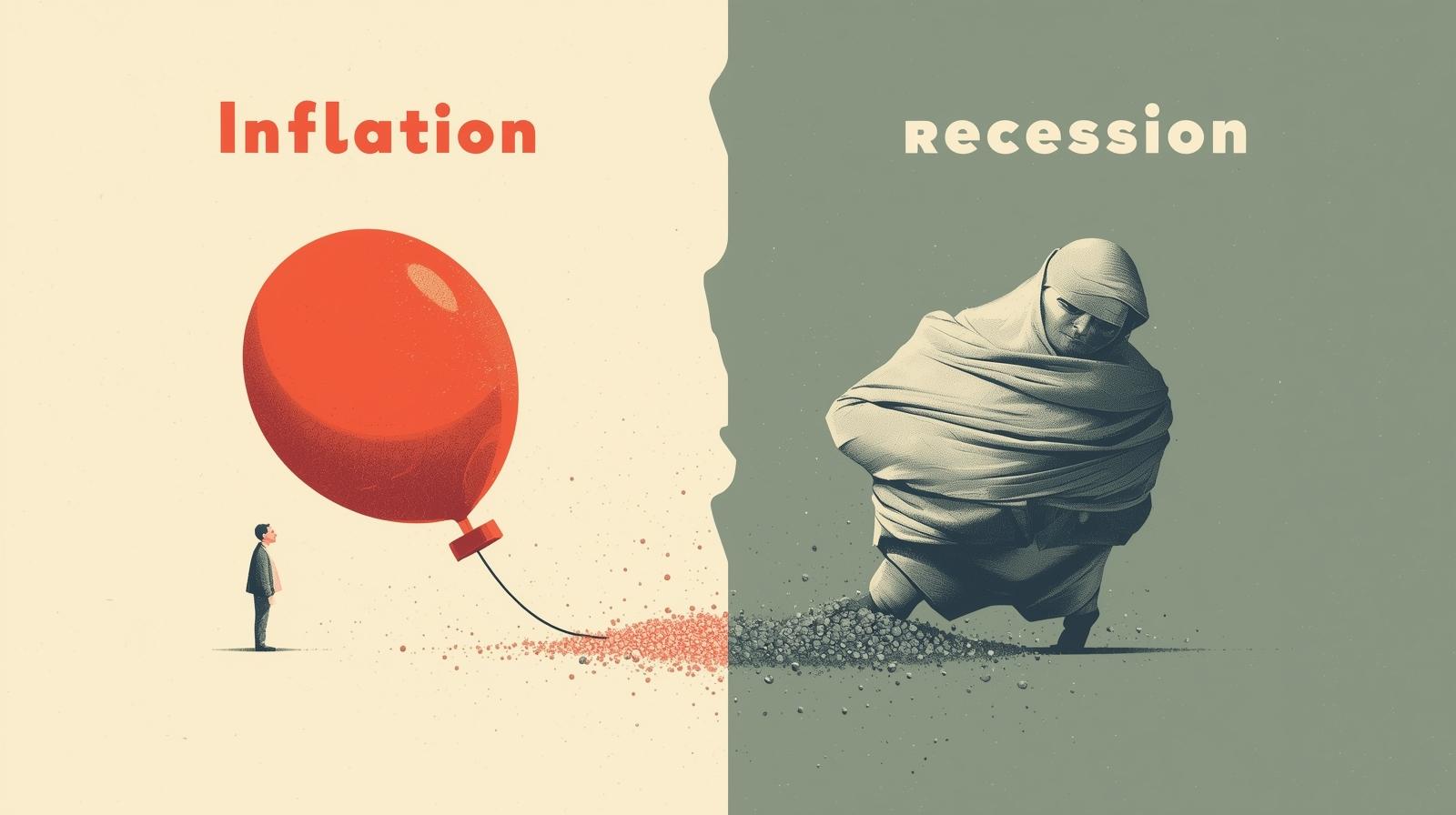
Understanding Inflation and Recession: Key Insights for Your Savings
The Economic Landscape
Financial discussions often center around terms like inflation and recession, which can seem abstract yet have real implications for your personal savings and financial well-being. It's crucial to grasp the distinctions between these concepts and learn how to navigate each to secure your money for the future.
This guide simplifies the meanings of inflation and recession, outlines their effects on your finances, and offers practical financial strategies to protect your savings.
What Is Inflation?
Inflation indicates the increase in prices for goods and services over time. When inflation rises, the value of your currency decreases, meaning that your currency won’t stretch as far as it once did.
For example, if a loaf of bread cost ₹30 last year but now costs ₹33, that shows inflation in action. While modest inflation is typical and healthy for growth, high or extended inflation can undermine savings and complicate everyday financial management.
What Causes Inflation?
There are several factors that can drive inflation, such as:
-
Demand-pull inflation: Prices elevate when consumer demand surpasses supply.
-
Cost-push inflation: Price hikes occur when production costs escalate, leading companies to pass along these costs to consumers.
-
Monetary policy: An increase in money supply or lowered interest rates can result in too much money chasing limited goods.
-
Global influences: Events such as supply chain disturbances, changes in oil prices, or geopolitical issues can lead to inflation.
In essence, inflation can signal economic growth—but excessive inflation can create financial stress.
Impact of Inflation on Your Savings
Inflation influences your savings in several ways:
-
Decreasing purchasing power:
For instance, if your savings accrue 4% interest yearly but inflation is 6%, you’re minimizing your money's actual value annually by 2%.
-
Rising living costs:
Essentials like groceries, housing, healthcare, and gas get pricier, forcing you to tap into savings or scale back on plans.
-
Investment returns:
Returns on fixed-income assets such as bank deposits and bonds may diminish during inflation periods. In contrast, real estate, stocks, or commodities might fare better.
-
Emergency fund erosion:
Failing to invest your emergency funds can result in their value declining in periods of high inflation.
Ways to Shield Your Savings from Inflation
You can protect and even enhance your wealth during inflation with these smart techniques:
-
Diversifying your investments: Avoid concentrating funds. Spread across stocks, mutual funds, gold, and real estate.
-
Investing in inflation-hedged assets: Seek out options such as inflation-indexed bonds or equity mutual funds that might surpass inflation over time.
-
Annually review your savings goals: Your savings targets should expand as prices do. Adjust your budget and contributions accordingly.
-
Reducing unnecessary expenses: Focus on value-driven spending and cutting waste that doesn't benefit you long-term.
-
Maintaining an emergency fund: Ideally, keep a buffer of 6–12 months’ worth of expenses readily accessible.
What Is a Recession?
A recession is defined as a notable drop in economic activity lasting months or longer, typically characterized by growing unemployment, decreased consumer spending, and lower business investments.
Economists officially declare a recession when a country faces two successive quarters of negative GDP growth.
Recessions generally result in fewer job opportunities, decreased consumer spending, and a general decline in economic confidence, creating an uncertain environment for individuals and businesses.
Reasons Behind a Recession
Multiple factors can trigger a recession, such as:
-
Elevated inflation and interest rates (which can decrease consumer spending)
-
Global economic shocks (like pandemics or conflicts)
-
Financial bubbles bursting (such as major market crashes)
-
Inadequate fiscal strategies or high government debt levels
Overall, recessions often succeed periods of swift economic growth or runaway inflation.
How Recessions Impact Your Finances
While inflation hides behind the scenes, recessions make their presence felt by influencing job security and income stability. Here’s how they affect your savings:
-
Job losses:
Employers frequently downsize during economic downturns, leading to the loss of jobs or pay cuts, prompting individuals to rely on savings.
-
Decreased investment returns:
Stock markets typically plummet in recessions, impacting your investement accounts, retirement funds, and property values.
-
Lower consumer confidence:
People tend to curb spending, contributing to economic slowdown—a cycle that takes time to reverse.
-
Tighter credit access:
Financial institutions might raise interest rates or become more selective in lending, complicating access to credit.
Safeguarding Your Finances During a Recession
Although recessions can be unpredictable, rigorous financial planning can lessen their effects:
-
Establishing a robust emergency fund: This should be your top priority—having adequate cash reserves is essential in case of job loss.
-
Diversifying income sources: Side jobs or freelance work can supplement your income during uncertain times.
-
Reviewing your investment approach: Pivoting toward safer investments such as government bonds or dividend stocks during turbulent periods can be wise.
-
Avoiding unnecessary debt: Limit credit card usage and refrain from incurring new loans unless necessary.
-
Continuing to develop skills: Improving professional skills can enhance your employability even during economic contractions.
Inflation and Recession: Key Distinctions
While both inflation and recession affect your finances, they do so in distinct manners.
| Category |
Inflation |
Recession |
| Definition |
Increase in prices and decrease in purchasing power |
Drop in economic growth and employment |
| Impact on Savings |
Decreases money value |
Reduces income and investment returns |
| Standard Response |
Increase interest rates to manage pricing |
Decrease interest rates to boost growth |
| Consumer Behavior |
Spend more before further price hikes |
Spend less to save amid uncertainty |
| Investment Preferences |
Favor real assets and equities |
Favor stable, low-risk investments |
Recognizing these differences equips you to prepare your finances, regardless of which economic phase lies ahead.
Long-Term Strategies for Financial Resilience
Whether inflation is rising or a recession is on the horizon, the foundation of protecting your savings rests in financial discipline and long-term planning.
Consider these methods to secure your financial future:
-
Automate your saving and investment efforts: Consistency is more valuable than timing.
-
Stay informed: Monitor central bank communications, inflation statistics, and job market developments.
-
Avoid hasty selling: Short-term fluctuations are normal; long-term investors typically gain from remaining committed.
-
Value health and insurance: Economic uncertainties can be challenging, but medical emergencies without coverage can lead to serious financial challenges.
-
Maintain a growth-oriented mindset: Both inflation and recessions are cyclical—economic recovery and new opportunities will always appear.
Concluding Thoughts
Both inflation and recession are natural features of the economic cycle, but their implications for your personal savings hinge on your level of preparedness. While inflation gradually diminishes the worth of money, recessions can jeopardize income stability. Together, they highlight the importance of financial literacy and effective planning.
By diversifying your investments, eliminating unnecessary expenses, and remaining disciplined, you can navigate challenging times and continue advancing your financial goals. Remember, strength in finance isn't solely about predicting market trends; it’s also about being ready for any eventuality.