Are Calls Still Trustworthy?
Traditionally, receiving a phone call meant hearing a human voice. However, that boundary is increasingly blurred as technology advances.
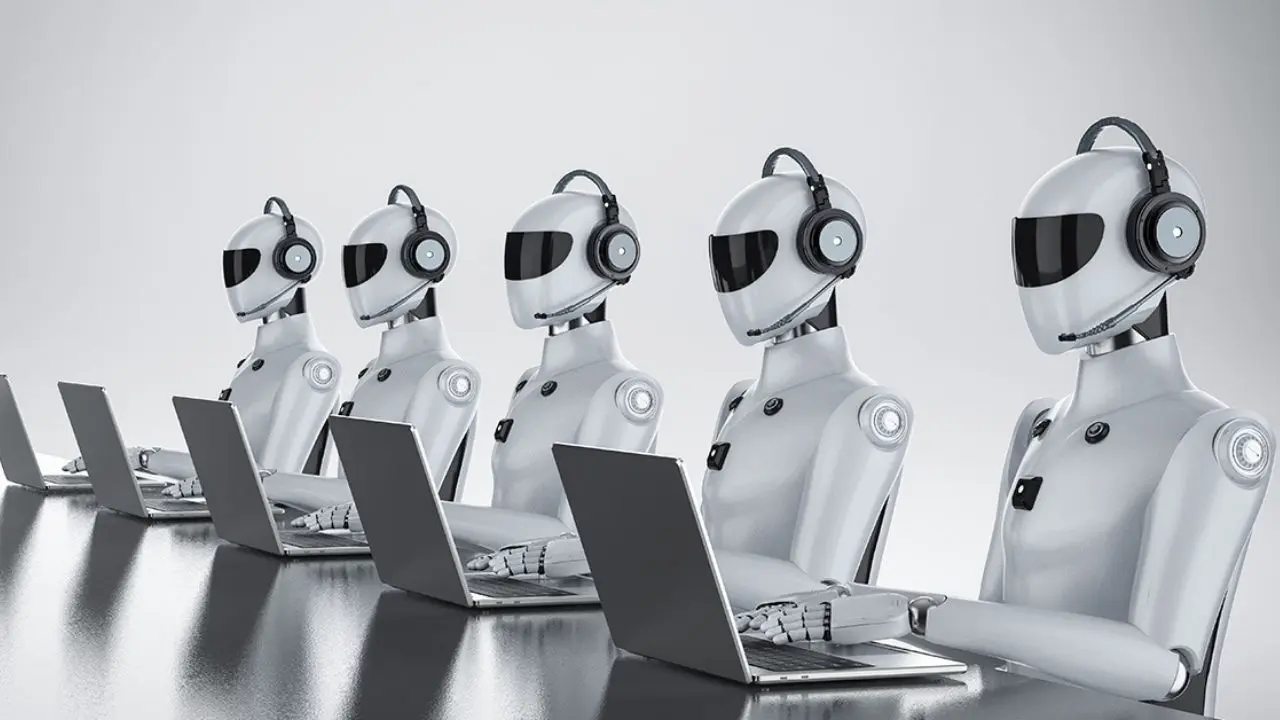
Artificially generated voices can now mimic human breath patterns, emotions, accents, and tones. These machines create a range of vocal expressions, making it possible to sound warm, concerned, or even tired. Such technology is now seeping into customer service experiences.
As you interact with customer service through phone reminders or updates, you might find yourself grappling with a crucial question:
Is this a real person ... or an AI?
Understanding AI Voice Cloning
AI voice cloning utilizes sophisticated software to replicate a human voice through artificial intelligence. With sufficient audio data, these systems can imitate speech patterns and emotional nuances effectively.
Unlike traditional recordings, this technology synthesizes speech directly from text, creating real-time interactions.
This real-time feature is transformative, allowing for:
What you hear is no longer a robotic playback, but an interactive voice simulation.
The Mechanics Behind Voice Cloning
This technology deconstructs human speech into mathematical algorithms, learning aspects such as:
-
Pitch and tone variations
-
Delivery speed and rhythm
-
Patterns of emphasis
-
Gaps of silence
-
Responses to stress and emotional variances
Once trained, the AI can convincingly recreate speech for phrases the original speaker may not have said.
Why the Rapid Adoption of Voice Cloning?
Customer service operations can be costly.
Businesses incur extensive expenses on call centers, training, and personnel. AI voice systems offer a solution that significantly cuts these costs.
Organizations are utilizing voice clones due to their ability to:
-
Scale operations without delay
-
Operate continuously without breaks
-
Avoid salary demands
-
Remain consistently calm and predictable
-
Adhere to provided scripts seamlessly
-
Simultaneously manage multiple calls
-
Eliminate fatigue concerns
For businesses, it appears to be a compelling resolution.
Conversely, for consumers, it raises unsettling feelings.
The Shift from Traditional Voice Systems
Basic robotic answering systems often provoke customer frustration.
What voice cloning provides is a conversational experience that can handle:
Such advancements prompt organizations to implement it more aggressively.
The output sounds remarkably human.
The imitation feels eerily human.
The efficiency is distinctly inhuman.
The Dangers Beneath the Comfort
The very reason voice cloning is effective is also what makes it perilous.
We inherently trust voices.
Recognizable voices lower our defenses.
A soothing tone fosters compliance.
An approachable accent enhances comfort.
When machines mimic human speech convincingly, listeners can fall prey to naivety.
In customer service scenarios, there's an automatic assumption of authority.
When a voice claims to be from a familiar institution like “your bank” or states “updating your delivery”—confidence is instinctively bolstered.
Why Our Brains Struggle with Fake Voices
While visuals can be trained for authenticity, auditory deception proves to be trickier.
Evolved cognitive patterns lead us to trust spoken communication.
When hearing:
-
Realistic breath
-
Emotional inflections
-
Natural speech pauses
we process it as genuine.
Voice cloning takes advantage of this inherent psychological shortcut.
The illusion of reality is strong because it aligns with our natural instincts.
Exploitation of Voice Cloning by Criminals
Criminals are quick to embrace innovations.
Scammers are swiftly adapting voice cloning to their schemes.
Recent trends show escalating global incidents involving:
-
Impersonating family members
-
Mimicking company representatives
-
Duplicating executive voices
-
Simulating official authority
-
Creating false emergency scenarios
A scammer could create a convincing replication of a loved one’s voice, spinning a tale of crisis.
Upon hearing a familiar tone, panic can overshadow rational thought.
Money can change hands swiftly.
The deception can be effectively executed.
Why Voice Cloning May Be More Dangerous than Text-Based Fraud
Text messages can be scrutinized.
Emails can be examined for authenticity.
Voices, however, are deeply personal.
When someone appears to sound exactly like a family member or colleague, skepticism fades.
Fear takes over.
Voice cloning targets feelings directly.
Benefits for Companies Versus Emotional Costs for Customers
Companies assert that this technology enhances customer services.
In certain instances, it does provide advantages:
-
Shortened wait times
-
Linguistic support for diverse demographics
-
Consistent service experiences
-
Around-the-clock assistance
-
Ability to accommodate high call traffic
However, the nuances of genuine emotion cannot be replicated.
Algorithms don’t grasp true human distress.
AI reacts based on pre-existing data.
This distinction can carry significant implications.
The Void of Human Insight
Human representatives can discern:
AI handles only the literal words.
It fails to comprehend the human essence.
In critical situations, the ability to interpret nuances can be life-saving.
Automated voices might falter in such moments.
Trust: A Fragile Commodity
Customer service is founded on one principle: trust.
When voices can be fabricated, that trust diminishes rapidly.
If clients can’t discern:
Then telephone communication becomes fraught with tension.
People grow hesitant to answer calls.
Support channels may lose integrity.
Even reputable firms may raise suspicions.
Mass adoption of voice cloning could undermine public faith in vocal communication altogether.
Legal Frameworks Are Strained
Voice cloning occupies uncertain legal territory.
The pressing inquiries are daunting:
-
Who holds the rights to an individual’s voice?
-
Can it be used without consent?
-
Who is liable for repercussions stemming from cloned speech?
-
How can one demonstrate misuse?
-
How do you prove identity theft if the identity is synthetic?
Law tends to be slow.
Technology evolves at a rapid pace.
Victims are left in limbo.
Identity Theft Has Entered a New Era
Previously, identity theft relied on documentation.
Now, it targets your voice.
Your vocal signature could serve as a password, and it can be hijacked without your awareness.
The Social Psychological Toll
Trust in voice-based communication is dwindling.
People are increasingly wary of:
Anxiety regarding communication is escalating.
The phone is becoming a source of unease.
When a voice feels “too polished,” instinctive discomfort arises.
We are collectively drifting towards a state of digital paranoia.
Defining Responsible Use
Voice cloning in itself isn’t inherently wrong.
It holds immense potential.
Yet, like all powerful technologies, it comes with responsibilities.
Ethical application should include:
-
Obtaining consent from voice owners
-
Clear communication to consumers
-
Avoiding impersonation
-
Implementing robust fraud defenses
-
Promoting transparency in policies
-
Allowing user opt-out rights
Should a voice not be real, users deserve to be informed.
Silence can mislead.
Building Trust Through Transparency
When companies state:
“This communication employs synthetic voice technology,”
trust remains intact.
It is secrecy that erodes credibility.
Self-Protection for Consumers
People should now approach telephone interactions with caution.
Recommended actions include:
-
Being wary of urgent asks over the phone
-
Verifying requests through official applications
-
Hanging up and re-dialing known contact numbers
-
Creating verification codes for family communication
-
Avoiding sharing sensitive information like OTPs
-
Staying emotionally detached during discussions
-
Questioning any financial urgency at all times
The era of blind faith in calls is over.
Gaps in Public Knowledge Are Expanding
Few truly grasp the sophistication of AI voice technology.
Educational institutions do not cover these topics.
Work environments lack explanations.
Families are often unaware.
This gap in knowledge is risky.
Digital literacy must now encompass audio comprehension.
It goes beyond internet safety.
Urgency in Legislative Action
While regulatory processes lag, damage unfolds with speed.
Authorities should take immediate steps to:
-
Criminalize identity voice cloning practices
-
Impose rules for disclosure
-
Sanction for misuse
-
Establish authentication standards
-
Create frameworks for consent
Without law, technology can lead to chaos.
The vocal dimension is too intimate to leave unguarded.
Workplace Dynamics Will Also Evolve
In-house communications won't escape these changes.
Voice cloning could assist in:
-
Summarizing meetings
-
Designing training resources
-
Facilitating instructional calls
-
Managing customer outreach
However, it can just as easily be misused for:
-
Creating bogus managerial demands
-
Facilitating internal deceit
-
Direct impersonation
-
Corporate manipulation strategies
Businesses must safeguard vocal validation systems just like they do with passwords.
Will Society Accept AI Synthesized Voices?
It's possible.
Humans are adaptable.
However, acceptance will likely carry with it a sense of unease.
People may acclimate to a world where they cannot determine the authenticity of a voice.
This isn't progress.
It's a loss of certainty.
Technology should enhance life, not complicate it.
Walking the Fine Line Between Benefit and Harm
Voice cloning holds promise:
-
To assist individuals with disabilities
-
To enhance elder care systems
-
Facilitating language accessibility
-
Aid in emergency situations
Yet it also bears the potential to:
The technology itself is indeed neutral.
Its applications, however, are deeply subjective.
Concluding Insights: A Preparedness Gap
The current landscape lacks readiness.
Legally, socially, and emotionally, we are behind.
Voice cloning has integrated into our lives without warning.
It cloaked itself in convenience.
Yet beneath this convenience lurks potential consequences.
Without enforceable protections, trust will continue to decline.
And as trust fades...
Communication deteriorates.
Voice cloning is shaping up to be one of the defining technological discussions of our time.
Once voices become untrustworthy...
What remains sacred?
DISCLAIMER
This analysis is offered solely for educational intents. It does not constitute legal, technological, or cybersecurity advice. Readers should consult professionals for security-related matters and keep current with artificial intelligence regulations.