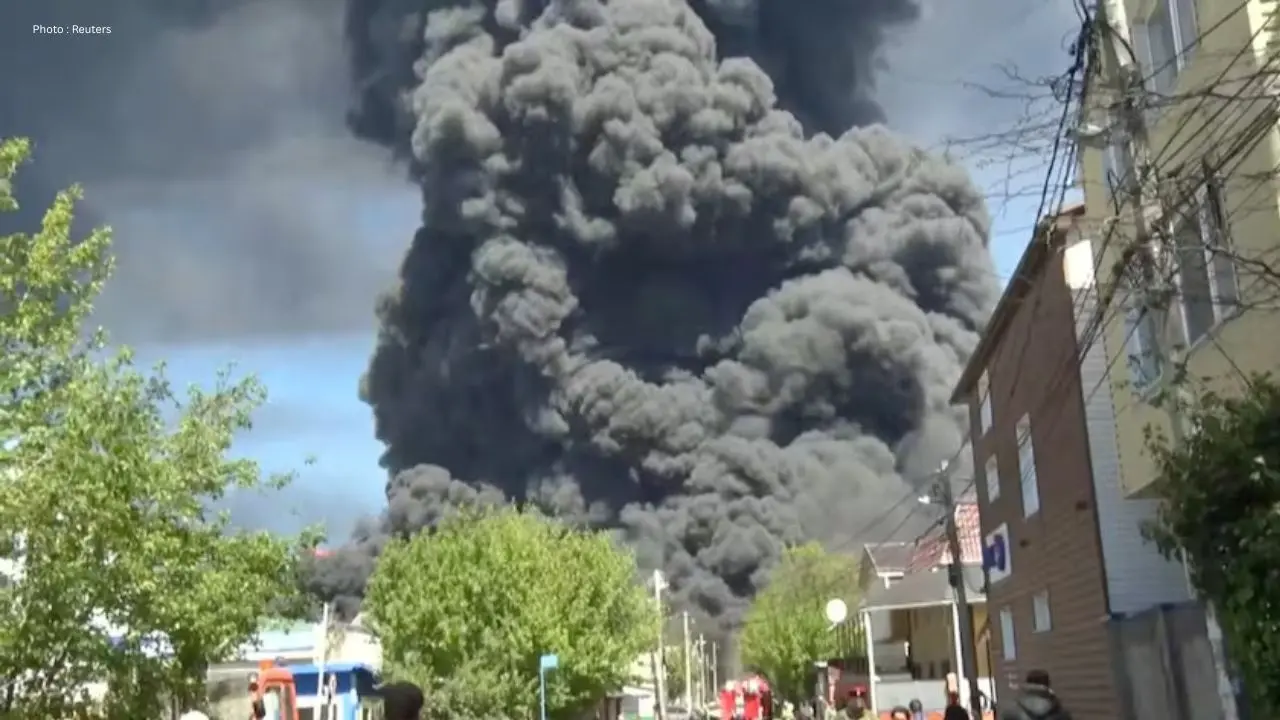
Ukraine has carried out another major drone strike on a Russian oil refinery, marking the third attack on the same facility within two weeks as Kyiv intensifies efforts to weaken Russia’s energy export network during a period of growing global oil instability.
The latest strike targeted the Tuapse oil refinery along Russia’s Black Sea coast. The refinery belongs to Rosneft, one of Russia’s largest energy producers. According to regional officials, the attack caused a large fire and forced emergency services to respond quickly to contain smoke and possible environmental contamination.
Videos released after the strike showed thick black smoke rising above the refinery and nearby coastal areas. Local authorities also reported oil contamination near the shoreline following earlier attacks on the facility.
Ukrainian special forces later claimed responsibility for the operation and described the repeated attacks as a successful campaign against Russian energy infrastructure. Officials in Kyiv say the strategy is designed to reduce Moscow’s ability to finance the ongoing war through oil exports.
The Tuapse refinery has become a key target because of its importance to Russian fuel exports through the Black Sea region. Industry experts estimate the facility accounts for a significant share of Russia’s fuel export capacity and produces products including diesel, fuel oil, and other petroleum materials.
Russian President Vladimir Putin accused Ukraine of worsening the global energy crisis through attacks on oil infrastructure. The Kremlin ordered emergency teams and firefighting units to the region as crews worked to contain the damage.
The refinery had already been operating under pressure after previous drone strikes earlier this month damaged export operations and interrupted shipping activity. Reports indicate Russian energy companies had begun redirecting oil supplies to Tuapse after damage to another Black Sea export facility at Novorossiysk.
Ukraine’s attacks come during one of the most unstable periods for global energy markets in recent years. Rising tensions in the Middle East, including conflict involving Iran and disruptions around the Strait of Hormuz, have already pushed oil prices sharply higher worldwide.
According to analysts, some of Ukraine’s international allies previously urged Kyiv to reduce attacks on Russian refineries because of fears that additional supply disruptions could worsen the global energy crunch. Ukrainian President Volodymyr Zelenskyy acknowledged earlier this year that partners had raised concerns about the impact of refinery strikes on international oil markets.
However, Ukrainian officials argue that Russia’s energy exports remain one of the main financial sources supporting the war effort. Kyiv believes reducing Russia’s oil revenue is necessary to weaken Moscow’s military capabilities.
Energy security expert Oleksandr Kharchenko said the attacks are intended to make Russian exports more expensive and difficult by damaging infrastructure and increasing operational risks around Black Sea shipping routes.
Analysts also say Ukraine’s drone capabilities have improved significantly during the war. Larger drone operations and more accurate targeting have allowed Kyiv to strike energy infrastructure deeper inside Russian territory than earlier in the conflict.
Meanwhile, global energy markets continue closely monitoring developments because Russia remains one of the world’s major oil exporters. Any disruption to exports from Black Sea facilities could affect fuel supplies and pricing in several regions already dealing with economic pressure from higher energy costs.
Despite concerns about market stability, Ukrainian officials insist they will continue targeting infrastructure connected to Russia’s war economy unless Moscow stops attacking Ukrainian cities and energy systems.
The refinery attack highlights how the war is increasingly expanding beyond front-line combat into economic and energy warfare, with both sides trying to damage critical infrastructure while global markets react to rising geopolitical uncertainty.