The United Arab Emirates (UAE) has opted to withdraw its remaining forces from Yemen, marking a significant shift in the geopolitical landscape of the Middle East. What commenced as a collaborative military initiative with Saudi Arabia has devolved into a pronounced conflict, heightening fears of increasing instability in Yemen and straining relations among Gulf nations.
On December 30, the UAE confirmed its decision to pull out its last troops from Yemen, which had been involved in counterterrorism operations since 2019 when the UAE formally ended its military engagement. The UAE's defense ministry stated that this withdrawal was voluntary, stemming from a newly conducted assessment of the prevailing circumstances.
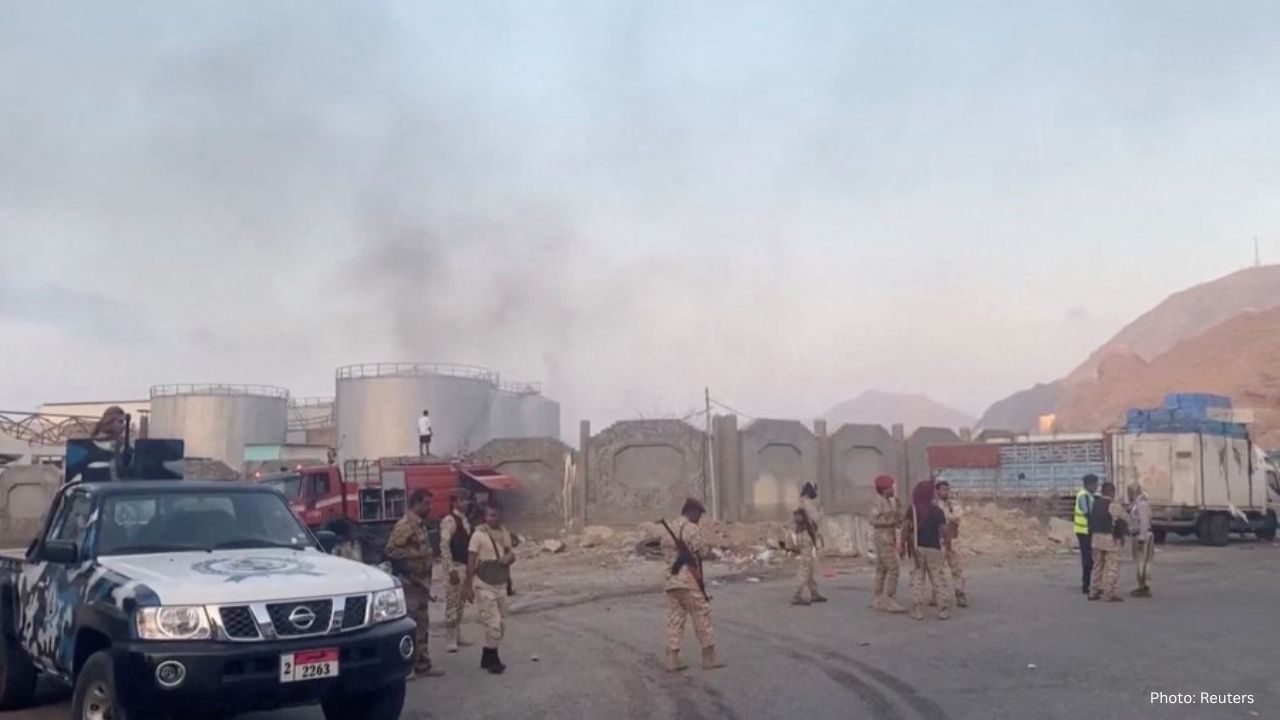
This announcement closely followed Saudi-led coalition airstrikes on Yemen's southern port city of Mukalla, targeting a shipment of arms believed to be associated with the UAE and intended for the southern Yemeni separatists. This military action has escalated tensions between the two erstwhile allies.
Saudi authorities have strongly endorsed a demand from Yemen's presidential council for the Emirati troops to depart within 24 hours. Rashad al-Alimi, head of the council and backed by Saudi Arabia, accused the UAE of fostering rebellion and military enhancements by the Southern Transitional Council (STC), which seeks independence for southern Yemen.
The UAE has dismissed these allegations, expressing surprise over the Saudi-led airstrike and insisting that the items shipped to Mukalla were not weapons but support for its personnel. In light of these developments, the UAE has called for a resolution that avoids further escalation and is grounded in verified facts.
In 2015, Saudi Arabia and the UAE were key partners in a coalition aimed at combatting Yemen's Houthi rebels, aligned with Iran. Over recent years, however, their priorities have begun to diverge, with Saudi Arabia focused on maintaining Yemen's unity under a recognized government, while the UAE has nurtured relationships with southern factions like the STC.
This disparity has erupted into outright conflict. Officials from Saudi Arabia have accused the UAE of drawing the STC closer to their borders, labeling this a direct threat to national security, with Riyadh asserting that its security represents a "red line." This marks the most assertive language exchanged between the two nations to date.
Recently, the STC executed a crucial offensive against Saudi-supported Yemeni troops, breaking a lengthy impasse and seizing substantial territories in southern Yemen, including the strategic Hadramout province, despite regular warnings from Saudi officials.
Official reports from the Saudi-led coalition claimed two ships from the UAE's Fujairah port docked at Mukalla without prior approval. Saudi media exhibited footage of a vessel unloading what they asserted to be military supplies. The shipping company linked to the UAE did not reply to inquiries.
While Saudi officials claimed no civilian harm resulted from the airstrike, Yemeni state television reported visual evidence of smoke and destruction at the port. In reaction, Alimi declared a temporary no-fly zone alongside sea and land blockades on ports and crossings for a duration of 72 hours.
The escalating crisis has garnered international attention, with U.S. Secretary of State Marco Rubio discussing the surging tensions with both Saudi and Emirati foreign ministers. Other Gulf nations, such as Kuwait and Bahrain, have called for dialogue and a political resolution, while Qatar highlighted that Saudi Arabia's security intertwines with its own.
The ongoing dispute may also influence global oil markets, as both Saudi Arabia and the UAE are major OPEC members. Any serious discord between them could complicate coordination on oil output strategies. Following the announcement, Gulf stock markets displayed volatility, with key indexes experiencing declines.
While the UAE's force withdrawal might alleviate immediate tensions, lingering questions persist. Will the UAE genuinely curtail its support for the STC? Can Saudi Arabia preserve unity among its allies in Yemen? Most critically, will ordinary Yemeni citizens experience relief from the prolonged conflict?
Yemen is already facing one of the direst humanitarian crises globally, and tension among allies exacerbates the suffering. This latest fallout illustrates the fragility of regional alliances and how quickly collaborative goals can collapse.
Ultimately, the UAE's exit from Yemen is more than a mere military decision; it reflects profound divides within the Gulf that may significantly influence Yemen's future, regional security, and even global energy dynamics for years ahead.