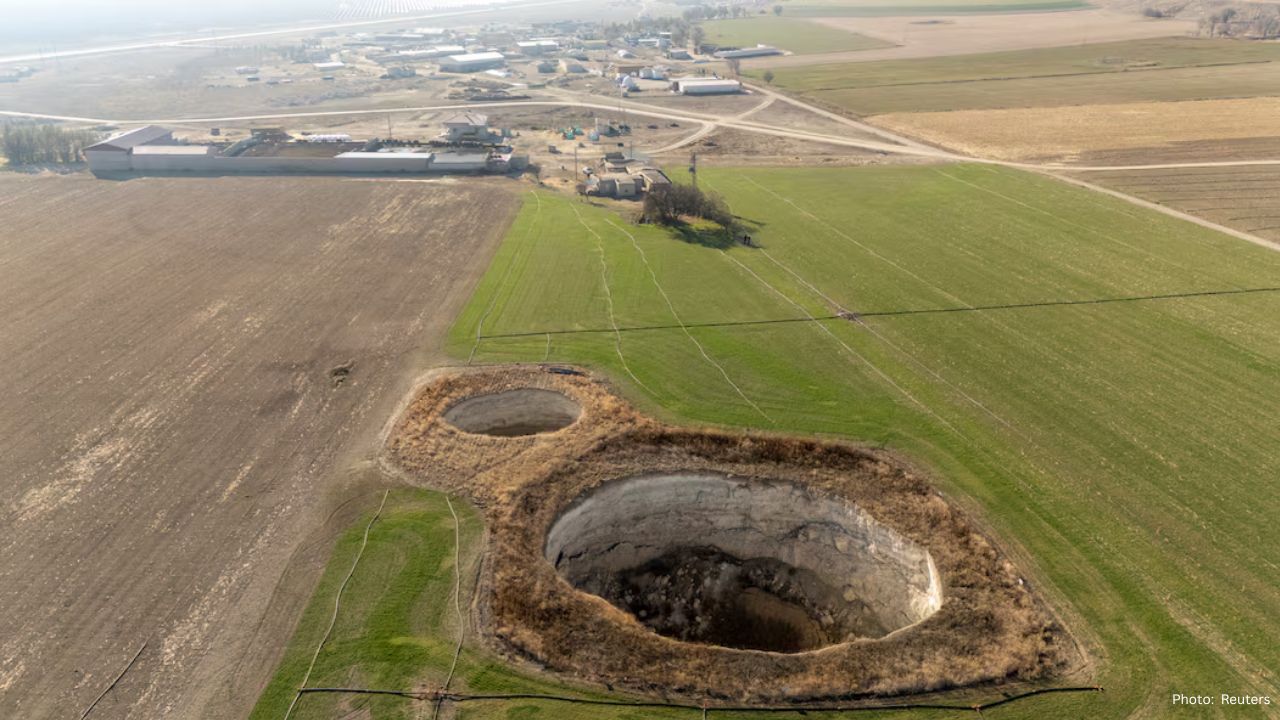
In central Turkey, a troubling environmental dilemma emerges with hundreds of sinkholes forming, fueled by reduced rainfall and falling groundwater levels. These sinkholes are disrupting vital agricultural areas that yield major crops such as maize, wheat, and sugar beet, prompting serious concerns over land stability and sustainability.
In the Karapinar district of Konya province, fields are witnessing more than ten sinkholes in some plots. In elevated regions, historic sinkholes that once retained water are now dry. Geologists tracking these developments caution that the deteriorating situation is indicative of the wider implications of climate change.
Fetullah Arik, a geology professor at Konya Technical University, noted a notable acceleration in sinkhole occurrences in recent years. He stated, “The primary factor is climate change and extended drought, impacting global water resources since the early 2000s. Groundwater is declining at rates of 4 to 5 meters annually, a sharp increase from just half a meter two decades ago.”
The surge in groundwater depletion is worsened by the growing number of wells—many unregulated—drawing from the subterranean resources. The Konya basin, a pivotal agricultural hub in Turkey, is now estimated to have around 120,000 unlicensed wells, overshadowing the 40,000 officially permitted ones.
Though these sinkholes haven’t resulted in any casualties, their sudden appearance poses significant hazards to infrastructure, private property, and public safety. Recent assessments in Karapinar pinpoint additional vulnerable areas, but experts remain unable to forecast when new sinkholes may surface.
Failure to adopt immediate strategies to regulate groundwater consumption and mitigate the effects of climate change threatens to increase sinkhole occurrences, jeopardizing agriculture, settlements, and the regional landscape. Experts assert that unified efforts are crucial to avert further environmental decline and secure the long-term health of central Turkey’s terrain.