On September 26, 2025, global markets were closely watching developments after the United States announced a new set of tariffs under President Donald Trump. Investors in Asia, Europe, and the Americas reacted with caution as the potential impact of these tariffs became clearer.
The new tariffs target a wide range of imported goods. Some of the most significant include 100% duties on branded drugs, 25% tariffs on heavy-duty trucks, 50% tariffs on kitchen cabinets and bathroom vanities, and 30% tariffs on upholstered furniture. These duties are scheduled to take effect on October 1, 2025, unless exemptions or adjustments are made.
The tariffs aim to protect U.S. industries and manufacturing, but they also have immediate consequences for global trade. It is still unclear whether countries with existing trade agreements, such as the European Union, Japan, and the United Kingdom, will face these higher tariffs,
because trade deals sometimes limit the maximum duties on certain products like automobiles, semiconductors, and pharmaceuticals.
Immediate Market Reactions
In Asia, the news caused a noticeable selloff. Pharmaceutical companies across the region experienced declines because the 100% tariff could make exporting their products to the U.S. far less profitable. An index tracking Chinese-listed furniture makers also fell more than 1% as the higher duties on furniture raised concerns about future sales.
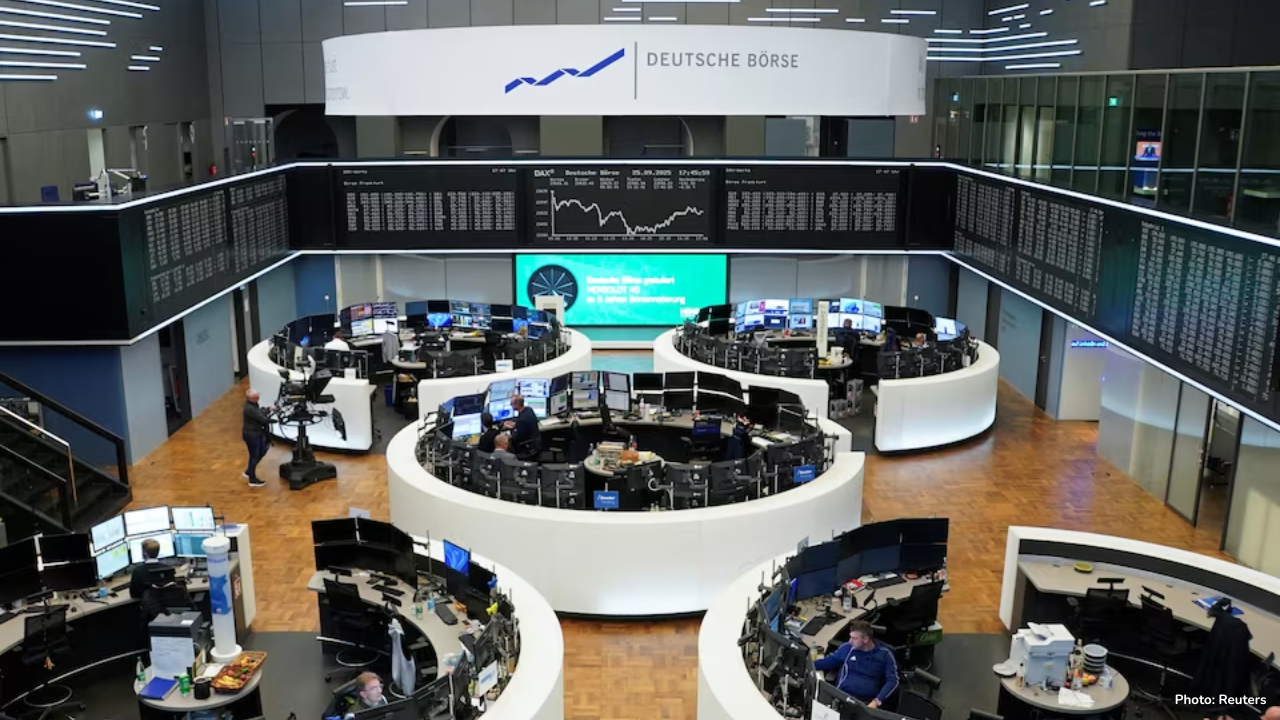
European investors are now watching closely. While the tariffs were announced in the United States, the potential ripple effects for the European economy are significant. Companies that export goods to the U.S. could face higher costs, which may reduce profits.
Investors in stock markets across Europe have adopted a cautious approach, waiting to see how the tariffs are implemented and which products may receive exemptions.
Details of the U.S. Tariffs
The 100% tariff on branded pharmaceuticals is one of the most notable measures. This tariff will apply to all imports unless the company has already started building a manufacturing plant in the United States. The aim is to encourage global pharmaceutical companies to produce more in the U.S., reducing dependency on foreign production.
Heavy-duty truck manufacturers, such as Peterbilt, Kenworth, and Freightliner, could benefit indirectly. By making imported trucks more expensive, the tariffs may increase demand for trucks made in the U.S.
Other tariffs, including those on furniture and kitchen goods, are designed to boost domestic production while discouraging imports. The goal is to strengthen U.S. industries and create jobs, though it may also increase costs for American consumers.
Broader Market Context
Even before the tariff announcement, global stock markets were experiencing challenges. Investors had been adjusting their expectations for U.S. interest rate cuts after a series of economic data showed that the U.S. economy remains strong. As a result, the Federal Reserve appeared less likely to reduce interest rates aggressively.
Traders now expect only about 39 basis points of rate easing by December 2025, slightly lower than expectations earlier in the week. Some Fed policymakers, however, continue to advocate for interest rate cuts to prevent potential issues in the labor market.
The combination of tariffs and changing interest rate expectations has created a “one-two punch” for global markets, leaving investors uncertain about the best strategies for the months ahead.
Key Economic Indicators to Watch
Investors are closely watching several economic indicators that could influence market reactions in the coming days:
U.S. Personal Consumption Expenditures (PCE) Data: Expected to show a 0.2% rise in the core PCE price index for August, slightly lower than July’s 0.3% increase. This measure is important because it helps determine inflation and influences Federal Reserve decisions.
Speeches by Federal Reserve Officials: Comments from Fed officials such as Barkin and Bowman are expected to provide insight into future monetary policy.
These data points will help investors assess whether the U.S. economy can absorb the impact of tariffs without slowing down, and whether further rate cuts or policy changes are necessary.
Implications for Global Trade
The tariffs announced by President Trump have implications beyond the U.S. borders. Countries that export to the U.S., including major trading partners in Asia and Europe, may face higher costs. Companies may need to adjust production, shift supply chains, or increase domestic manufacturing to stay competitive.
Trade uncertainty can also impact investment decisions. Businesses may delay expansion plans or capital spending until they have a clearer picture of the global trade environment. Investors are closely monitoring policy statements from the U.S., European Union, and other trade organizations to anticipate how markets will react.
European Market Outlook
European investors are particularly cautious. While the EU has agreements in place to limit tariffs on certain goods, there is still uncertainty about whether these new tariffs will be applied on top of existing national tariffs. European stock markets may experience volatility if companies expect a drop in profits due to increased costs of exporting goods to the U.S.
Investors are also considering the impact on global supply chains. Products such as pharmaceuticals, trucks, and furniture often involve multiple countries in their production. A tariff in one country can affect production costs and profitability across several regions.
Impact on Asian Markets
Asian companies, especially pharmaceutical and furniture manufacturers, have reacted strongly to the news. Asian stock indexes showed declines as investors adjusted their expectations for future profits. Companies may need to increase U.S. manufacturing or re-evaluate supply chains to minimize the impact of tariffs.
China, a major exporter, is likely monitoring the situation closely. While it is unclear whether exemptions will be applied, Chinese manufacturers may face higher costs for shipping products to the U.S., which could reduce competitiveness and affect overall sales.
Investor Strategies
- Investors around the world are responding in several ways:
- Diversification: Moving investments into sectors less affected by U.S. tariffs.
- Hedging: Using financial instruments to protect against potential losses from trade disruptions.
- Caution: Holding off on large investments until the details of tariffs and exemptions become clear.
- Many investors are also paying close attention to corporate earnings reports, as companies may revise forecasts based on anticipated tariff impacts.
Policy and Political Considerations
The new tariffs are part of President Trump’s broader trade strategy, which focuses on protecting U.S. industries and reducing dependency on imports. Critics argue that tariffs can increase costs for American consumers and may trigger retaliatory measures from other countries.
Lawmakers, business groups, and international trade organizations will continue to monitor developments closely. The implementation of tariffs could influence U.S. relations with key trading partners, including the European Union, Japan, and China.
The announcement of new U.S. tariffs has caused significant global market reactions. Asian stock markets fell, European investors are cautious, and companies around the world are reevaluating strategies. The tariffs target a wide range of products, including pharmaceuticals, trucks, furniture, and home goods.
While the goal of these tariffs is to strengthen U.S. manufacturing and protect domestic jobs, the potential ripple effects across global trade and investment are substantial. Investors, companies, and governments will continue to watch closely as the tariffs take effect and as more information emerges regarding exemptions, enforcement, and responses from trading partners.
Global markets are navigating a period of uncertainty, balancing concerns over trade policies, interest rates, and economic growth. The coming weeks and months will show whether the new U.S. tariffs create lasting changes in global trade or are absorbed smoothly by businesses and investors worldwide.