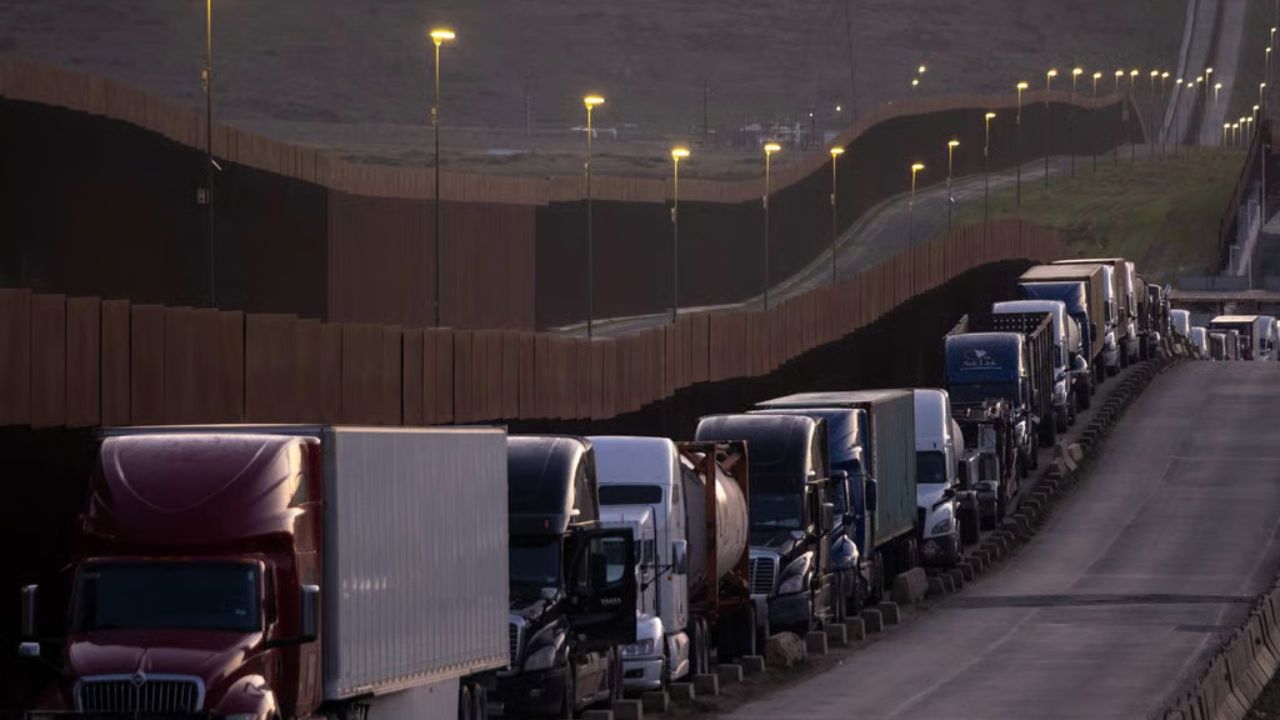
Photo:AFP
The United States government has announced a sudden and strict new rule targeting foreign truck drivers after a deadly accident in Florida left three people dead. The decision, which halts all new work visas for commercial truck drivers from overseas, was declared by Secretary of State Marco Rubio on Thursday and is already creating a heated national debate.
The Florida Crash That Sparked the Decision
The move came shortly after a tragic highway crash in Florida involving Harjinder Singh, a truck driver originally from India. Singh is accused of making an illegal U-turn with a large tractor-trailer, which led to a violent collision that killed three people.
Federal officials later said Singh had entered the United States illegally through Mexico. After the accident, he was tested and failed an English-language exam that truck drivers are required to pass in order to work legally in the country. This revelation quickly fueled public anger and gave political leaders an opportunity to push forward stricter immigration rules.
The case took on even more political weight because Singh held a commercial truck driving licence issued in California, a state controlled by the Democratic Party, which often challenges President Donald Trump’s immigration policies. In contrast, Florida’s Republican leadership has strongly supported Trump’s tougher approach.
Political Showdown Between Florida and California
The clash between these two states became highly visible when Florida’s lieutenant governor personally flew to California to bring Singh back for trial, traveling with immigration agents. This rare gesture demonstrated how much political attention the case had drawn.
Transportation Secretary Sean Duffy described the crash as a “preventable tragedy” and accused both state and federal systems of failing to keep unsafe drivers off the road. “Reckless decisions and broken oversight directly led to the loss of innocent lives,” he said.
California, however, defended itself by pointing out that it was the federal government under Trump that had approved Singh’s work permit while he was seeking asylum. The governor’s office said California had done its duty by cooperating with the extradition request.
Rubio’s Hardline Announcement
Within hours of the case becoming national news, Marco Rubio announced on social media that the State Department was halting all work visas for commercial truck drivers from abroad.
“Effective immediately, we are pausing all issuance of worker visas for commercial truck drivers,” Rubio wrote. He argued that the rise in foreign truck drivers was “endangering American lives” and “undercutting the livelihoods of American truckers.”
This announcement fits into a larger strategy by Trump’s administration to link road safety with immigration enforcement.
Foreign Truck Drivers in the US – The Numbers
The trucking industry in America has long been a symbol of blue-collar jobs held by working-class men. But the face of the industry has changed dramatically in the last two decades.
* Between 2000 and 2021, the number of foreign-born truck drivers more than doubled, rising to around 720,000 drivers.
* Today, nearly 18 percent of all truck drivers in the United States are foreign-born, roughly matching the percentage of immigrants in the US workforce overall.
* The largest groups of foreign truck drivers come from Latin America, but there are also significant numbers from India, Ukraine, and Eastern Europe.
Industry experts explain that this growth was driven by necessity. The United States has been facing a severe shortage of truck drivers. Earlier this year, a study showed the country needed an additional 24,000 drivers. This shortage costs the freight industry about 95.5 million dollars per week in undelivered goods, affecting supermarkets, factories, and medical supply chains.
In other words, foreign drivers have been filling a critical gap. But for the Trump administration, safety risks and immigration concerns now outweigh the industry’s demand.
English Proficiency and Safety Rules
Truck drivers in the US have long been required to pass a licensing test that includes basic English-language skills. The rule exists because truckers must read road signs, understand safety warnings, and communicate in emergencies.
However, in 2016, under former President Barack Obama, regulators were advised not to suspend or remove drivers solely because of weak English skills. Critics argued this made the roads less safe.
In June of this year, Transportation Secretary Sean Duffy reversed that policy and made English proficiency testing mandatory again. Singh’s failure of the language exam after the Florida crash gave more ammunition to those pushing for tougher enforcement.
A Wider Immigration Crackdown
The freeze on truck driver visas is just the latest in a long list of immigration restrictions put in place since Trump returned to the White House.
* The State Department revealed it has cancelled more than 6,000 student visas in recent months, four times more than during the same period last year.
* Officials say all 55 million people holding US visas are now under “continuous vetting,” meaning their activities, including social media use, are being closely monitored.
* Rubio has also used a rarely applied law to revoke visas from students who campaigned against US allies, including those protesting against Israel’s military actions in Gaza.
* In another controversial step, the US temporarily stopped issuing visas for children from Gaza who were supposed to travel for life-saving medical treatment.
These measures show how immigration policy is being reshaped not just around border security but also around foreign policy and political messaging.
Public Reaction – Divided Opinions
The suspension of truck driver visas has sparked divided reactions across the country.
* Supporters argue the decision is necessary to save lives, protect jobs for American-born truckers, and restore public confidence in road safety.
* Critics warn the move will worsen the trucker shortage, delay supply deliveries, raise prices, and hurt industries already struggling with transport costs.
Some analysts believe the Florida crash, while tragic, is being used as a political tool to justify sweeping immigration policies. Others see it as a wake-up call to strengthen road safety and ensure that only qualified drivers operate heavy trucks.
For now, the debate continues, but one thing is clear: the Florida crash has reshaped the national conversation on immigration, safety, and the future of America’s trucking industry.