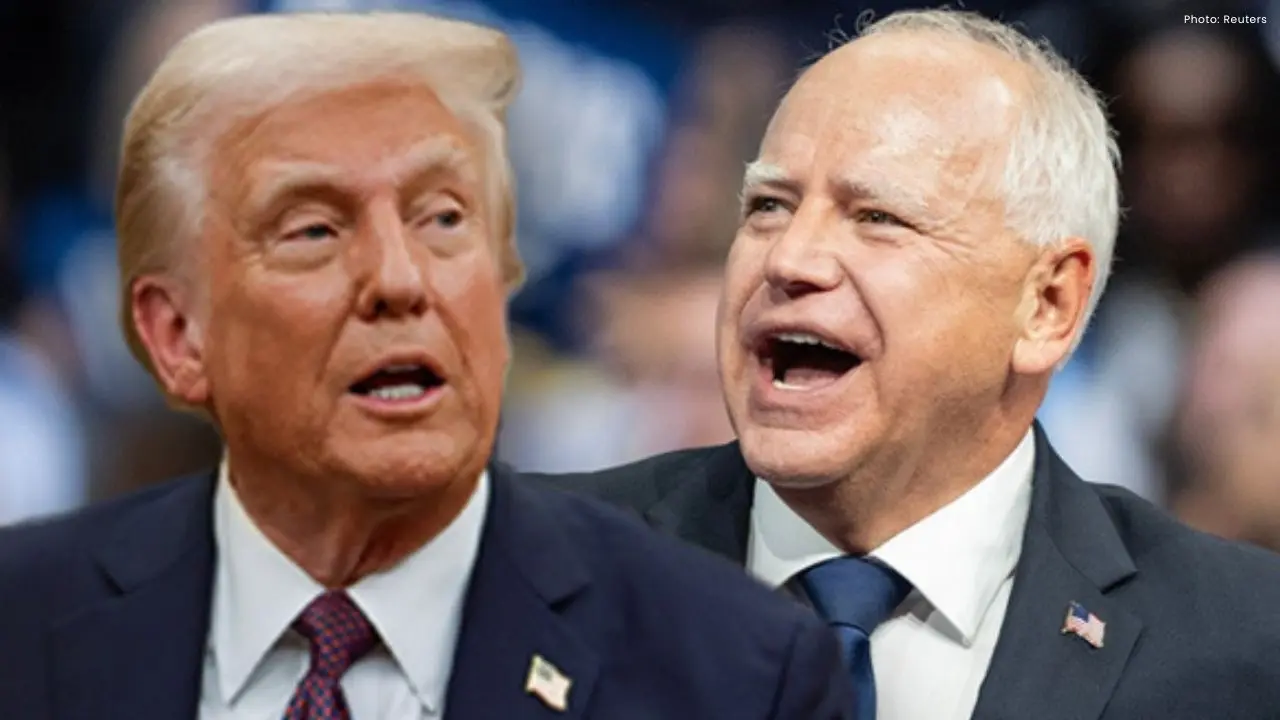
Amid escalating tensions in Minnesota, U.S. President Donald Trump engaged in private discussions with Governor Tim Walz and Minneapolis Mayor Jacob Frey. This dialogue followed the devastating shooting of a civilian during federal immigration initiatives and indicated a potential shift away from the heated confrontations previously seen.
The conflict escalated when Trump implemented a significant deportation operation in the Minneapolis–St. Paul region, deploying thousands of federal immigration agents despite pushback from local authorities. The controversy intensified following two fatal incidents where federal agents shot U.S. citizens during confrontations with protestors.
The latest victim, 37-year-old intensive care nurse Alex Pretti, was killed amidst clashes involving immigration officials and demonstrators. Widely circulated video footage has raised doubts about official narratives suggesting Pretti was a threat, igniting public outrage and protests against federal immigration enforcement in urban areas.
Tensions soared as federal officials suggested that Pretti was culpable in his own death. Similar assertions were made concerning another shooting where mother of three, Renee Good, was killed in her vehicle. The contradictions presented by video evidence have further fueled anger and distrust in the official accounts. Notably, the U.S. Justice Department has not initiated inquiries into either occurrence, leaving many feeling unheard.
In light of this troubling atmosphere, Trump's calls on Monday were interpreted as an effort to defuse rising tensions. Following his discussion with Governor Walz, Trump noted they were “on the same page,” a significant departure from previous exchanges. Walz’s office termed the dialogue as constructive, mentioning Trump’s willingness to contemplate a reduction in federal agents in Minnesota, as well as agreeing to state-led investigations into the Pretti shooting.
Trump’s call with Mayor Frey mirrored this progress. Frey reported that both parties acknowledged the necessity for change in the current dynamics, with indications that some federal agents may be vacating the Twin Cities, a sign of potential de-escalation on the streets.
Additionally, reports indicate that Gregory Bovino, a senior Border Patrol figure associated with the deportation strategy, will likely be reassigned. Bovino faced considerable backlash for leading armed patrols through urban areas and his uncompromising stance in public. Although official confirmations about his status were inconsistent, sources have confirmed his title has been revoked and he is expected to leave Minnesota soon.
Shifts in public sentiment are also evident. Recent polling illustrates a decline in support for Trump's immigration methods following the tragic shooting. Compounding this pressure, a prominent Republican candidate for governor in Minnesota announced their withdrawal from the race, claiming the crackdown had overstepped and harmed the party’s reputation in the state.
The recent fatalities have shed light on significant challenges within immigration enforcement practices. Operations intended to uphold the law resulting in citizen fatalities and conflicting accounts contribute to a growing mistrust in the institutions involved. Establishing calm dialogues among federal, state, and local leaders is vital, but it must also be accompanied by transparency, accountability, and adherence to due process.
While the transition from confrontation to dialogue is a positive initial step, achieving a lasting resolution will ultimately rest on the commitment of leaders to protect lives, respect state sovereignty, and guarantee independent inquiries. The crisis in Minnesota serves as a nationwide evaluation of the boundaries of enforcement and its impact on the very communities it seeks to protect.