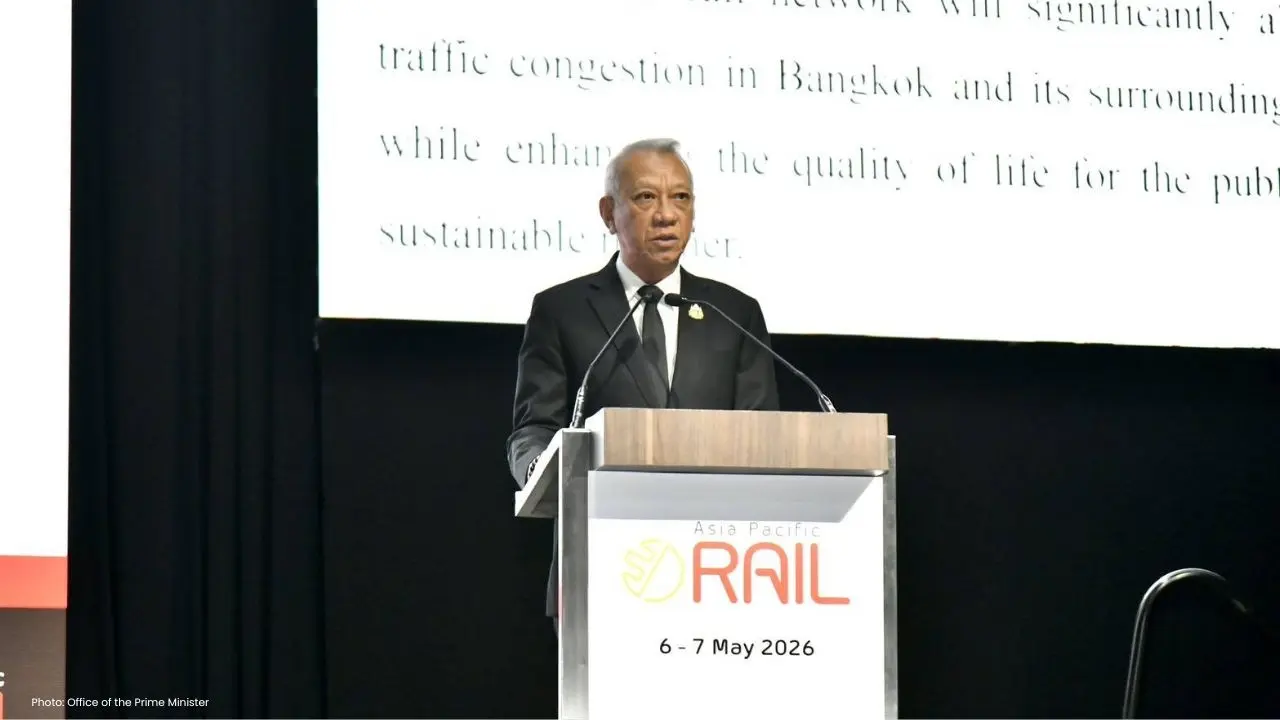
The Asia Pacific Rail 2026 event served as a strategic venue for Thailand to unveil its extensive transportation and infrastructure plans. Held at the BITEC Exhibition and Convention Center in Bangkok, Deputy Prime Minister and Transport Minister Pipat Ratchakitprakarn highlighted the government’s vision to establish Thailand as a premier railway and logistics nexus for Southeast Asia.
In his address, Pipat emphasized the commitment of the current administration, led by Prime Minister Anutin Charnvirakul, to prioritize rail systems as pivotal to national economic advancement. He noted that enhanced rail transport is vital for optimizing logistics, bolstering trade, minimizing transportation expenses, and fostering seamless economic connectivity across ASEAN.
Attendees included senior officials from various transport agencies, such as the Department of Rail Transport and the State Railway of Thailand, indicating a unified approach to coordinate infrastructure initiatives and accelerate rail project investments nationwide.
A primary focus is the swift rollout of Thailand’s railway network. The government announced that six railway lines from the initial phase of the double-track programme are currently active, covering over 993 kilometres. Progress is underway for the second phase, which includes seven additional lines totaling about 1,479 kilometres as part of a comprehensive national transport strategy.
Moreover, modernization efforts for urban transit systems in Bangkok and nearby areas are also continuing. Officials revealed that the Ministry of Transport is executing a master plan comprising 14 railway lines spanning over 550 kilometres, with many already in operation. Projects for the Orange Line and Southern Purple Line are under construction and being expedited.
The discussion also spotlighted the proposed “Land Bridge” project, aimed at linking ports on the Gulf of Thailand in Chumphon with ports on the Andaman Sea in Ranong through enhanced railway and highway connections. Authorities anticipate this initiative will significantly shorten shipping durations and cut costs while reinforcing Thailand's status as a global logistics and trade hub.
Cross-border railway links emerged as another vital economic focus, with plans to enhance connections to Malaysia, Laos, and China. Officials contend that regional railway coherence could yield new investments, expand trade prospects, and boost tourism across Southeast Asia, contributing to greater ASEAN cooperation in forthcoming years.
The significance of clean energy and sustainable transport development was also underscored. Thailand's Rail Technology Research and Development Institute is fostering environmentally-friendly rail technologies and encouraging partnerships with private entities to nurture green innovations. Future rail projects will strive to align with global net-zero emissions aspirations and adhere to international environmental criteria.
The conference also elaborated on Thailand's high-speed rail objectives. Preparations for the first phase of the high-speed rail line from Bangkok to Nakhon Ratchasima are ongoing, with trial runs anticipated by 2028. Additionally, the subsequent phase aiming to connect Nakhon Ratchasima to Nong Khai is advancing towards the bidding stage. Officials assert that these railway initiatives reflect Thailand’s commitment to elevate its standing as a leading transportation and logistics hub within the Asia Pacific region.