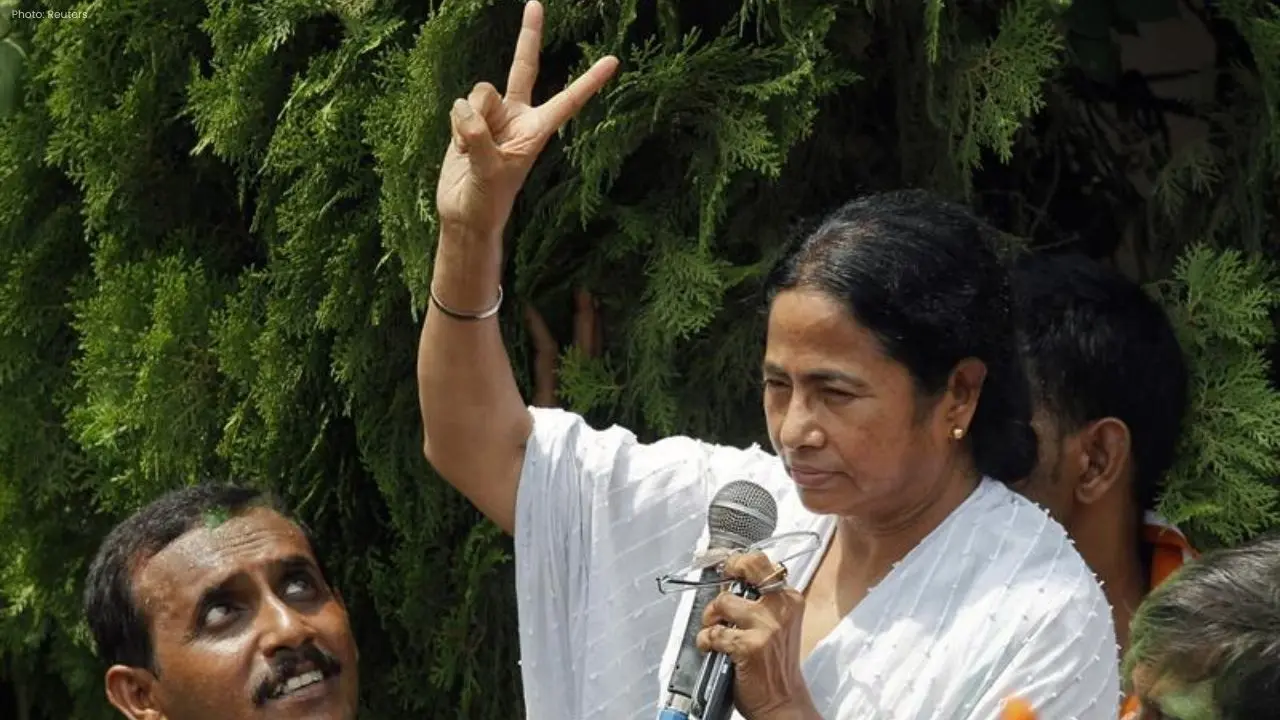
On Wednesday, the Supreme Court expressed deep concerns regarding the chaotic scenes observed in the Calcutta High Court amidst hearings linked to the contentious relationship between the Enforcement Directorate (ED) and the Mamata Banerjee-led Trinamool Congress. The court deemed the disruption a substantial issue and announced it would issue a notice for a comprehensive review.
Justice Prashant Mishra and Justice Vipul Pancholi noted that such turmoil within a constitutional court presents alarming questions about upholding the rule of law. They emphasized that persistent disturbances must be firmly addressed to maintain the dignity of the judicial framework.
The unrest arises from accusations by the ED claiming that leading figures of the Trinamool Congress, alongside West Bengal officials, hampered its ongoing investigation. The central agency has asserted it faced significant barriers during inspections at the political consultancy firm I-PAC, which collaborates closely with the Trinamool Congress during elections.
During the proceedings, Solicitor General Tushar Mehta alleged that Mamata Banerjee directly interfered with the search operation, claiming she visited I-PAC co-founder Pratik Jain's residence to remove materials deemed critical for the inquiry. Mehta referred to this act as "theft" and cautioned that such behavior could embolden state police to protect individuals involved in sensitive investigations.
He requested stern measures, including the suspension of West Bengal's Director General of Police Rajeev Kumar and other senior officials, arguing that tolerating such actions would undermine law enforcement agencies nationally.
Mehta further noted that on January 9, chaos erupted in the Calcutta High Court due to a large assembly of lawyers, many of whom were unrelated to the case. This rowdy atmosphere forced the presiding judge to adjourn the session, and Mehta branded the occurrence a sign of "mobocracy," stressing that the integrity of democracy is compromised when courtrooms are swarmed by politicized crowds.
The Solicitor General mentioned that lawyers had been coordinated via messages to assemble at the court at a predetermined time, leading to the chaos. He referenced the high court judge’s remarks acknowledging the environment was unsuitable for a proper hearing.
The Supreme Court bench inquired if the high court had effectively been turned into a venue for protests. The judges underlined that such scenes are intolerable and could seriously damage public trust in the justice system.
In response to the turmoil, the Calcutta High Court restricted access to subsequent hearings, allowing entry only to lawyers directly involved in the case. The high court later nullified the petition put forth by the Trinamool Congress after the ED clarified that no documents were seized during their operations. Nonetheless, the Trinamool Congress maintains that confidential party documents were taken, a claim refuted by the central agency.
Tushar Mehta reiterated that this incident was not isolated and urged the Supreme Court to decisively address the unfolding situation. He remarked that repetitive interference in investigations sends a detrimental signal, undermining the autonomy of central agencies.
Senior Advocate Kapil Sibal, representing Mamata Banerjee, questioned the timing of the ED's actions. He highlighted that there had been no substantial developments in the coal scam case since February 2024, challenging the rationale behind conducting searches in 2026, so close to West Bengal Assembly elections.
Sibal asserted that I-PAC manages election tasks for the Trinamool Congress and stores sensitive electoral information, including candidate details and campaign strategies. He argued that any intrusion could jeopardize the party’s capacity to contest fairly. According to him, Mamata Banerjee’s actions were taken to safeguard that confidential data.
However, the Supreme Court clarified that these arguments wouldn't prevent them from issuing notice. The bench noted if the ED intended to seize electoral data, they would have already done so, and since no documents were reportedly taken, the situation required thorough examination.
Senior Advocate Abhishek Singhvi, representing the West Bengal government and police leadership, recognized a disturbance on January 9 but contended it shouldn’t justify the ED's concurrent issues before the Calcutta High Court and the Supreme Court. He acknowledged that emotions can escalate in politically charged matters.
The bench firmly stated that recurrent emotional outbursts cannot be accepted. The judges insisted that maintaining discipline and order in courtrooms is imperative and must never be compromised.
With the Supreme Court poised to issue notice, this case is set for closer scrutiny. The outcome will likely bear significant implications for the ongoing conflict between the ED and the Trinamool Congress, as well as for upholding order and impartiality in court proceedings nationwide.