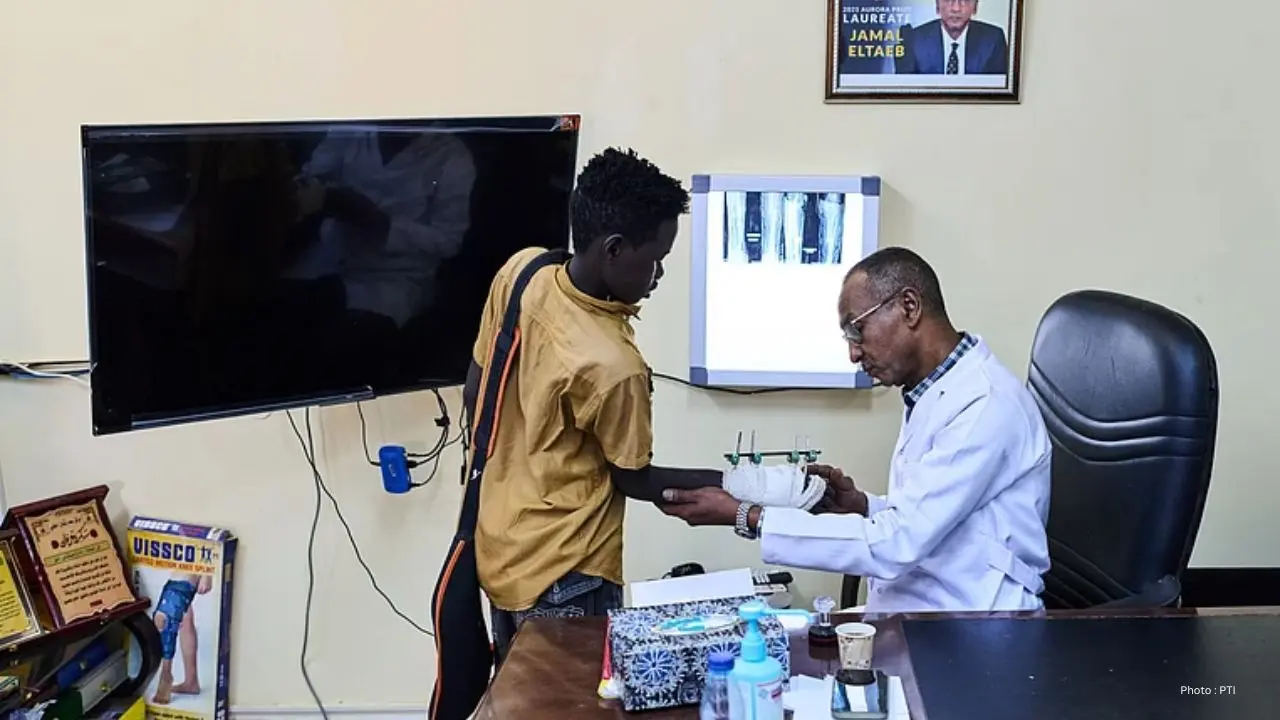
Amid the ongoing conflict in Sudan, orthopaedic surgeon Jamal Eltaeb has emerged as a symbol of resilience and dedication, continuing to save lives under extreme and life-threatening conditions. For more than three years, he remained at Al Nao Hospital in Khartoum, even as violence escalated, medical systems collapsed, and many healthcare workers fled the region.
As fighting intensified in the capital Khartoum, the hospital became overwhelmed with casualties from clashes between national forces and paramilitary groups. With nearly 40 percent of the country’s hospitals no longer functioning, Al Nao Hospital stood as one of the few remaining centres providing critical care. Despite repeated bombings, severe shortages of medicine, and a lack of electricity, Dr. Eltaeb chose to stay, believing his skills were essential for patients who had nowhere else to go.
Operating under extremely difficult conditions, the medical team often performed surgeries outside traditional operating rooms, sometimes even on the ground or in temporary tents. Basic supplies such as antibiotics, anaesthesia, and fuel for generators were frequently unavailable, forcing doctors to make painful decisions about who could be treated. In some cases, life-saving procedures were carried out with minimal resources, highlighting the harsh realities faced by healthcare workers in conflict zones.
Dr. Eltaeb took charge of the hospital after many staff members left due to safety concerns. Leading a small team of volunteers and remaining personnel, he worked tirelessly to keep the facility running. Community support played a vital role, with local volunteers and pharmacists providing medicines and supplies, while international networks of Sudanese doctors offered remote guidance during emergencies.
The hospital itself was repeatedly targeted, suffering multiple strikes that damaged infrastructure and endangered both patients and staff. Despite these risks, operations continued, with makeshift solutions such as handmade crutches and improvised medical equipment becoming part of daily practice.
In recognition of his extraordinary efforts, Dr. Eltaeb was awarded the Aurora Prize for Awakening Humanity, which honours individuals who risk their lives to help others. Demonstrating his commitment to humanitarian work, he used much of the prize money to support global medical initiatives rather than personal gain.
Today, as the conflict shifts and international attention moves elsewhere, Al Nao Hospital faces new challenges, including reduced funding and the possible withdrawal of aid organizations. Despite uncertainty about the future, Dr. Eltaeb continues his mission, focusing on saving lives and maintaining medical care in one of the world’s most difficult environments.
His story reflects not only the collapse of Sudan’s healthcare system but also the courage of individuals who continue to serve despite overwhelming odds.