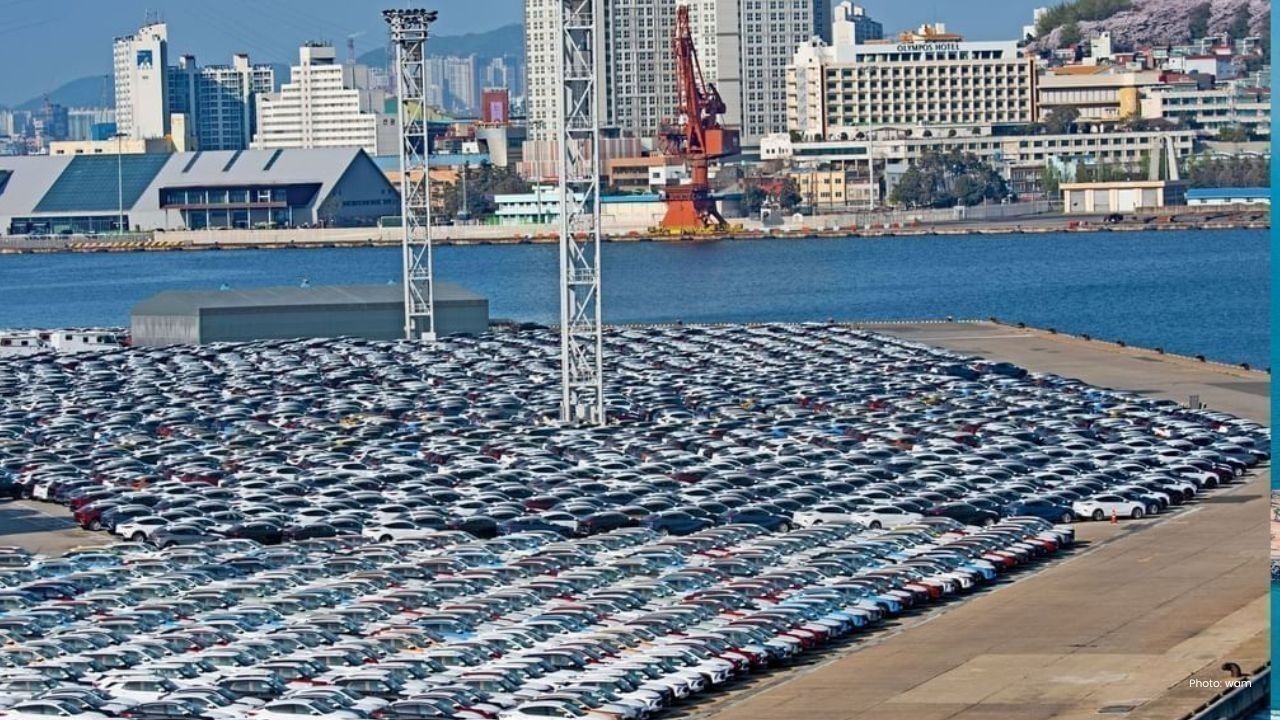
South Korea’s automobile industry is showing strong growth despite global trade challenges. In August 2025, the country’s auto exports rose 8.6 percent compared to the same month last year, reaching a record value of US$5.5 billion. A total of 200,317 vehicles were shipped worldwide, marking a 5.5 percent increase in volume. From January to August 2025, the cumulative export value reached US$47.7 billion, the highest ever for South Korea.
Europe Leads the Growth
Europe has been the main driver of this growth, especially for electric vehicles (EVs). Exports to the European Union rose 54 percent year-on-year, totaling $792 million. Within Europe, Germany and the Netherlands saw huge increases of 118.7 percent and 110.3 percent, respectively. The United Kingdom also recorded a 115.7 percent rise to $250 million, and exports to Turkey grew 96.1 percent to $100 million.
This growth comes despite declining sales in North America. Exports to the U.S. fell 15.2 percent to $2.1 billion, mainly because of a 25 percent tariff imposed by the Trump administration. Overall, North American exports dropped 8.3 percent to $2.55 billion.
Strong Growth in Asia, the Middle East, and Oceania
Other regions also showed positive results. Exports to Asia rose 9.3 percent to $591 million, while the Middle East increased 9.8 percent to $369 million. Oceania saw a notable jump of 20.1 percent to $344 million, showing that Korean vehicles are popular worldwide.
Electric and Eco-Friendly Vehicles Boost Sales
A key factor in this success is the rising demand for eco-friendly vehicles. In August alone, shipments of EVs, hybrid cars, and hydrogen-powered vehicles increased 26.6 percent to 69,000 units. Among these, EV exports surged 78.4 percent, with 23,000 electric vehicles shipped.
Popular models include Kia EV3 and Hyundai Casper Electric (sold overseas as “Inster”), which have become top choices in the global market. Governments in Europe and Asia are supporting EV adoption with incentives, helping Korean automakers expand their reach.
Expert Views
Industry analysts say that South Korea’s auto industry is following a long-term growth path, not just a temporary spike. Investments in battery technology, EV platforms, and hydrogen fuel systems have positioned Korean companies as leaders in sustainable mobility.
Experts note that market diversification has been crucial. While North America faces challenges, growth in Europe, Asia, and the Middle East balances the losses.
“Korean automakers are showing that they can succeed even in tough trade conditions,” said a Seoul-based auto analyst. “Europe’s EV demand is helping them offset U.S. tariffs.”
Challenges Ahead
Despite strong numbers, challenges remain. Tariffs in the U.S. continue to affect competitiveness. Global EV competition is rising, especially from Chinese automakers. Additionally, supply chain issues for battery materials like lithium, cobalt, and nickel could affect future growth.
Government Support
The South Korean government has supported the auto industry through incentives, funding, and trade agreements. The Ministry of Trade, Industry and Energy is working to expand overseas markets and address tariff challenges. Partnerships with European nations in clean energy and mobility are also strengthening the country’s global position.
Outlook for the Rest of 2025
Experts expect Korean auto exports to remain strong for the rest of the year. New EV models and growing demand in Europe and Asia should maintain momentum. If trade tensions stay manageable, 2025 could be a record-breaking year for South Korea’s automobile industry.
For consumers, Korean vehicles—especially eco-friendly models—are seen as affordable, technologically advanced, and stylish alternatives to American, Japanese, and European cars.
Conclusion
South Korea’s auto industry has once again proven its resilience and innovation. Even with U.S. tariffs and global competition, the country has expanded its global footprint. Rising demand for electric and eco-friendly vehicles has helped Korean automakers lead the transition toward sustainable transportation. August’s record export figures reflect the strength, adaptability, and global competitiveness of Hyundai, Kia, and other South Korean carmakers.