Photo:reuters
A major milestone for clean energy in Europe
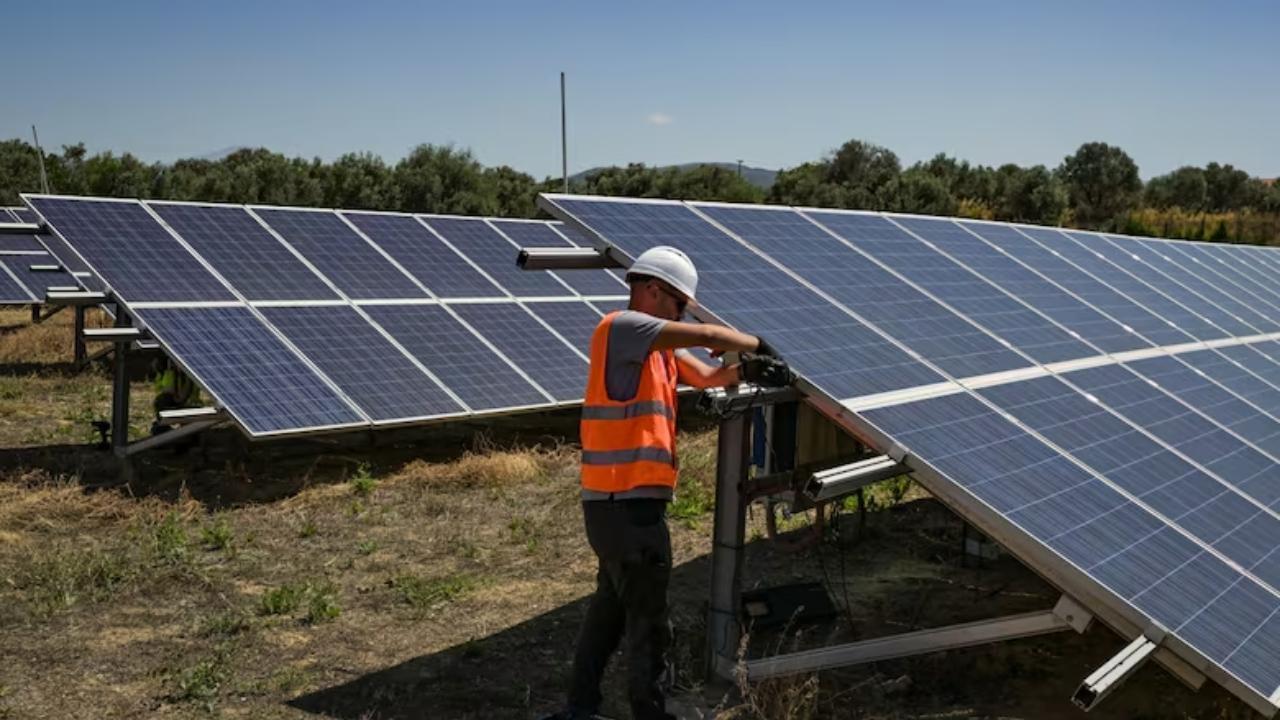
In a historic development that marks a major turning point in Europe’s transition to renewable energy, solar power has officially become the leading source of electricity in the European Union for the first time. During the month of June 2025, solar energy surpassed all other forms of power generation across the EU, accounting for a record-breaking 22.1% of the total electricity produced within the bloc. This achievement underscores the accelerating pace of Europe’s green energy transformation and highlights the growing dominance of solar energy in the global energy mix. With more than 45 terawatt-hours (TWh) of electricity generated from solar panels during the month, the EU has proven that solar is not just a supplementary energy source, but now a major pillar of its electricity infrastructure.
How solar surpassed nuclear and wind in the energy mix
Historically, the EU has relied on a diverse portfolio of energy sources, with nuclear power, coal, gas, and more recently, wind playing dominant roles. But in June 2025, solar edged ahead of all of them, even overtaking nuclear, which has traditionally held the top spot in several European countries. Nuclear accounted for 21.8% of the electricity mix, while wind energy contributed 15.8%. Solar’s rise to the top was fueled by a combination of rapid photovoltaic deployment, favorable weather conditions, and increasing electricity demand due to an intense summer heatwave that swept across the continent. Importantly, this shift was not a temporary fluke but the result of years of consistent investment and policy support aimed at reducing reliance on fossil fuels and building a sustainable energy future.
Record-breaking generation across multiple countries
At least 13 EU member states reported record levels of solar electricity generation in June. These countries include Germany, Spain, the Netherlands, France, Austria, Bulgaria, Greece, Croatia, Czechia, Poland, Belgium, Romania, Slovenia, and Sweden. In the Netherlands alone, solar power provided an astonishing 40% of the country’s electricity needs. Germany and Spain, already leaders in solar energy, added significant capacity in the first half of the year, further boosting their monthly output. In these nations, the widespread adoption of both rooftop and utility-scale solar installations has created an energy landscape where sunlight now plays a central role in meeting everyday power demands.
Surging electricity demand met with clean power
The achievement of solar power’s top spot is even more impressive when viewed against the backdrop of rising electricity consumption. Across the EU, electricity demand grew by over 2% in the first half of 2025 compared to the same period in 2024. This increase was driven by an unusually warm summer, higher usage of air conditioning, electrification of heating systems, and continued growth in electric vehicle charging needs. Despite this surge, solar power managed to meet much of the additional demand without triggering increased reliance on fossil fuels. This demonstrates the scalability and resilience of solar energy when supported by a robust grid and efficient generation infrastructure.
Decline of coal and its implications for the future
While solar power surged, coal-fired power generation continued its steady decline, falling to just 6.1% of the EU electricity mix in June—its lowest share on record. A year earlier, coal contributed nearly 9%, but a combination of plant closures, carbon pricing, and renewable expansion has rendered coal increasingly obsolete. Germany and Poland, historically among the largest coal consumers in Europe, both posted record-low levels of coal generation. Spain, once reliant on coal for a significant share of its power, produced less than 1% of its electricity from coal in June. The rapid phasing out of coal not only benefits climate goals but also reduces air pollution and associated health costs across the continent.
Natural gas remains a backup but faces pressure
Natural gas remains an important backup source of electricity in the EU, particularly during periods of low wind or hydro availability. In the early months of 2025, gas-fired generation increased to offset reduced hydroelectric output due to drought conditions and underperformance in wind power. However, as solar ramped up in June, the need for gas declined. Policymakers continue to face the challenge of managing the transition away from gas without compromising energy security. Long-term strategies include replacing gas peaker plants with battery storage, enhancing interconnectivity between national grids, and integrating demand-response mechanisms that reduce peak loads.
The importance of seasonal generation trends
One key aspect of solar power is its seasonality. June typically marks the high point for solar electricity generation due to long daylight hours and abundant sunshine across Europe. While this makes solar an ideal energy source for summer peaks, it also highlights the need for balanced energy planning to ensure reliable power during darker winter months. Countries with advanced energy systems are already investing in seasonal storage technologies, such as pumped hydro, hydrogen storage, and long-duration batteries, to bridge the gap when solar output falls. At the same time, the EU is looking to diversify its renewable portfolio by expanding offshore wind and enhancing inter-regional grid links that allow energy to flow from sunny regions to others as needed.
Eastern Europe’s solar surge reshapes regional dynamics
In recent years, Eastern European countries have emerged as surprising leaders in solar adoption. Between 2019 and 2024, solar capacity in the region grew by more than 450%, from just 9 gigawatts (GW) to over 46 GW. Countries like Poland, Hungary, and Romania have embraced solar as a way to reduce dependence on imported fossil fuels and to comply with EU emissions targets. In June 2025, solar contributed over 20% of electricity generation in several of these countries, reflecting not just growth in capacity but also improved grid integration and policy alignment. This transformation is reshaping regional energy politics and bringing new economic opportunities to areas once dominated by coal and gas.
Challenges in integrating high levels of solar power
As solar becomes a dominant force in electricity generation, new challenges arise. Solar power is inherently variable, with production peaking during the day and dropping off at night. Managing this variability requires advanced grid infrastructure, real-time data monitoring, and flexible demand systems. Storage is a critical component of this solution. Europe is investing heavily in battery technology, both at the grid and household level. Countries are also promoting smart meters, time-of-use pricing, and vehicle-to-grid systems that allow electric vehicles to support grid stability. In addition, digital control systems that balance supply and demand across borders are being deployed to ensure that surplus solar energy can be stored or shifted efficiently.
Economic and job creation benefits of solar growth
The rapid expansion of solar power has significant economic implications. As of 2024, the solar sector employed over 640,000 people across the EU, with more jobs being added every month in installation, maintenance, R&D, and manufacturing. The sector is becoming a major contributor to local economies, particularly in rural and semi-urban areas where large-scale installations are built. Solar energy is also creating new revenue streams for homeowners, businesses, and municipalities through rooftop solar programs and community energy schemes. As production scales up, the cost of solar panels continues to fall, making it more accessible to consumers and accelerating the pace of adoption even further.
Public support and community engagement driving expansion
Public opinion continues to be a driving force behind solar expansion. Surveys indicate that over 80% of EU citizens support increased investment in renewables, and solar consistently ranks as the most favored option due to its low impact, scalability, and cost-effectiveness. Community solar projects, in which multiple households or businesses invest in shared systems, are gaining popularity across countries like France, Italy, and the Netherlands. These projects not only democratize energy access but also generate social cohesion and local resilience. Governments are increasingly integrating these models into national energy plans, offering grants, tax credits, and technical support to encourage participation.
How policy and regulation shape solar’s future
The rise of solar power in Europe has been supported by a combination of EU-wide directives and national-level policies. Key frameworks include the European Green Deal, the Fit for 55 package, and the REPowerEU initiative, all of which aim to accelerate the clean energy transition. These policies set legally binding targets for emissions reduction and renewable energy capacity while offering financial mechanisms like the Just Transition Fund to support affected workers and regions. At the national level, feed-in tariffs, net metering, and solar auctions have incentivized both small and large-scale development. As solar’s role continues to grow, regulatory bodies are focusing on ensuring grid readiness, data transparency, and fair market access.
The road ahead: what must be done to sustain growth
While the EU’s solar achievement is historic, it is only one step on a longer journey toward a fully decarbonized energy system. In order to sustain and expand solar’s role, continued investment in innovation, storage, and infrastructure will be essential. Research into next-generation solar technologies, such as perovskite cells and bifacial panels, promises to boost efficiency and reduce material costs. Battery storage must be deployed at scale, and the regulatory environment must evolve to support dynamic pricing, flexibility services, and decentralized generation. Cross-border collaboration will also play a key role, as countries work together to optimize resource sharing and improve energy security.
A template for global clean energy transitions
Europe’s success story with solar energy offers valuable lessons for other regions grappling with the twin challenges of energy security and climate change. The combination of clear political will, community engagement, technological innovation, and financial support has proven effective in transforming the energy mix. Countries with similar conditions—abundant sun, robust institutions, and public support—can emulate this model. At the same time, international cooperation on supply chains, standardization, and emissions monitoring will be crucial to scaling up renewable solutions worldwide. The EU’s leadership can inspire others, but global success will require shared commitment and mutual learning.
Conclusion: the sun rises on a new energy era
June 2025 will be remembered as the month when solar energy outshone all other electricity sources in the European Union. This moment represents more than just a statistic—it’s a validation of decades of effort, investment, and innovation aimed at creating a cleaner, more resilient energy system. Solar’s emergence as the leading power source signals the beginning of a new era where clean energy is not only possible but already happening. As the EU continues to build on this foundation, the challenge now is to ensure that solar power’s rise is sustained, equitable, and integrated into a broader vision of climate justice and energy democracy. The solar revolution is no longer on the horizon. It’s here, and it’s lighting the way forward.