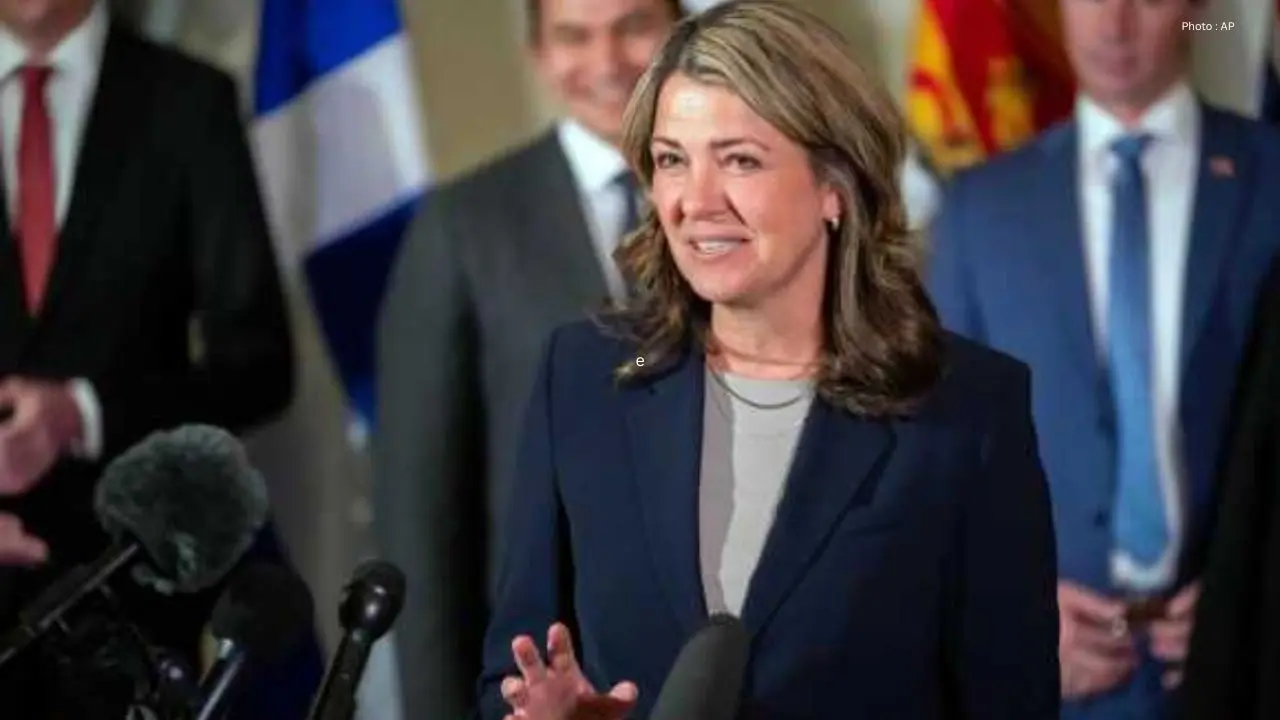
Alberta Premier Danielle Smith defended members of her United Conservative Party after reports revealed that party representatives joined a call with an Alberta separatist group. The issue has created fresh political debate in the province as discussions about Alberta independence continue to gain attention across Canada.
Smith said the UCP is not a separatist party and insisted that speaking with different groups does not mean the government supports Alberta leaving Canada. According to the premier, political parties regularly communicate with organizations and citizens holding different views, and such discussions are part of the democratic process.
The controversy began after reports claimed that senior UCP figures took part in an online meeting connected to a separatist organization that supports Alberta becoming independent from Canada. Opposition parties criticized the government and questioned why officials connected to the ruling party were participating in conversations with groups pushing for separation.
The issue comes at a time when Alberta separatist movements have become more active in the province. A separatist organization recently announced that it had collected enough signatures to request a referendum on Alberta independence. If the signatures are officially verified, Alberta could potentially hold a public vote on separation in the future.
Danielle Smith has repeatedly said she personally does not support Alberta separating from Canada. However, she has also stated that citizens have the right to express their political opinions and organize campaigns under provincial law. Her government previously introduced changes that lowered the number of signatures required to launch citizen-led referendum initiatives in Alberta.
Critics argue that the UCP government has created an environment that has encouraged separatist movements to grow stronger. Opposition leaders accused the government of sending mixed messages by publicly supporting a united Canada while also maintaining connections with groups promoting independence.
Political analysts say frustration over federal policies, energy issues, equalization payments, and provincial rights has increased support for separatist discussions among some Albertans in recent years. However, surveys continue to show that a majority of Albertans still prefer remaining part of Canada.
The debate has also raised concerns among Indigenous leaders and legal experts. Several First Nations groups have warned that any attempt to separate Alberta from Canada could affect treaty rights and create serious constitutional challenges. Legal experts believe any future referendum would likely face court battles and federal negotiations.
Meanwhile, separatist supporters argue Alberta should have greater control over its economy, natural resources, and provincial decisions. Some groups have claimed the province has not received fair treatment from the federal government, especially on energy and environmental policies.
Smith responded to criticism by saying her government remains focused on protecting Alberta’s interests within Canada. She added that open discussions with different political groups should not be interpreted as support for separation.
The controversy continues to draw attention across the country as political leaders, analysts, and citizens closely watch how the Alberta government handles growing separatist pressure ahead of possible referendum discussions.