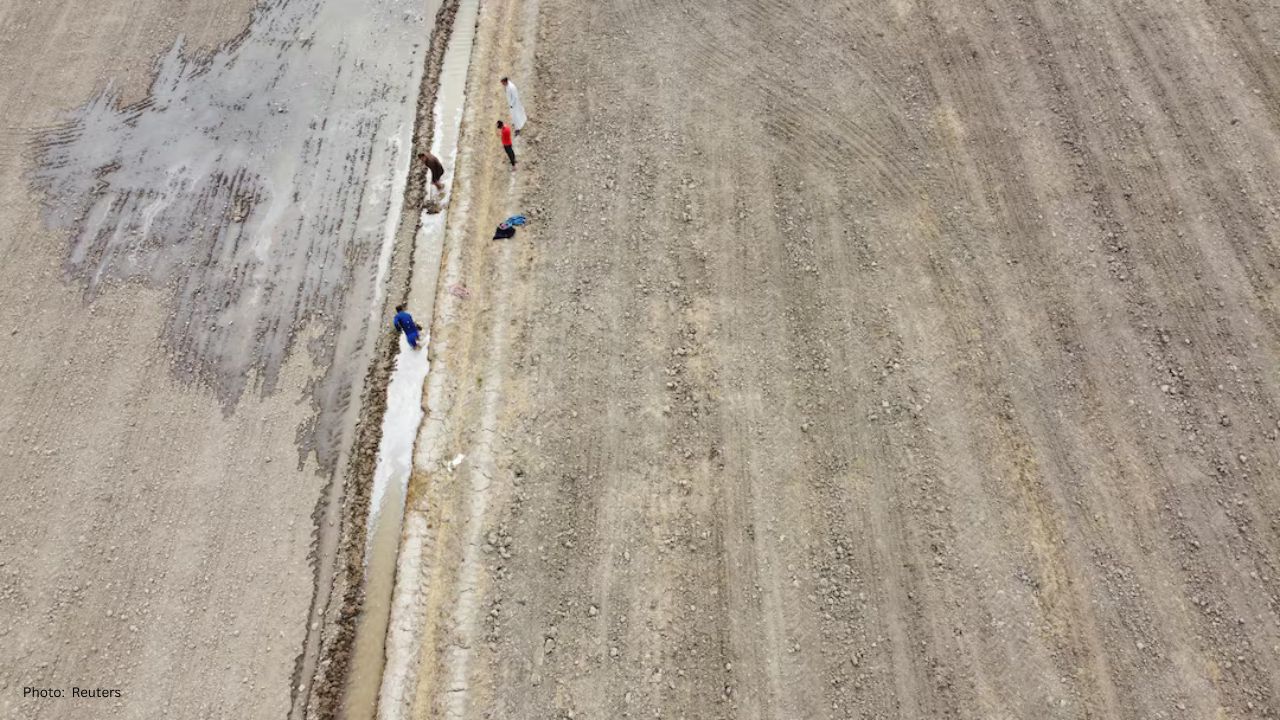
The fertile land between the Tigris and Euphrates rivers, once a cradle for civilizations, now faces dire challenges in wheat production as Iraq experiences one of the harshest water crises in its recent history. Aspirations for wheat self-sufficiency are dwindling as farmers confront drought, climate change, and diminishing river supplies.
Nearby the revered city of Najaf, wheat cultivator Ma’an al-Fatlawi examines parched canals and dry earth. Traditionally reliant on the Euphrates, this year, water has been scarce. Despite attempts to drill wells, groundwater salinity poses obstacles for crop cultivation. Consequently, he has drastically cut his wheat sowing and reduced his workforce.
In earlier years, Iraq had made considerable strides towards local wheat production. Once among the region's largest wheat importers, the nation enjoyed three consecutive years of surplus. Essential government backing, including high-yield seeds and substantial subsidies, had propelled this progress. The state had even compensated farmers at more than twice the global pricing to spur local output, leading to overflowing storage facilities.
However, this progress is now jeopardized. This year marks the driest conditions Iraq has encountered in decades, with Tigris and Euphrates levels plummeting to record lows. The United Nations Food and Agriculture Organization warns of an impending 30% to 50% decline in wheat production this season, as total water reserves plummet from approximately 60 billion cubic meters in 2020 to under 4 billion.
Climate change plays a significant role in this predicament. Iraq ranks among the most climate-vulnerable nations, facing temperatures that ascend quicker than the global average alongside reduced precipitation and increased heatwaves. Moreover, about 70% of Iraq’s water originates from external sources, with upper-river dams implemented by Turkey and Iran drastically curbing water accessibility for Iraqi farmers.
The repercussions extend beyond agriculture. Baghdad has instituted water rationing measures, limiting river-irrigated wheat cultivation to half of last year's figures and nationwide restrictions on rice farming due to high water demands. Farmers are now mandated to adopt modern irrigation strategies like drip and sprinkler systems to mitigate water waste. While desert farming utilizing groundwater is on the rise, it requires expensive technology and meticulous management.
Experts caution that excessive reliance on wells may present further complications. Growing one ton of wheat necessitates over 1,000 cubic meters of water, and unregulated extraction risks depleting underground reserves. In southern Iraq, groundwater levels have plummeted by several meters, and the financial burden of new irrigation setups is daunting for many rural families.
As local wheat production diminishes, imports are poised to surge once again, with the FAO estimating a need for approximately 2.4 million tons of wheat in the upcoming season. Although present global wheat prices are favorable, reliance on imports exposes Iraq to sudden price fluctuations and fiscal strain. Analysts predict that water and food shortages may trigger social unrest and elevate security threats.
The humanitarian impact is evident, with roughly 170,000 individuals displaced from rural communities due to diminishing water supplies. For farming-dependent families, the crisis transcends mere food shortages, affecting survival and dignity.
In essence, Iraq’s plight highlights how water scarcity can unravel years of advancements in food security. Without immediate regional cooperation on water distribution, enhanced climate adaptability, and robust support for farmers, the country’s historical identity as a grain-producing powerhouse may further erode.